
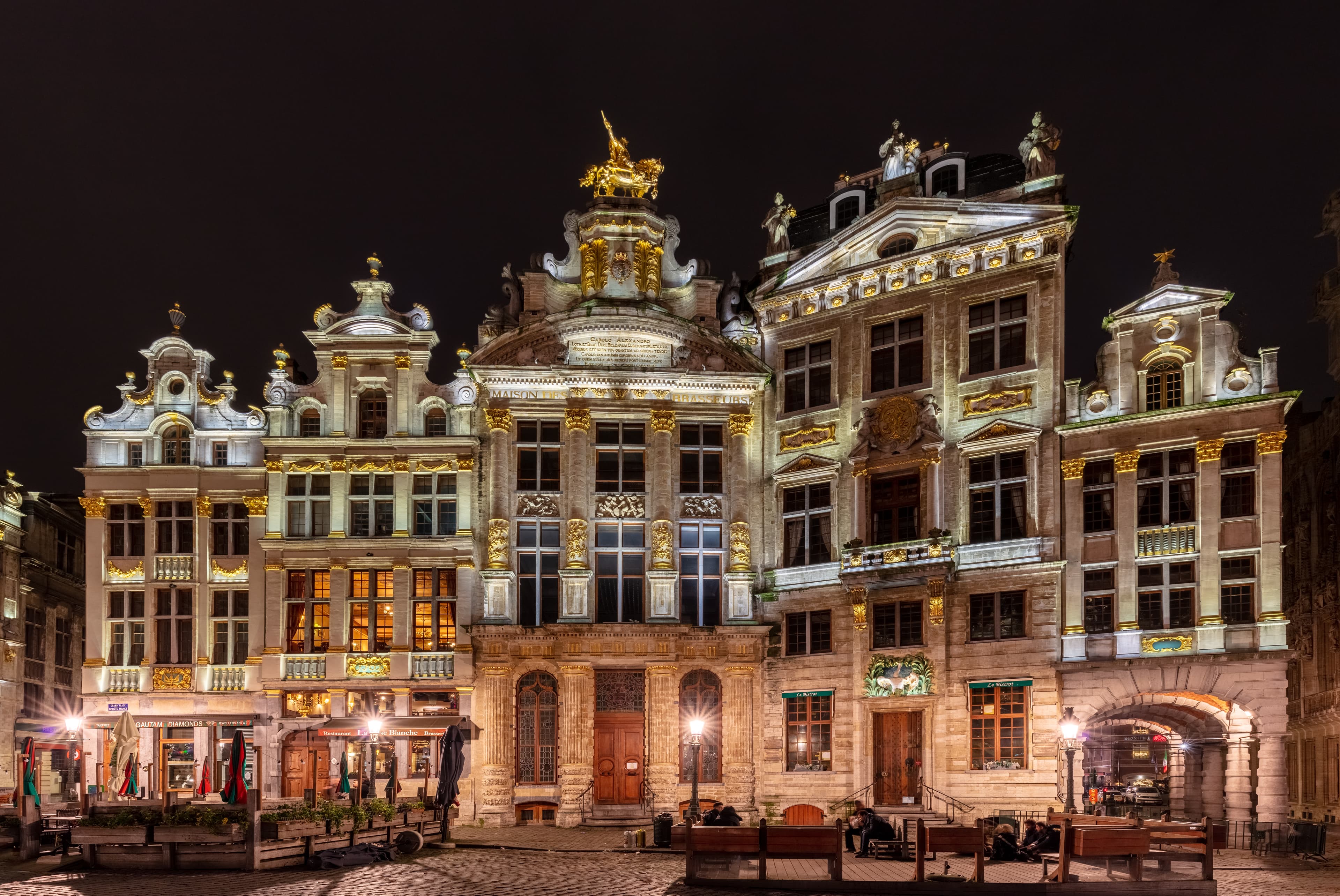
Brussels is one of the easiest European cities to underestimate. Many travelers pass through on the way to Paris, Amsterdam, Bruges, or Ghent, then miss the actual city: gilded squares, comic murals, Art Nouveau townhouses, neighborhood markets, serious museums, Congolese food, lambic beer, and some of the best snack culture in Europe.
This 3-day Brussels itinerary is built for a first visit in 2026. It gives you the famous sights without turning the trip into a checklist, then leaves room for the parts that make Brussels feel specific: Marolles, Saint-Gilles, Ixelles, Matonge, the Comic Strip Route, beer cafes, and a final day trip decision.
If you are coming from the UK, Brussels also fits naturally into our best short-haul destinations from the UK and 2-hour flights from the UK clusters. If you are building a Benelux trip, pair it with our 3 days in Amsterdam itinerary.
Quick Links - Skip Ahead:
👉 Day 1: Grand Place and the historic center
👉 Day 2: Art Nouveau, comics and neighborhoods
👉 Day 3: Markets, museums or a day trip
👉 How to plan from saved videos
👉 FAQ
Before You Start
Brussels is compact in the center, but the best version of the city is not only around Grand Place. Plan it as a set of connected neighborhoods rather than one old-town loop.
A few things to know before you go:
- Best trip length: Three full days is ideal for a first visit. Two days works if you skip the day trip or keep museums light.
- Arrival: Eurostar arrives at Brussels Midi/Zuid. Flights usually land at Brussels Airport, with trains into the city, or at Charleroi, which needs a longer bus transfer.
- Getting around: Walking works in the center, but trams, metro, buses, and short taxis help with Saint-Gilles, Ixelles, museums, and late evenings.
- Languages: French and Dutch are both official. English is widely understood in central visitor areas, but a few polite French or Dutch greetings help.
- 2026 angle: Brussels keeps getting more attention as a culture-first city, especially around contemporary art, design, food, and neighborhoods beyond the obvious tourist core. Treat current museum openings and exhibition schedules as something to verify close to your dates.
- Booking style: Book specific restaurants, brewery visits, and major museum time slots if they matter to you. Leave cafes, frites, chocolate shops, and mural hunting flexible.
Dream Trip tip: Brussels is a perfect city for map-first planning. Save TikTok and Instagram finds such as frites shops, comic murals, beer cafes, Art Nouveau buildings, and brunch spots into Dream Trip, then let the AI trip planner group them by area so you do not bounce between Grand Place, Ixelles, and Saint-Gilles all day.
Day 1: Grand Place and the Historic Center
Your first day covers Brussels' historic core, but the trick is pacing. Grand Place is spectacular, yet the center can feel touristy if you only chase the obvious stops. Use the landmarks as anchors, then step sideways into galleries, cafes, beer halls, and quieter streets.
9:30 AM: Start at Grand Place
Begin at Grand Place before the middle of the day. The square is the reason many people come to Brussels, and it deserves time. Walk the full perimeter slowly so you can see the guild houses, Town Hall, gold detailing, and changing views from each corner.
If your hotel is nearby, come back after dark as well. Grand Place is often more atmospheric at night when the facades are lit and the day-trip crowds have thinned.
10:30 AM: Galeries Royales Saint-Hubert
Walk to Galeries Royales Saint-Hubert, the elegant covered arcade north of Grand Place. It is touristy, yes, but still worth seeing for the architecture, chocolate windows, bookshops, and rainy-day usefulness.
Do not treat chocolate shopping as a single famous-shop errand. Brussels has everything from heritage chocolatiers to modern makers. Save two or three options and choose based on route, not hype.
11:30 AM: Cathedral or comic mural loop
Choose based on your interests:
- Cathedral of St. Michael and St. Gudula: Best if you like Gothic architecture and want a calm reset.
- Comic Strip Route: Best if you want something more Brussels-specific and visual. The murals are scattered, so pick a small cluster rather than trying to collect them all.
- Belgian Comic Strip Center: Best if the weather is poor or comics are a major reason you came.
The comic angle is especially useful if you are planning with saved posts. Mark murals in Dream Trip before you arrive, then use them as a walking route between food and museum stops.
1:00 PM: Frites, waffles or a proper lunch
Brussels food is not just waffles and chips, but day one is a good time to enjoy the classics. You can keep lunch casual with frites and a waffle, or sit down for mussels, stoemp, carbonnade flamande, or a seasonal Belgian plate.
The main mistake is eating only on the streets closest to Grand Place because you are hungry. Save backup options in advance. If a place looks aggressively tourist-focused, walk five minutes farther.
2:30 PM: Mont des Arts and the museum quarter
Walk up toward Mont des Arts for one of the easiest city views. From here you can choose a museum depending on your mood:
- Royal Museums of Fine Arts: Best for a classic art-heavy afternoon.
- Magritte Museum: Best if you want a focused Belgian art stop.
- Musical Instruments Museum: Best for architecture and something a little different.
- BELvue Museum: Best if you want context on Belgium itself.
Pick one. Brussels has enough museums to fill a week, but three days works better when you leave room for wandering.
5:30 PM: Sablon and Marolles
From the museum quarter, move toward Sablon for antiques, chocolate, cafes, and polished streets. Then continue down toward Marolles if you want something more lived-in.
Marolles has flea-market energy, vintage shops, casual bars, and a different rhythm from the Grand Place area. It is a good first reminder that Brussels is not one aesthetic.
8:00 PM: Belgian beer without overdoing it
For your first evening, choose a beer cafe with a proper list and staff who can guide you. If you are new to Belgian beer, start gently with a witbier, blonde, saison, or fruit lambic before jumping into stronger Trappist and abbey styles.
Plan dinner before beer if you know you are a lightweight. Belgian beer can be stronger than it tastes, and the point is to enjoy the city, not lose the next morning.
Day 2: Art Nouveau, Comics and Neighborhoods
Day 2 gets beyond the center. This is where Brussels becomes much more interesting: Art Nouveau architecture, Saint-Gilles, Ixelles, Matonge, markets, cafes, and a more local evening.
9:30 AM: Horta Museum or Art Nouveau walk
Start with Art Nouveau. Brussels is one of the best cities in the world for it, and Victor Horta is the essential name.
If you can get tickets, the Horta Museum in Saint-Gilles is the cleanest first-time choice. The house itself helps you understand the movement better than a paragraph ever could. If tickets do not fit your dates, build an exterior architecture walk around Saint-Gilles and Ixelles instead.
Do not rush this morning. Art Nouveau in Brussels is about details: staircases, ironwork, windows, doorways, curves, and the way the houses sit on ordinary streets.
12:00 PM: Lunch in Saint-Gilles
Stay in Saint-Gilles for lunch. It is one of the best neighborhoods for a second-day meal because it feels residential but lively, with cafes, bistros, bakeries, wine bars, and international food.
This is a good area to let your saved map guide you. Instead of chasing one "must eat" restaurant, save several realistic options and choose the one that fits your exact route and appetite.
2:00 PM: Ixelles ponds, Flagey and Matonge
Spend the afternoon around Ixelles. Walk near the ponds, continue toward Flagey, then decide whether to spend time in Matonge, the neighborhood with strong Congolese and African food culture.
Matonge is one of the best answers to the question "what does Brussels have that I will not find in every other European capital?" Go for lunch, snacks, groceries, music, or a casual dinner plan, but go with curiosity rather than treating it as a quick photo stop.
4:30 PM: European Quarter or Parc du Cinquantenaire
If you want institutions and big-city scale, move east toward the European Quarter and Parc du Cinquantenaire. The park is a useful late-afternoon break, and the surrounding museums give you options if the weather turns.
If EU buildings do not interest you, skip this and stay in Ixelles or Saint-Gilles. A good Brussels trip does not need to prove you saw every official building.
7:30 PM: Dinner outside the tourist center
Use your second night to eat away from Grand Place. Good areas include Saint-Gilles, Ixelles, Chatelain, Flagey, and Matonge. The right choice depends on your mood:
- Classic Belgian: Choose a brasserie or bistro.
- Food-focused but relaxed: Look around Saint-Gilles or Chatelain.
- Congolese or African food: Build the night around Matonge.
- Casual drinks and snacks: Flagey and Ixelles work well.
For groups, save options in Dream Trip and vote before the evening starts. Brussels has enough good choices that indecision becomes the real problem.

Save these places before you forget them
Share a supported TikTok or Instagram link to Dream Trip, check the places it finds, and keep them together on your trip map.
Day 3: Markets, Museums or a Day Trip
Your third day should match your trip style. Brussels is an excellent base, but it is also worth a slower final day if you liked the city more than expected.
Option A: Stay in Brussels
Choose this if you want the city to feel rounded instead of rushed.
Start at a market if your dates line up, then spend the late morning on a museum you skipped. Good final-day ideas include Autoworld, the Royal Museum of the Armed Forces and Military History, the House of European History, or another art museum near Mont des Arts.
In the afternoon, revisit the center for last purchases, or go deeper into a neighborhood you enjoyed. This is often the best choice if the weather is mixed, because Brussels has strong indoor options.
Option B: Day trip to Ghent
Ghent is my favorite day trip pairing for Brussels if you want canals, medieval architecture, good food, and a less polished feel than Bruges. Trains are frequent, and the journey is usually short enough that you can go after breakfast and return for a Brussels dinner.
Spend your time around the old center, Graslei and Korenlei, Gravensteen, St. Bavo's Cathedral, and a slow lunch. Do not overplan. Ghent works best when you wander.
Option C: Day trip to Bruges
Choose Bruges if you want the most fairy-tale version of Belgium. It is beautiful, compact, and very easy to understand as a first-timer.
The tradeoff is crowds. Go early, avoid building the whole day around the busiest streets, and leave yourself time to walk beyond the postcard core. If you only have three days and hate crowded old towns, Ghent may suit you better.
Option D: Day trip to Antwerp
Antwerp is the better choice if you want fashion, design, a bigger city feel, architecture, nightlife, and a very different mood from Brussels. It is less obvious than Bruges, but it pairs well if your Brussels trip is already heavy on food, art, and neighborhoods.
Final evening: Return to Grand Place or go local
For your last evening, choose one of two endings:
- Classic ending: Return to Grand Place after dark, then have a final Belgian beer nearby.
- Local ending: Go back to Saint-Gilles, Ixelles, or Matonge for dinner, then finish with a quieter bar.
Both are valid. The best Brussels trip balances the famous square with the neighborhoods that make the city feel alive.
Where to Stay in Brussels
Your hotel area matters because Brussels changes character quickly from one neighborhood to the next.
Grand Place and Central Brussels
Best for first-timers, short stays, Eurostar arrivals, and anyone who wants to walk to the main sights. This is the easiest base for a 3-day Brussels itinerary, especially if you arrive late or leave early.
The tradeoff is atmosphere. Some streets are wonderful, others are busy and tourist-heavy. Read recent reviews carefully for noise and location specifics.
Sablon
Best for a polished, central stay with antiques, chocolate shops, museums, and pretty streets nearby. Sablon is convenient without feeling quite as hectic as the blocks beside Grand Place.
Saint-Gilles
Best for restaurants, cafes, Art Nouveau, and a more local trip. It is a strong choice for repeat visitors, couples, and anyone who wants evenings away from the tourist center.
Ixelles
Best for food, bars, international energy, Flagey, Matonge access, and longer stays. It is less obvious for first-timers but often more rewarding if you like neighborhood travel.
Near Brussels Midi/Zuid
Best only if your train times make it useful. It can be practical for Eurostar, early departures, and onward rail trips, but choose the exact street carefully and do not assume station convenience equals charm.
What to Eat and Drink in Brussels
Brussels is a better food city than its stereotypes suggest. The classics are fun, but the real win is mixing them with neighborhood eating.
Classic Brussels food list
- Frites: Treat them as a main snack, not a side.
- Waffles: Brussels waffles are lighter and rectangular; Liege waffles are denser and sweeter.
- Mussels: Best when they are in season and the restaurant feels serious about them.
- Carbonnade flamande: Beef stew cooked with beer, excellent in cooler weather.
- Stoemp: Mashed potato with vegetables, usually served with sausage or meat.
- Chocolate: Compare a few makers rather than buying the first box you see.
- Speculoos: Easy gift, easy train snack, easy mistake to eat too much of.
Beer without the headache
Belgian beer is a major part of the trip, but treat it with respect. Many styles are stronger than standard lager. Alternate with water, eat properly, and ask staff for recommendations if you do not know the difference between lambic, saison, dubbel, tripel, gueuze, and Trappist styles.
If you want a specific brewery visit, check current opening days and reservation rules before you build the itinerary around it.
Brussels Planning Budget
Brussels can be cheaper than Paris or Amsterdam, but it is not automatically cheap. Your spend depends mostly on hotel area, museum choices, restaurant ambition, and whether you add day trips.
Use this structure when estimating your trip:
| Cost area | Lower-spend approach | Higher-spend approach |
|---|---|---|
| Accommodation | Simple hotel or apartment outside the tourist core | Boutique or central hotel near Grand Place or Sablon |
| Food | Bakeries, frites, casual lunches, one relaxed dinner | Brasseries, tasting menus, cocktail bars, chocolate shopping |
| Transport | Walk plus occasional metro or tram | Taxis, airport transfers, multiple day trips |
| Activities | Free walks, markets, exterior architecture, one museum | Multiple museums, brewery visits, tours, paid day-trip extras |
If you are planning from the UK, compare total trip cost rather than flight price alone. A cheap flight to Charleroi with a late arrival can become less attractive once transfer time, hotel check-in, and the next morning are included. Our trip cost calculator is useful for comparing Brussels against Amsterdam, Paris, Dublin, or Copenhagen with all the small costs included.
How to Plan Brussels From Saved Videos
Brussels is exactly the kind of city where saved videos can either help or make the trip chaotic. A viral waffle shop, a comic mural, a beer cafe, an Art Nouveau facade, and a Ghent day trip may all look close on social media. On a map, they are not always close enough for the same half-day.
Here is the clean workflow:
- Save every TikTok, Instagram Reel, restaurant, mural, and museum idea into one Dream Trip plan.
- Add practical anchors first: hotel, arrival station, Grand Place, one museum, one dinner area.
- Use the AI planner to group saves by neighborhood: center, Sablon, Marolles, Saint-Gilles, Ixelles, Matonge, European Quarter.
- Keep only one or two "must eat" places per day. Everything else should be optional.
- Turn the final plan into a Google Maps-friendly route so your day makes geographic sense.
For a step-by-step workflow, read our guide on how to plan a trip from TikTok videos or try the AI itinerary generator.
FAQ
Is 3 days enough for Brussels?
Yes. Three days is enough for Grand Place, the historic center, museums, Art Nouveau, several neighborhoods, Belgian food, and either a day trip or a slower final day. If you want Brussels plus Ghent and Bruges, give yourself four or five days.
Is Brussels worth visiting or should I go straight to Bruges?
Brussels is worth visiting if you like food, museums, architecture, comics, beer, and neighborhoods with real city texture. Bruges is prettier at first glance, but Brussels is more varied and better for a full weekend.
What is the best area to stay in Brussels for a first visit?
Grand Place, Sablon, and the central area are easiest for a first visit. Choose Saint-Gilles or Ixelles if you care more about restaurants, cafes, and a local evening feel than being beside the main square.
Should I visit Ghent or Bruges from Brussels?
Choose Ghent if you want a lively, less polished city with canals, food, and medieval architecture. Choose Bruges if you want the classic fairy-tale Belgian old town. Both are easy by train, but Ghent usually feels less crowded.
Is Brussels good for a weekend from the UK?
Yes. Brussels is one of the simplest European weekends from the UK because flight times are short and Eurostar is an option from London. It works especially well when you want food, museums, beer, and architecture without a long transfer.
Do I need a car in Brussels?
No. A car is more trouble than help for this itinerary. Use trains, trams, metro, buses, walking, and occasional taxis instead.
What should I book ahead in Brussels?
Book hotels, specific restaurants, popular museum time slots, brewery visits, and any high-priority day-trip activities. Leave casual snacks, murals, markets, and neighborhood wandering flexible.
Final Thoughts
The best Brussels itinerary does not treat the city as a transfer point. Give it three days and it becomes much more interesting: Grand Place at night, Art Nouveau in Saint-Gilles, comics on side streets, frites when you are hungry, lambic when you are ready, and neighborhoods that feel nothing like the postcard version of Belgium.
If you are choosing between several easy European weekends, start with our 2-hour flights from the UK guide, compare costs with the trip cost calculator, then build the route in Dream Trip so your saved places turn into an actual plan.


