

Planning your dream road trip from Chicago to Las Vegas? It’s a classic American adventure, trading the iconic skyline of the Windy City for the neon glow of the Mojave Desert. You're looking at a journey of roughly 1,750 miles and about 26 hours of pure driving time.
But let's be real, a dream trip isn't something you just wing. This guide is your co-pilot, packed with actionable tips on routes, costs, and the best times to go. We'll break down everything you need to know to transform this long drive into an unforgettable experience.
Your Chicago To Las Vegas Drive Starts Here
This drive is more than just a long haul; it's a front-row seat to the country’s dramatic and ever-changing landscapes. You’ll watch the flat plains of the Midwest give way to the staggering peaks of the Rocky Mountains before descending into the vast, beautiful emptiness of the Southwest. For your dream trip to come to life, smart planning is just as important as the perfect playlist.
First, let's get the core logistics out of the way. The most direct route—blasting west on I-80 before cutting south on I-15—covers about 1,750 miles. That’s a solid 25-28 hours behind the wheel. Budget around $250 to $400 for gasoline, depending on your car's fuel efficiency and current pump prices.
While the interstate is efficient, many travelers can't resist the pull of historic Route 66, which also kicks off in Chicago. There's been a 15% spike in interest for trips along the "Mother Road" lately, largely thanks to its iconic status on social media. You can check out more Chicago road trip trends from RoadGenius.com.
Chicago To Las Vegas Drive At A Glance
To help you plan your adventure, here's a quick comparison of the two main approaches. Think of this as choosing the entire personality of your trip, not just a line on a map.
| Metric | Direct Route (I-80/I-15) | Scenic Route (Route 66 portions) |
|---|---|---|
| Total Distance | Approx. 1,750 miles | Approx. 2,000+ miles |
| Driving Time | 26-28 hours | 35-40+ hours |
| Recommended Trip Length | 3-4 days | 5-7+ days |
| Estimated Fuel Cost | $250 - $400 | $300 - $475 |
| Best For | Speed & Efficiency | Nostalgia & Sightseeing |
As you can see, adding scenic detours adds significant time and cost, but that's often the whole point of a road trip. The best choice comes down to your top priority: maximizing time in Vegas, or savoring the journey itself.
Choosing The Perfect Cross Country Route
The route you take from Chicago to Las Vegas is the single biggest decision you'll make. It literally shapes your entire adventure. It's the difference between a high-speed dash across the plains and a winding journey through the heart of Americana.
So, the first question to ask yourself is: what kind of trip do I really want? Are you all about getting to the Vegas lights as fast as possible, or is the drive itself the main event?
The Speedy I-80 Route
If your goal is pure efficiency, I-80 is your best friend. This is the most direct shot, taking you straight across Illinois, Iowa, and Nebraska before hooking up with I-76 through Colorado and dropping onto I-15 south in Utah. It's a well-maintained interstate built for covering ground quickly.
While it's not famous for dramatic scenery, there’s a unique, meditative beauty to the vast, open landscapes of the Great Plains. You'll find plenty of reliable gas stations and motels, making it a low-stress, straightforward option.
- Best For: Travelers on a tight schedule or anyone who wants to maximize their time in Las Vegas.
- Drawbacks: The scenery can feel monotonous after a few hours. You'll find fewer of those iconic "wow" moments.
- Local Insight: For a great stop, check out Omaha’s historic Old Market district. Or, for a unique photo op, see the quirky Archway monument in Kearney, Nebraska that spans right over the interstate.
The Scenic I-70 Route Through The Rockies
For travelers who crave breathtaking mountain vistas, the I-70 route is an absolute showstopper. After heading south from Chicago through Illinois and Missouri (don't miss the St. Louis Arch!), you’ll cut across Kansas before hitting the good stuff in Colorado.
Traveler Tip: The drive through the Colorado Rockies on I-70 is one of the most stunning stretches of interstate in the entire country. You'll climb through the sheer cliffs of Glenwood Canyon and crest Vail Pass at over 10,600 feet. The views make every extra minute behind the wheel completely worth it.
This route requires more attention to weather, especially from fall through spring, as high mountain passes can get snow unexpectedly. The payoff, though, is immense. You'll find endless opportunities for hiking, photography, and exploring charming mountain towns like Vail and Glenwood Springs before descending into Utah's unique desert landscapes.
The Nostalgic Route 66 Journey
If your dream road trip involves classic diners, quirky roadside giants, and a deep dive into American history, then weaving in portions of historic Route 66 is a must. The “Mother Road” also begins in Chicago, tracing a path south and west through Illinois, Missouri, Oklahoma, and beyond.
Be aware: this isn’t a single highway anymore. It’s a patchwork of local roads and preserved segments. You’ll need to be more flexible with your navigation and your schedule, but the reward is an unforgettable trip back to a bygone era.
See the Blue Whale of Catoosa or stand on a corner in Winslow, Arizona—this drive is all about savoring every detour, not racing to the finish line.
Crafting Your Day-By-Day Road Trip Itinerary
The real magic of a Chicago to Vegas drive isn’t just about the miles you cover; it’s about the memories you make at every stop. A good itinerary is your roadmap to adventure, transforming a long haul into the trip of a lifetime. It's the key to avoiding burnout and making sure you actually experience the country you're driving through.
We've laid out three different travel paces to match your style. Whether you’re racing to the Strip or savoring every scenic overlook, there's a plan here for you.
The 3-Day Express Dash
This itinerary is for the road warriors. The goal is simple: get to Vegas fast, but still catch a few highlights. Be prepared for long days, averaging about 8-9 hours of driving time.
- Day 1: Chicago to Omaha, Nebraska (Approx. 470 miles / 7 hours): Your first day is a straight shot across Illinois and Iowa. Once in Omaha, decompress in the historic Old Market, a cool area with cobblestone streets and surprisingly great restaurants.
- Day 2: Omaha to Denver, Colorado (Approx. 540 miles / 8 hours): Get ready to cross the vast plains of Nebraska. Your reward is Denver, a buzzing city at the base of the Rocky Mountains. The local food and craft beer scene is the perfect way to cap off a long day.
- Day 3: Denver to Las Vegas, Nevada (Approx. 750 miles / 11 hours): This is the marathon leg. You’ll wind through the jaw-dropping landscapes of Utah's deserts and canyons before making the final push into Vegas. It’s a long haul, but the dramatic scenery helps the time fly by.
This timeline gives you a visual on how different routes stack up against each other, balancing speed with scenery and those can't-miss stops.
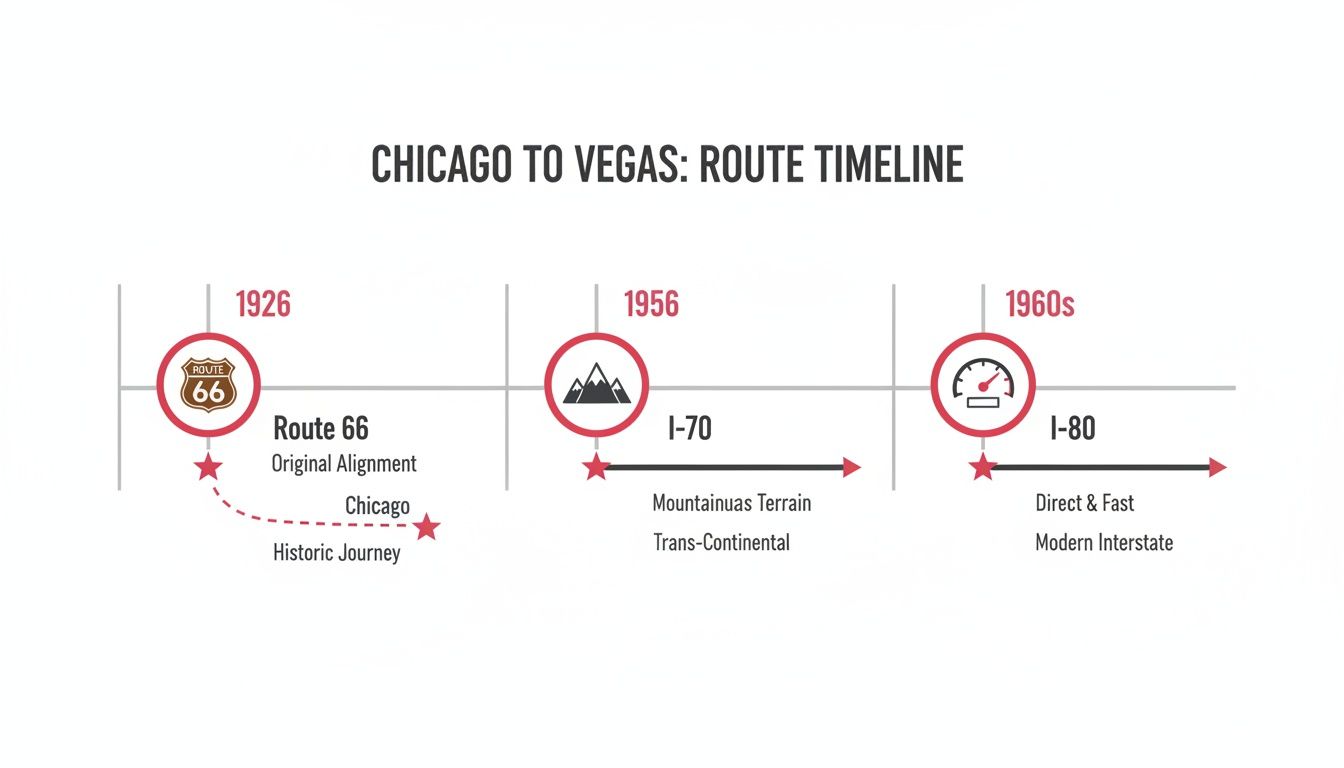
As you can see, I-80 is the fastest path, but jumping onto I-70 or parts of Route 66 adds time for some truly invaluable scenic rewards.
The 5-Day Balanced Adventure
A five-day trip hits that sweet spot between making good time and actually having enough daylight to explore. Driving days are far more manageable, usually around 6-7 hours, which leaves your afternoons open for detours and spontaneous finds.
Local Insight: This is the perfect pace for most travelers. You get to see incredible places like the Rockies and Utah's national parks without feeling rushed. The drive becomes a core part of the vacation itself.
Here’s a popular itinerary to consider:
- Day 1: Chicago to St. Louis, MO (A perfect intro to Route 66, plus the Gateway Arch).
- Day 2: St. Louis to Denver, CO (A longer day, but it sets you up perfectly for the mountains).
- Day 3: Explore Rocky Mountain National Park (Dedicate a full day to hiking, wildlife, and epic views).
- Day 4: Denver to St. George, UT (This puts you on the doorstep of Zion National Park).
- Day 5: St. George to Las Vegas, NV (With time for a morning stop in Zion before hitting Vegas).
To build a plan tailored to your specific interests, use a tool like the AI itinerary generator from Dream Trip. It helps you collect ideas and then optimizes your daily schedule, saving you planning time.
The 7-Day Leisurely Exploration
For the ultimate road trip experience, give yourself a full week. This provides ample time to dive deep into the culture and landscapes along your route. Driving is cut down to a comfortable 4-5 hours per day, which means more time for sightseeing, hiking, and just soaking it all in.
This pace is ideal for weaving in historic Route 66 stops or visiting multiple national parks. You could spend a full day exploring Abraham Lincoln’s history in Springfield, Illinois, or dedicate an entire day to the otherworldly rock formations in Utah's Zion or Bryce Canyon National Park. With a week-long journey, you'll roll into Vegas feeling refreshed and inspired, not completely wiped out.
Budgeting For Fuel, Food, And Fun
Figuring out the cost of your Chicago to Las Vegas drive is just as critical as mapping your route. A solid budget means less stress on the road and more freedom to enjoy the journey. Your biggest expenses will be fuel, lodging, and food, but with a few practical tips, you can keep them under control.
For fuel alone, budget anywhere from $250 to over $400, depending on your car's MPG and current gas prices. A simple way to lower this cost is to use an app like GasBuddy to find cheaper pumps along your route. Saving even 20-30 cents a gallon really adds up over a 1,750-mile trip.
When it comes to lodging and food, your travel style is the biggest factor. Let's break down what a typical day might cost to help you plan.
Estimated Daily Budget Per Person
Here’s a snapshot of what you might spend per day, helping you match your budget to the kind of trip you want to have.
| Expense Category | Budget Traveler | Mid-Range Traveler | Luxury Traveler |
|---|---|---|---|
| Lodging | $40 - $70 (Hostels, budget motels) | $100 - $180 (Comfortable hotel chains) | $250+ (Boutique hotels, resorts) |
| Food & Drink | $30 - $50 (Groceries, fast food) | $60 - $100 (Diners, casual restaurants) | $150+ (Fine dining, craft cocktails) |
| Activities | $0 - $20 (Free parks, small museums) | $25 - $50 (Guided tours, park entry) | $75+ (Special events, unique experiences) |
| Daily Total | $70 - $140 | $185 - $330 | $475+ |
As you can see, the numbers can swing wildly. A budget traveler can pack a cooler, stay in classic roadside motels, and focus on free activities like hiking or wandering through historic downtowns. This approach not only saves money but often leads to more authentic discoveries.
Money-Saving Tip: A packed cooler is your best friend on a long road trip. Stopping for snacks and drinks at every gas station can easily add $30-$40 to your daily budget. Packing your own saves money and time, getting you back on the road faster.
To get a number that’s a bit more tailored to your specific plans, it helps to use an interactive tool. Our road trip cost calculator lets you plug in your exact vehicle, route, and travel style to spit out a much more detailed and personalized budget.
Savvy Spending On The Road
Beyond the big three expenses, a few simple habits can make your fun money go a lot further.
National and state parks offer incredible bang for your buck. A single vehicle pass often gets you a full day of world-class scenery and hiking for a small fee. For instance, the entry fee for Petrified Forest National Park—which Historic Route 66 runs right through—is a tiny price to pay for such a surreal landscape.
Also, look for overnight stops in cities with lots of free attractions. St. Louis is a perfect example. You can spend hours exploring the Gateway Arch National Park grounds and the historic riverfront without opening your wallet. By mixing in these free experiences with your must-do paid attractions, you create a balanced itinerary that’s both exciting and easy on your bank account.
Preparing Your Car And Packing Essentials
A road trip’s success is decided before you even pull out of the driveway. The long, empty stretches between Chicago and Vegas are no place for surprises, so a little prep work for your car and your suitcase goes a long way. Getting this sorted now saves a world of stress later.
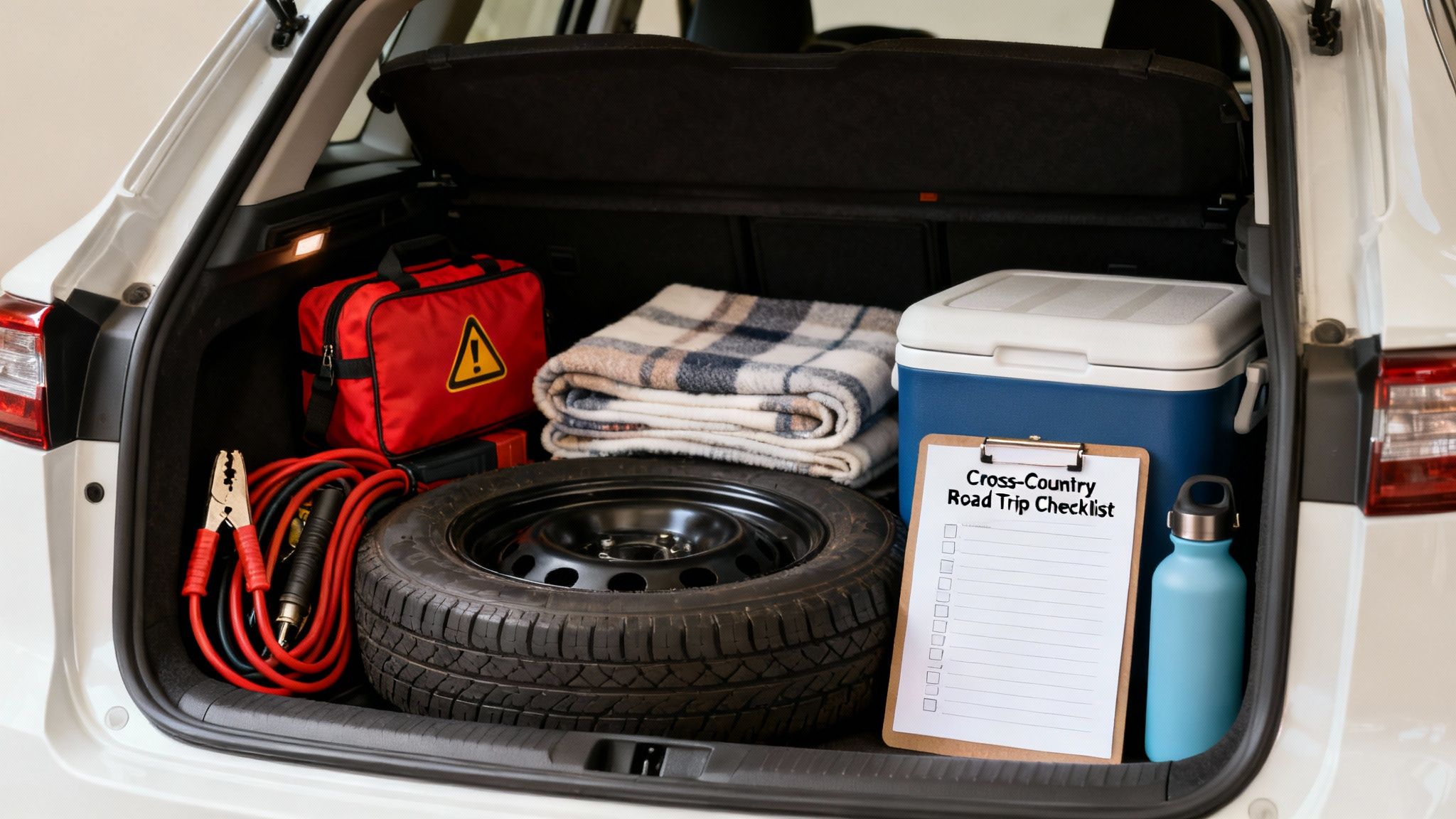
Before you start worrying about snacks, give your car some attention. If it's been a while since its last service, a pre-trip inspection from a trusted mechanic is non-negotiable. They can spot a potential issue that could turn into a trip-ruining disaster in the middle of nowhere.
Your Pre-Trip Vehicle Checklist
Don't just assume your car is ready for a cross-country haul. Running through this list isn't just about avoiding a breakdown; it's about safety.
- Tires: Check the pressure on all four tires—and the spare. Look at the tread for uneven wear. Proper inflation is key for maximizing gas mileage over the 1,750+ miles you’re about to cover.
- Fluids: Top off or change the oil, and make sure your coolant, brake fluid, and windshield washer fluid are full. This is especially critical for the extreme temperatures of the high desert.
- Brakes: Do they squeak or feel soft? Get them checked. You'll rely on them heavily during steep descents through the Rockies and Utah’s mountain passes.
- Lights and Wipers: Do a quick walk-around to test your headlights, taillights, and turn signals. Replace worn-out wiper blades—a sudden Midwest thunderstorm or a dusty desert squall can kill your visibility in seconds.
Practical Tip: A well-maintained vehicle is your number one asset. A simple $100 pre-trip inspection can save you from a $1,000+ repair bill and a ruined vacation. It’s the best travel insurance you can buy.
Smart Packing For The Open Road
Once the car is good to go, it's time to pack. The key is versatility without overstuffing your trunk. You’re going from humid Midwest air to high-altitude mountain chill and then into dry desert heat.
For a deep dive into everything you might need, check out our ultimate packing list for any road trip. But here’s a quick-start guide for the Chicago to Vegas journey:
Clothing and Comfort:
- Layers are essential. Pack light jackets, sweaters, and breathable shirts that you can add or remove as the elevation and temperature change.
- Bring a comfy pair of driving shoes and another pair for walking around cities or hitting a trail.
- Sunglasses, sunscreen, and a large reusable water bottle are non-negotiable. That desert air will dehydrate you faster than you think.
Essential Documents and Safety:
- Keep your license, registration, and proof of insurance somewhere easily accessible.
- Pack a roadside emergency kit. It should have jumper cables, a first-aid kit, a flashlight, and basic tools.
- Download your maps for offline use before you leave. Cell service gets incredibly spotty in remote parts of Utah and Nevada.
Getting this prep work done means you can focus on the incredible views and experiences ahead, making your drive from Chicago to Las Vegas smooth from start to finish.
Answering Your Final Road Trip Questions
Even with a solid plan, a few questions always pop up right before you hit the road. Let’s tackle some of the most common ones for the Chicago to Las Vegas drive so you can head out with total confidence.
When Is The Best Time Of Year To Drive?
The best times to make this drive are during the shoulder seasons: April-May and September-October. This is when you'll find pleasant weather across the plains, avoid summer humidity in the Midwest, and dodge both the Rockies' snowstorms and the desert's scorching heat.
Summer travel (June-August) is possible, but be prepared for temperatures to climb well over 100°F once you hit Utah and Nevada. Winter travel (November-March) offers stunning snowy landscapes but comes with the significant risk of road closures. Major mountain passes on I-70 and I-80 can shut down with little warning, potentially adding days to your trip.
What About Cell Service In Remote Areas?
Once you push west of the Rockies, particularly through remote parts of Utah and Nevada, your cell signal will disappear. It's not a matter of "if" but "when." Expect to go for an hour or more at a time without a single bar.
Actionable Tip: Before leaving a major city like Denver or Salt Lake City, download your entire route for offline use in your mapping app. This ensures you can navigate perfectly even when you're completely off-grid.
How Should I Handle Long Stretches Without Gas Stations?
This route has some seriously empty sections, especially if you venture off the main interstates. Services can be few and far between.
A few practical rules will keep you out of trouble:
- The Quarter-Tank Rule: Never let your gas tank drop below a quarter full. When you see a gas station, just top it off.
- Treat Towns Like Oases: When you roll into a town with services, use it as a chance to refuel, restock on snacks, and use a real restroom, even if you think you can make it to the next one.
- Always Carry Extra Water: This is especially critical for the desert portion of the drive. Keeping a case of water in the trunk is a simple, cheap insurance policy against a breakdown in the middle of nowhere.
Thinking ahead about the realities of a long-haul drive is what separates a stressful trip from an amazing one. Get these basics locked down, and you’ll be free to enjoy the incredible views and the pure freedom of the open road.
Keeping track of all your stops, ideas, and routes is the hardest part of planning. With Dream Trip, you can save spots you find online, build a visual itinerary, and let AI figure out the best route. Stop juggling tabs and start planning at https://www.thedreamtrip.app.


