
Planning your dream trip from Chicago to Washington D.C.? The drive is roughly 700 miles of pure American heartland, clocking in at a solid 11 to 13 hours on the road. This journey can be a direct dash across the Midwest or a scenic adventure through historic towns and rolling hills—it’s your trip, your rules.
Your Chicago to DC Road Trip at a Glance
So, you’re ready to trade the Windy City's skyline for the monuments of the nation's capital. Fantastic choice. This guide is packed with actionable tips to help you plan the perfect drive. We'll cover everything from routes and costs to must-see stops, giving you the practical info you need to hit the road with confidence.
The drive will take you across a huge swath of the country, cutting through a few different states. While the straight-line distance is manageable, the experience can vary wildly. Let's start with the basics to set the stage for your adventure.
Chicago to DC Drive Quick Comparison
To help you get started, here's a simple breakdown of what to expect. This table gives you the key numbers at a glance, helping you match the drive to your travel style and budget.
| Metric | Details | Notes for Planners |
|---|---|---|
| Total Distance | Approximately 700 miles | A substantial but totally doable drive. Perfect for a two-day trip. |
| Driving Time | 11-13 hours (wheels turning) | This doesn't include stops for gas, food, or sightseeing. Plan for 14-15 hours total. |
| Major Cities | Cleveland, Pittsburgh | These cities are great natural halfway points for an overnight stay. |
| Fuel/EV Cost | $70-$120 (Gas); $30-$60 (EV) | Highly variable based on your vehicle's efficiency and current prices. |
| Tolls | $40-$60 (on the fastest routes) | The quicker you go, the more you'll pay in tolls, especially on the OH and PA Turnpikes. |
Getting these numbers down early helps you make smarter decisions. If you're on a tight budget, the slightly longer, toll-free route is a great option. If time is of the essence, paying for the turnpikes might be a no-brainer.
Planning Your Budget and Itinerary
Okay, let's talk planning. A great road trip is more than just a route on a map; it's about all the cool stuff you discover along the way. But trying to keep track of every screenshot, TikTok recommendation, and random note can get messy fast.
This is where a good planning tool comes in handy. Instead of juggling a dozen different apps, you can save everything in one spot and see it all on a map. It turns that scattered inspiration into a real, actionable plan for your dream trip.
For example, using an app like Dream Trip lets you save spots directly from social media and then builds a visual itinerary for you. The screenshot below shows how its trip cost calculator can give you a solid estimate for your expenses—a lifesaver for budgeting.
Seeing a visual breakdown of your potential costs for gas, hotels, and food helps you know what you’re getting into financially. It’s about making sure your adventure stays fun from start to finish, without any surprise budget headaches.
Choosing Your Perfect Route From Chicago to DC
The drive from Chicago to Washington, DC isn't just a single line on a map; it's a choice between several completely different road trips. The right path for you boils down to a simple question: what’s your priority? Are you trying to get there as fast as possible, soak in some Appalachian scenery, or save money on tolls?
Each option offers its own flavor. The fastest route is all business, built on major toll roads. The scenic route dips south into rolling hills and charming cities. And the toll-free path is for those who believe a little patience is a small price to pay for big savings. Let's break down what each drive actually feels like.
The Fastest Route: The Pennsylvania Turnpike
If your only goal is getting from Point A to Point B with maximum efficiency, your GPS will funnel you onto the I-80/I-90 corridor, which eventually feeds into the legendary Pennsylvania Turnpike (I-76). This is the straightest shot, typically clocking in around 11-12 hours of pure driving time.
Think of this route as a well-oiled machine. Service plazas with gas, food, and restrooms are perfectly spaced, meaning you never have to detour off the highway. But that speed and convenience don't come free. Be ready for some hefty toll costs, especially as you cross Ohio and Pennsylvania—they can easily add $40 to $60 to your trip total.
Local Insight: The Pennsylvania Turnpike is infamous for its aggressive truck traffic and constantly changing speed limits, especially through the mountainous sections. Stay sharp, and know that summer construction can bring things to a grinding halt without warning.
The Scenic Route: Southern Charm via I-70
For those who believe the journey is the destination, taking a more southerly route is a fantastic change of pace. This option sends you down through Indianapolis and Columbus before you catch I-70 East. It might add an hour or two to the drive, but you'll trade monotonous turnpikes for the beautiful rolling hills of southern Ohio and western Maryland.
This is where you find the really interesting stopovers. You could spend an afternoon exploring Columbus or even take a detour to the jaw-droppingly beautiful Hocking Hills State Park in Ohio. As you head east, the views just get better and better, offering gorgeous mountain vistas as you climb into the Appalachians.
This decision between speed and scenery is the first major fork in the road for your trip planning.
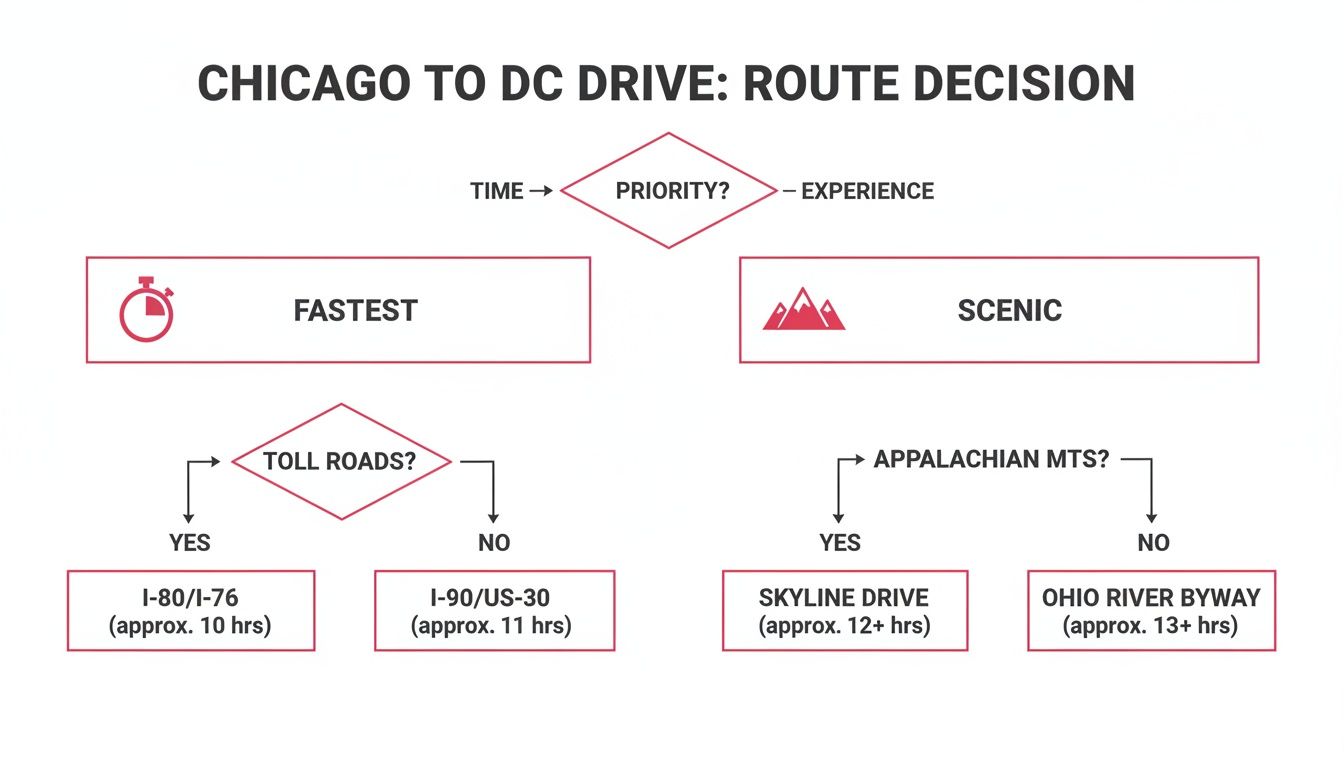
As the chart shows, this choice sets the entire tone for your adventure, steering you toward either hyper-efficient highways or more picturesque backroads.
The Budget Route: The Toll-Free Alternative
If keeping costs down is your top priority, dodging the tolls is totally doable—it just requires a little creative navigation and some extra time behind the wheel. By piecing together a route using U.S. Highways and non-tolled interstates, you can completely bypass the expensive turnpikes.
A popular toll-free strategy involves taking US-30 across Ohio and Pennsylvania. This road meanders through smaller towns and rural farmland, giving you a much more authentic glimpse of the heartland. Sure, the speed limits are lower and you'll hit some stoplights, but the money you save is significant. Just be prepared for this path to add 2-3 hours to your total drive; it’s a much better fit for a relaxed two-day trip than a marathon one-day sprint.
Route Comparison: Chicago to Washington DC
To help you visualize the trade-offs, here’s a quick side-by-side comparison of your main options.
| Route Option | Primary Highways | Pros | Cons |
|---|---|---|---|
| Fastest Route | I-90 E, I-80 E, I-76 E | Most direct path; plenty of service plazas; best for tight schedules. | High toll costs; heavy truck traffic; scenery can be monotonous. |
| Scenic Route | I-65 S, I-70 E, I-270 S | Beautiful Appalachian scenery; more interesting cities to visit. | Longer drive time; requires more planning for food and gas stops. |
| Toll-Free Route | US-30 E, I-70 E | Zero toll expenses; passes through charming, authentic small towns. | Significantly longer; lower speed limits; fewer 24/7 services. |
Ultimately, picking your route is the first big decision you'll make. Whether you go for the turnpike's pure speed, the mountain views of the southern route, or the budget-friendly backroads, your adventure truly begins the moment you decide which way you’re headed.
Budgeting Your Road Trip Costs and Expenses
A dream road trip runs on freedom and spontaneity, but a little financial planning means the only surprises you’ll find are the good kind. Figuring out your costs before you hit the road transforms that fuzzy idea of driving from Chicago to Washington DC into a real, stress-free plan. Let's break down what you can actually expect to spend, from the gas pump to your hotel pillow.
Think of your budget in four main buckets: fuel, tolls, lodging, and food/activities. Each one has wiggle room, but with a little foresight, you can keep costs in check without killing the fun. This is your financial roadmap to a smooth ride.
Calculating Your Fuel and Toll Expenses
Your car's gas mileage is the biggest wildcard in your travel budget. A sedan getting a respectable 30 MPG will probably run you between $70 and $90 for the 700-mile journey, depending on what gas prices are doing that week. If you’re in an SUV that gets closer to 20 MPG, expect that number to climb to $110-$130. EV drivers have a serious advantage here, with charging costs usually falling in the $30 to $60 range.
Then you’ve got the tolls. If you’re sticking to the fastest route along the Ohio and Pennsylvania Turnpikes, get ready. These aren't just a few quarters here and there; they add up fast.
- Ohio Turnpike (I-80/I-90): Plan for around $20-$25.
- Pennsylvania Turnpike (I-76): This is the big one. It can easily cost $30-$40 or even more to cross the state.
A savvy traveler's tip: Get an E-ZPass or a compatible transponder. It's not just about blowing past the cash lanes; you often get a real discount on the tolls, sometimes saving you up to 25%.
Estimating Lodging and Food Costs
After fuel, your biggest expense is where you lay your head. If you’re splitting the drive into two days, a decent mid-range hotel in a city like Cleveland or Pittsburgh will probably set you back $120 to $180 a night. For a more budget-friendly approach, look for motels in smaller towns just off the highway, where you can often find rooms for under $100.
Food costs are entirely up to you. The classic road trip move of packing your own snacks and drinks is a tried-and-true money-saver. A good rule of thumb is to budget $50-$75 per person, per day, which should cover a mix of quick lunches and a relaxed sit-down dinner.
When you crunch the numbers, driving from Chicago to DC is an incredibly economical way to travel, especially if you’re with a partner or a group. The total cost for the drive itself often lands between $126 to $182 for fuel and other must-haves. Compare that to flying, where a single ticket can range from $95 to $340 depending on when you book.
Smart Tools for a Smarter Budget
Trying to keep all these numbers straight can feel like a chore, but modern tools make it dead simple. Instead of scribbling on the back of a napkin, you can get a clear picture of your total trip cost in just a few minutes.
For a really detailed and personalized breakdown, a trip cost calculator is the way to go. You can plug in your car’s exact MPG, your hotel preferences, and your dining style to get a budget that’s tailored to your trip. Planning ahead like this means your focus stays where it should be: on the road ahead and the adventure waiting for you in DC.
Unforgettable Stops and Itineraries Along the Way
Let’s be honest, the real magic of a road trip isn't just about the destination. It's about the unexpected discoveries, the quirky roadside diners, and the stories you collect along the way. The drive from Chicago to Washington DC is loaded with these moments—a cross-section of America packed with vibrant cities, stunning nature, and pivotal history.
To help you get the most out of your drive, here are two different itineraries. Think of them as blueprints you can follow to a T, or mix and match to build your perfect trip. One is for the weekend warrior trying to pack it all in, and the other is for those who want to take their time and really soak it all in.
This journey is a real mix of experiences—you'll find yourself immersed in rock and roll history one day and standing on a quiet, historic battlefield the next.
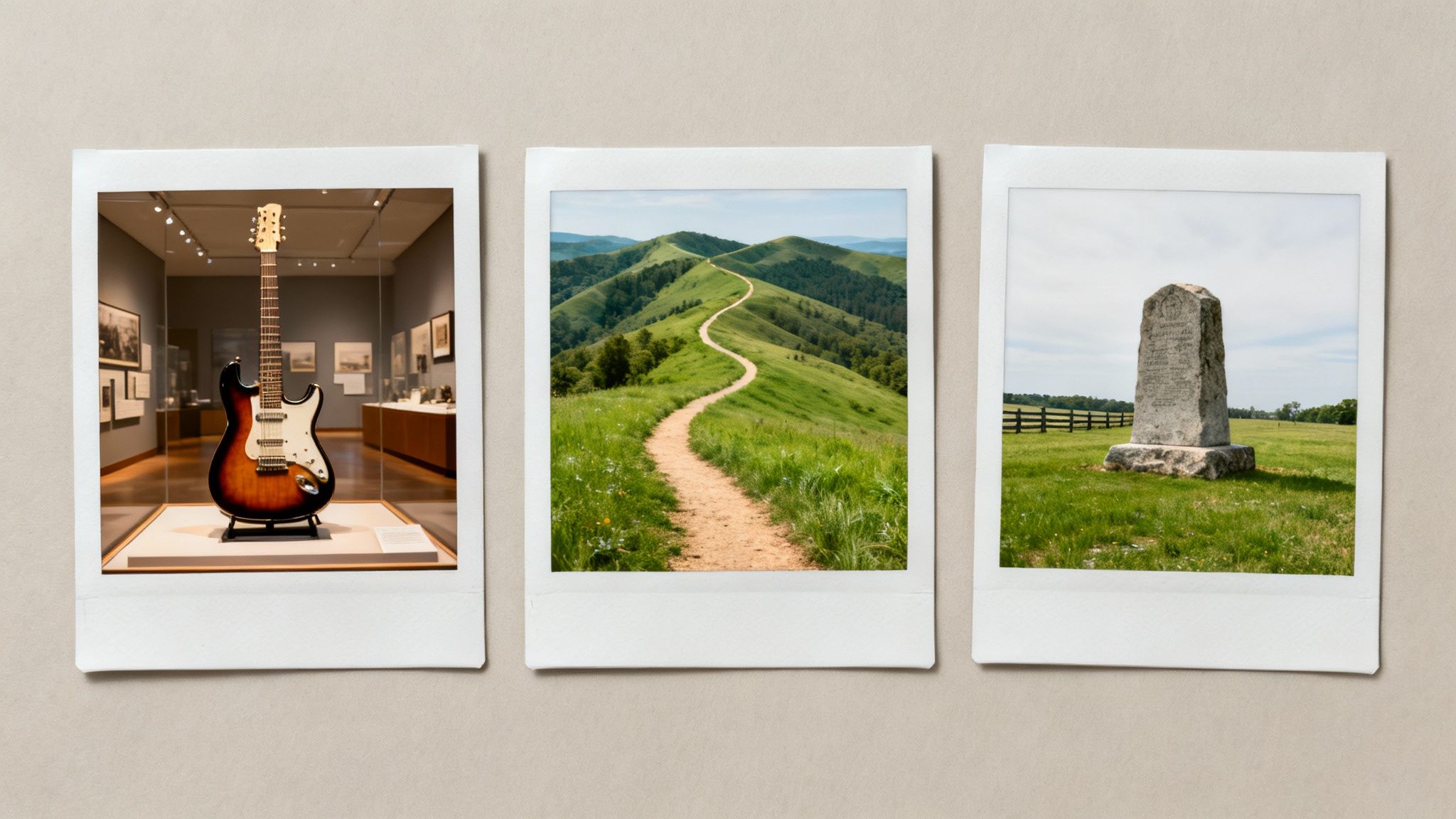
Each of these moments represents a different chapter of the drive, from the buzz of a major city to the quiet reflection you'll find in the mountains and historical parks.
The Quick 2-Day Dash
This plan is all about maximum impact in minimum time. It's designed for a weekend getaway and sticks to the fastest route, using Pittsburgh as a perfectly placed and surprisingly cool overnight stop.
Day 1: Chicago to Pittsburgh (Approx. 7-8 hours driving)
Day one is about covering some serious ground but rewarding yourself with a major cultural stop. Leaving Chicago, your first big target is Cleveland, Ohio.
- Morning: Get on the road early to escape the infamous Chicago traffic. Your first stop is the Rock & Roll Hall of Fame in Cleveland. Seriously, give yourself at least 3-4 hours here; the exhibits are incredible and you'll lose track of time.
- Lunch: Once you're done, grab a bite in Cleveland. The East 4th Street district is a great pedestrian-only spot with a ton of food options.
- Afternoon: From Cleveland, it’s about a two-hour drive east to Pittsburgh. Get checked into your hotel and get ready to explore. Pittsburgh has done an amazing job of reinventing itself from a steel town into a modern hub for tech and art.
- Evening: For the absolute best view of the city, you have to ride the Duquesne Incline up Mount Washington. The panoramic shot of the three rivers and the skyline at night is breathtaking and an iconic Pittsburgh experience.
Day 2: Pittsburgh to Washington DC (Approx. 4-5 hours driving)
Today’s drive is shorter, which leaves plenty of room for one more crucial historical stop before you roll into the nation's capital.
- Morning: Start your day with a great breakfast in Pittsburgh’s Strip District, a neighborhood known for its historic markets and eclectic food stalls. After that, it's time to hit the road for the final leg of your journey.
- Afternoon: Your big stop today is the Gettysburg National Military Park in Pennsylvania. Even if you're not a huge history buff, the sheer scale and quiet power of the battlefield are incredibly moving. The 2-3 hour auto tour is the best way to grasp what happened here.
- Late Afternoon: From Gettysburg, it's just a final 90-minute drive to Washington DC. Try to time your arrival for after the evening rush hour. Trust me, it makes navigating the city and finding parking a whole lot less stressful.
The Leisurely 4-Day Discovery
If you’ve got more time to play with, this four-day itinerary lets you slow down, get off the main highway, and explore a bit deeper. It even includes a beautiful detour through one of America's newer national parks.
Day 1: Chicago to Cuyahoga Valley (Approx. 6 hours driving)
- Kick off your trip and make a beeline for Cuyahoga Valley National Park, which is conveniently tucked between Cleveland and Akron.
- Spend your afternoon taking an easy hike to the stunning Brandywine Falls, one of the park’s most popular sights for a good reason.
- Instead of a big city hotel, find a place to stay in a nearby town like Peninsula or Brecksville for a quiet evening.
Day 2: Cuyahoga Valley to Pittsburgh (Approx. 2 hours driving)
- With only a short drive ahead, you have the whole morning to see more of the park. Consider renting a bike and cruising a section of the Ohio & Erie Canal Towpath Trail.
- In the afternoon, make the easy two-hour drive over to Pittsburgh.
- Spend the evening checking out the Andy Warhol Museum or, if it’s baseball season, catch a Pirates game at PNC Park—it has one of the best skyline views in the league.
Day 3: Pittsburgh to a Mountain Retreat (Approx. 3-4 hours driving)
- Today you'll trade the city for the beautiful Laurel Highlands of Pennsylvania.
- Your destination is Frank Lloyd Wright's architectural masterpiece, Fallingwater. A word of warning: you must book tour tickets weeks, if not months, in advance. They sell out fast.
- Rather than pushing on, find a charming inn or rent a cabin in the area. Enjoy a quiet night in the mountains.
Day 4: Mountain Retreat to Washington DC (Approx. 3-4 hours driving)
- On your final day, consider a stop at the Antietam National Battlefield in Maryland. It was the site of another pivotal Civil War battle and is often less crowded than Gettysburg.
- Finish the last leg of your drive into Washington DC, feeling refreshed from the mountain air and full of memories.
Pro Tip: Juggling multiple stops, reservations, and driving times can get out of hand quickly. Using an online tool to visually map everything out is a game-changer. For a totally seamless experience, a powerful AI itinerary generator can automatically organize all your saved spots, figure out the most logical route, and build a smart day-by-day plan for you.
Finding the Best Time to Drive and Beat the Traffic
Timing is everything on a drive from Chicago to DC. The season you pick completely changes the vibe of the trip, turning the landscape from brilliant autumn reds to the soft pinks of spring. More importantly, a little strategic planning helps you dodge the notorious traffic that bookends this journey, meaning more time cruising and less time staring at brake lights.
The drive is beautiful year-round, but spring and fall easily win for the most comfortable weather and knockout scenery. A spring trip, especially from late March to mid-April, lines up perfectly with DC's world-famous National Cherry Blossom Festival. Autumn has its own magic, draping the Appalachian Mountains along I-70 and I-76 in stunning reds and golds, usually peaking in mid-October.
Navigating Big City Traffic Jams
While the middle of your drive is usually smooth sailing, the start and end points demand careful timing. Both Chicago and the DC metro area are famous for gridlock, and getting caught in rush hour can tack hours of frustration onto your drive.
Here are a few road-tested tips to keep you moving:
- Avoid Peak Hours: This is the golden rule. Plan to leave Chicago before 6:00 AM or after 9:00 AM on weekdays. When approaching DC, aim to arrive between 10:00 AM and 3:00 PM or after 7:00 PM.
- Travel Mid-Week: If your schedule is flexible, starting your drive on a Tuesday, Wednesday, or Thursday almost always means lighter traffic than on a Monday or Friday, when commuter and weekend getaway traffic swells.
- Listen to the Locals: Both cities have their own traffic quirks. In DC, the "Beltway" (I-495) can turn into a parking lot at any time of day. Always, always check a real-time app like Waze or Google Maps as you get close to either city.
The last 20 miles into DC can often take longer than the previous 100. Local commuters know that even a minor fender-bender during peak hours can cause a ripple effect of delays across the entire region. Plan for the unexpected and give yourself a generous time buffer.
Choosing the Best Season for Your Trip
Deciding when to go really comes down to what you want to see and do. Summer gives you long daylight hours but brings serious heat, humidity, and peak tourist crowds in DC. Winter can be a great budget-friendly option with fewer people, but you're rolling the dice with snow and ice, especially through the mountains of Pennsylvania and Maryland.
For a full breakdown of what each season offers, including crowd levels and special events, check out this guide on the best time to visit Washington DC. Ultimately, matching your travel dates with your interests—and using smart timing to beat traffic—is the key to a smooth and unforgettable drive.
Your Arrival Guide to Parking and Navigating DC
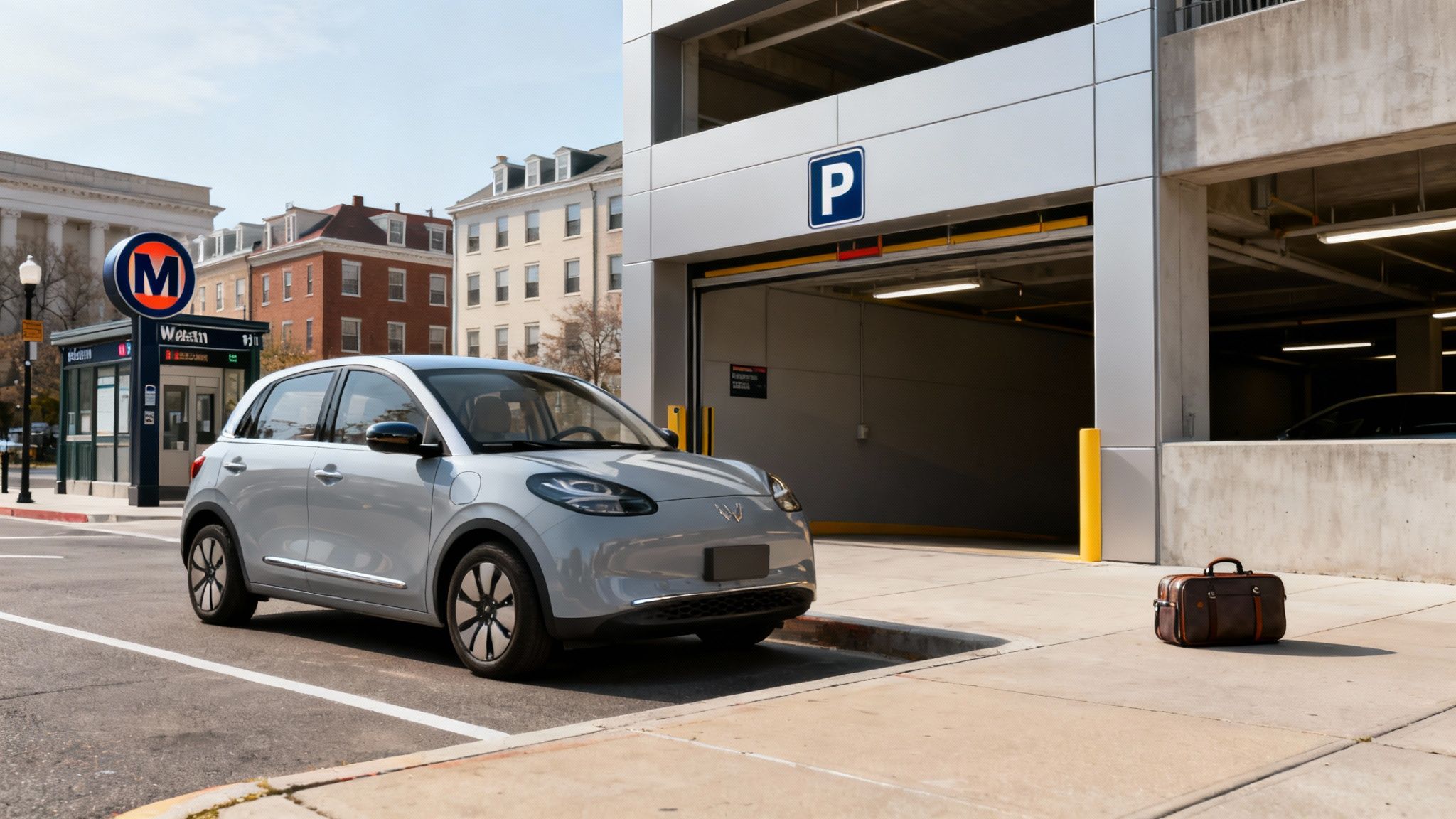
Congratulations, you made it! The long drive from Chicago is behind you. But don't put your brain in park just yet—navigating the nation's capital is a challenge all its own. The city’s unique street grid, aggressive drivers, and notoriously tricky parking require a solid game plan.
Unlike Chicago’s beautifully simple grid, DC is a tangle of numbered and lettered streets sliced up by diagonal avenues named after states. This setup creates chaotic traffic circles and five-way intersections that can baffle even the most seasoned driver. Trust me, your GPS is your new best friend here. Keep it on and listen closely.
Mastering DC Parking
Finding a spot for your car is often the biggest headache you'll face upon arrival. Street parking is scarce, heavily regulated, and usually has a two-hour limit, making it completely impractical for sightseeing. Your best bet is to plan for off-street parking from the get-go.
- Hotel Parking: Most hotels have parking, but it'll cost you. Expect to pay a premium of $40 to $60+ per night. It’s steep, but the convenience and security can absolutely be worth it after a long drive.
- Public Garages: You'll find public garages scattered throughout the city. Rates swing wildly depending on the neighborhood and time of day, but they're almost always a more affordable choice than your hotel's valet.
- Reservation Apps: Services like SpotHero or ParkWhiz are total game-changers. You can book a garage spot days or weeks ahead, often at a serious discount compared to drive-up rates. This takes all the stress out of finding a safe place for your car.
Once you’ve arrived and checked in, here's the best advice anyone can give you for enjoying DC: park your car and forget about it. The city’s public transportation is excellent, and trying to drive between monuments is a recipe for pure frustration.
The Metro is Your Best Friend
Washington, DC, is an incredibly walkable city, and its Metro system is one of the most efficient in the country. All the main tourist areas, from the National Mall to Capitol Hill, are well-connected by Metro lines, making it a breeze to get around without a car.
Honestly, deciding whether to drive or use public transport isn't much of a choice here. The stress of one-way streets, the endless search for non-existent parking, and paying high garage fees for short stops just isn’t worth it. A multi-day Metro pass will be cheaper and infinitely less stressful than getting behind the wheel.
By planning your parking strategy before you even hit the city limits and embracing public transit, you can transition smoothly from the open highway to the bustling capital. This final bit of planning ensures your trip ends on a high note, letting you focus on what you came for: exploring everything DC has to offer.
Frequently Asked Questions About the Drive
Even the most seasoned road tripper has a few last-minute questions. Let's tackle some of the most common ones that pop up when planning the drive from Chicago to DC so you can hit the road feeling prepared.
What Is the Total Cost of the Drive?
This is the big one, right? Your total cost will obviously depend on your travel style, but a good baseline budget for a one-way trip is $200 to $350. That covers the absolute essentials: gas, tolls, and one night in a decent hotel.
Let's break that down a bit:
- Fuel: For a standard car, expect to spend somewhere between $70 and $130 on gas.
- Tolls: If you're taking the fastest route through Ohio and Pennsylvania, budget around $40 to $60 for tolls. They can sneak up on you!
- Lodging: A one-night stopover in a city like Pittsburgh will typically run you $120 to $180 for a comfortable, no-frills room.
Of course, this doesn't include food and fun. A realistic food budget is about $60 per person per day, but you can easily spend more or less depending on whether you're grabbing fast food or sitting down for a nice meal.
Is It Better to Drive or Fly?
This really comes down to what you value most: time, money, or the experience itself.
If speed is your only goal, flying wins, no contest. It’s dramatically faster. And don't forget about the time change—DC is one hour ahead of Chicago, which can throw you off if you're not prepared. You can learn more about the air travel distance to get a better sense of flight times.
But if you have the time, driving opens up a world of possibilities. It’s almost always cheaper, especially if you’re traveling with family or a group, and you get to call all the shots.
Driving from Chicago to Washington DC allows you to explore fascinating cities and landmarks at your own pace. For a travel experience that's as much about the journey as the destination, hitting the open road is the superior choice.
Can You Do the Drive in a Single Day?
Technically, yes. Should you? Probably not. You're staring down 11 to 13 hours of straight driving, and that’s before you factor in any stops for gas, food, or just stretching your legs. Realistically, it turns into a grueling 15-hour day. It's exhausting and, frankly, not very safe.
Do yourself a favor and split the drive into two days. An overnight stop in a city like Cleveland or Pittsburgh is the perfect way to break it up. It transforms a marathon slog into two genuinely pleasant days of driving.
Ready to turn all your road trip ideas into a perfectly organized plan? With Dream Trip, you can save spots you find on social media, build a visual itinerary, and let our AI tools handle the logistics. Stop dreaming and start planning your unforgettable adventure at https://www.thedreamtrip.app.


