
So, your camera roll is filled with saved TikToks of Italian villages and your browser has a dozen tabs open on Parisian cafes. It's time to turn that inspiration into your dream Europe trip. Planning an adventure across a continent can feel overwhelming, but with the right strategy, it's an exciting process. This guide breaks it down into actionable steps, focusing on practical tips for costs, timing, and local insights to help you build the trip of a lifetime.
1. Define Your Dream Trip Style

Before you even look at a map, ask yourself: what kind of trip do I actually want? Getting honest about your travel style is the single most important first step. It ensures you plan a vacation that energizes you, rather than one you think you should have.
This isn’t about logistics yet. It's about translating your daydreams into a clear vision that will guide every other decision.
What Kind of Traveler Are You?
Think about which of these travel personas sounds most like you. Your answer will help you filter an entire continent of options down to the places you'll truly love.
- The Culture Vulture: Your perfect day involves ancient ruins, world-class museums, and an evening theatre show. Cities like Rome, Florence, Athens, and Vienna should be at the top of your list.
- The Nature Enthusiast: You’d rather be hiking in the Swiss Alps, kayaking through Norwegian fjords, or finding a secluded beach on a Greek island. Focus on national parks and scenic regions.
- The Urban Explorer: You thrive on the energy of big cities. You want to dive into trendy neighborhoods, hunt for the best coffee, and experience the nightlife in places like Berlin, Amsterdam, and Barcelona.
- The Relaxation Seeker: Your goal is to unwind. This could mean slow-paced days in a Tuscan villa, leisurely strolls through Provence, or sipping wine in Portugal’s Douro Valley.
Nailing this down now saves you from planning a trip that doesn't match your personality.
2. Choose the Best Time to Visit
Deciding when to go is a critical balancing act between weather, crowds, and cost. Each season in Europe offers a completely different experience.
Local Insight: The "best" time to visit is highly personal. A traveler seeking sunny beaches in July will have a vastly different ideal trip than someone wanting to experience German Christmas markets in December. Your travel style dictates the perfect season.
Here’s a practical breakdown of what to expect:
- Peak Season (June-August): The classic European summer. Pros: Warm, sunny weather and long daylight hours. Cons: The highest prices, biggest crowds, and intense heat in southern regions. Best for beach holidays and island hopping if you can handle the bustle.
- Shoulder Season (April-May & September-October): The savvy traveler's choice. Pros: Pleasant weather, fewer crowds, and significantly better deals on flights and hotels (often 20-30% cheaper than summer). It’s the sweet spot for comfortable city exploration.
- Off-Season (November-March): For the budget-conscious and crowd-averse. Pros: The absolute lowest prices and a more local feel. Cons: Weather can be cold and gray, and some attractions may have shorter hours. Fantastic for cozy city breaks and museum-hopping.
If you want to dig deeper, you can learn more about the best times to visit Europe to pinpoint the perfect window for your trip.
3. Map Your Must-See Spots
Now, let's organize that beautiful mess of saved Instagram posts and TikToks. Instead of managing a hundred screenshots, use a modern planning tool that can extract location data directly from social media links.
Simply paste a link, and the tool automatically pins the location onto a personal map. This creates a visual dashboard of all your interests.
Suddenly, you’ll see a cluster of saved spots in southern Spain, or realize half of your dream restaurants are in the same Parisian neighborhood. This visual clarity is game-changing. It’s how you start building a logical, efficient route—turning a random collection of ideas into the first real draft of your incredible European itinerary.
4. Craft a Realistic Travel Budget
Let's talk money. Budgeting isn't about restriction; it's about empowerment. A clear financial plan tells you where you can splurge and where you should save, allowing you to travel stress-free.
A solid budget gives you a clear savings goal and the confidence to make decisions on the road without constantly checking your bank balance.
Breaking Down Your Core Expenses
First, let's tackle the "Big Three"—the major costs you'll pay before you even pack your bags.
- Flights & Major Transport: Your round-trip ticket to Europe and any significant train journeys or flights between countries. Actionable Tip: Book these 3-6 months in advance for the best prices.
- Accommodation: This can range from budget hostels to luxury hotels. Decide on your comfort level and book refundable options where possible.
- Activities & Entrance Fees: Museum tickets, guided tours, and special experiences. Actionable Tip: Pre-booking major attractions like the Louvre or the Colosseum online can often save you both time and money.
Once you have a rough estimate for these, you can drill down into daily spending.
Estimating Your Daily Spending
This is where your travel style and destination choices really matter. Your money will stretch much further in Prague than in Paris.
Local Insight: A realistic daily budget isn't just a number. It's permission to spend on what matters most to you. Whether that's a world-class meal in Lyon or a once-in-a-lifetime hot air balloon ride in Cappadocia, your budget should reflect your priorities.
For a more detailed estimate, use a dedicated comprehensive trip cost calculator to see how your choices impact the bottom line.
Sample Daily Budget Estimates Per Person in USD
Use this table as a starting point for your planning. These figures cover food, local transport, and minor activities.
| Travel Style | Western Europe (e.g., France, UK) | Southern Europe (e.g., Italy, Greece) | Central/Eastern Europe (e.g., Hungary, Poland) |
|---|---|---|---|
| Backpacker | $70 - $100 | $50 - $80 | $40 - $60 |
| Mid-Range | $150 - $250 | $120 - $200 | $80 - $150 |
| Luxury | $400+ | $350+ | $250+ |
Smart Tips for Making Your Budget Work
- Mix and Match Accommodations: Splurge on a nice hotel in one city, then save with a charming guesthouse or a private hostel room in the next.
- Embrace Local Markets and Picnics: Hitting a local market for fresh bread, cheese, and fruit for lunch is a classic European experience. It's affordable, delicious, and authentic.
- Use Public Transportation: European cities have fantastic, affordable public transit. A multi-day pass is almost always the most economical way to get around. Taxis will drain your budget fast.
5. Build Your Perfect Daily Itinerary
You’ve picked your destinations and set your budget. Now for the fun part: turning those big ideas into a day-by-day plan. A great itinerary is about flow and balance, not just a checklist of sights.
The best way to plan is to think geographically, grouping your activities by neighborhood to save time and energy.
Group Activities by Neighborhood
Rushing from the Louvre to Montmartre and then back to the Eiffel Tower is a classic rookie mistake. You'll spend more time in the metro than enjoying Paris.
Instead, dedicate a day (or half a day) to a specific district. This lets you soak in the local vibe. Start with a main landmark, then get lost in the side streets, discover hidden cafes, and pop into local shops. Use your digital map to see where your saved spots cluster together—that’s a natural day plan right there.
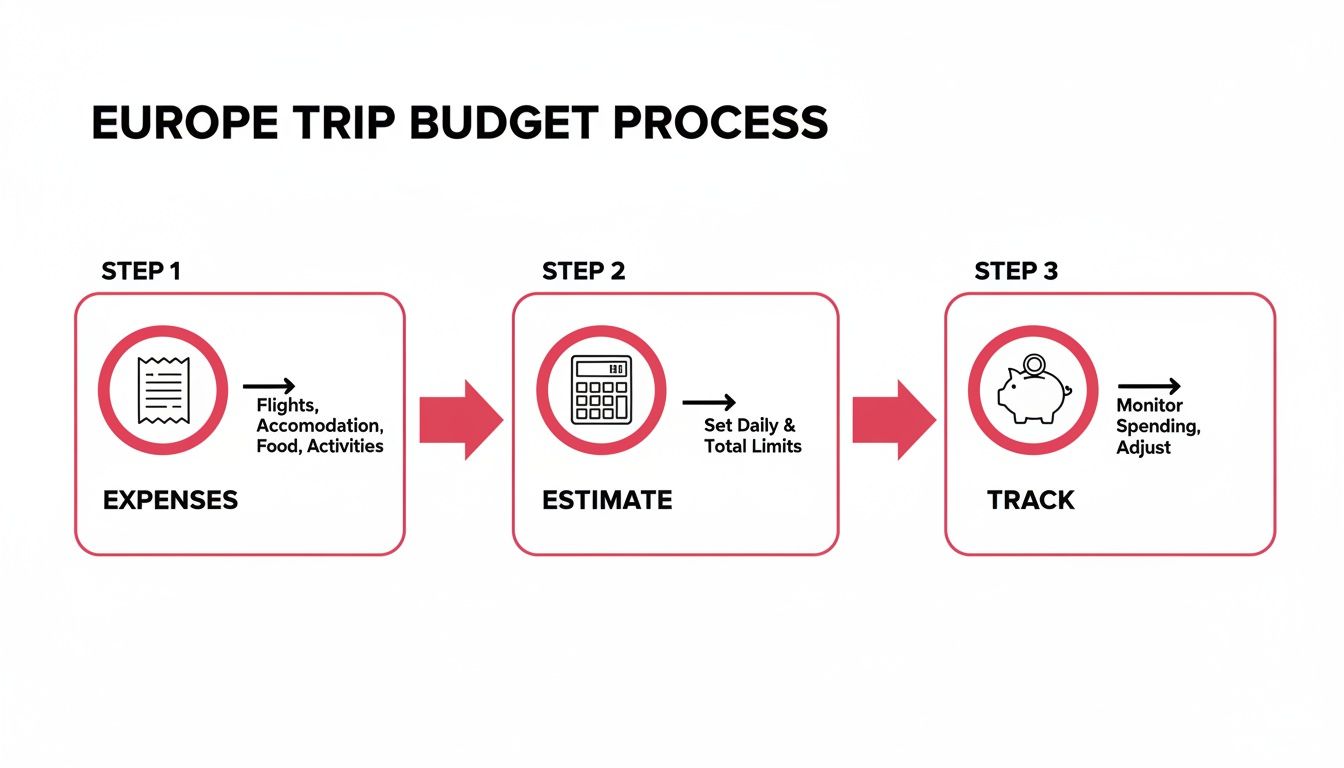
This kind of structured thinking—budget first, daily details second—is exactly how you avoid those nasty surprises and keep the trip fun.
Balance Landmarks with Downtime
The fear of missing out (FOMO) leads to over-scheduling. The best itineraries balance must-see attractions with crucial, unplanned downtime.
Local Insight: The magic of European travel happens in the unplanned moments—stumbling upon a lively local market, lingering over an extra glass of wine at a sidewalk cafe, or just sitting in a quiet park and watching the world go by. Building downtime into your schedule isn't lazy planning; it's smart planning.
Actionable Tip: Structure your day around one "major" activity (like a museum visit) and leave the rest of the time flexible for spontaneous exploration of that area.
Leverage AI for Smarter Scheduling
Manually organizing pins, checking opening hours, and calculating travel times is a headache. This is where modern tools can help. Imagine dragging your saved locations onto a calendar and letting an AI optimize your daily routes.
An AI itinerary generator can factor in transit times and venue hours to suggest the most logical sequence for your activities, turning a logistical puzzle into a fun, creative process. This is especially useful as intra-European travel booms, with gross bookings projected to hit €415 billion by 2028, making smart planning essential.
6. Book Your Transportation
Now it's time to connect the dots. Europe’s world-class transport network offers everything from scenic high-speed trains to cheap regional flights. Making the right choice maximizes your time and protects your budget.
Choose the Right Mode of Transport
- Trains: The Classic European Experience. For journeys under five hours, the train is almost always best. It takes you from city center to city center, skipping the time and cost of airport transfers. It's comfortable, scenic, and efficient.
- Budget Airlines: Fast but with Caveats. For long distances (e.g., Lisbon to Rome), budget airlines like Ryanair or EasyJet offer unbeatable prices. Actionable Tip: Beware of strict baggage rules and extra fees. Always factor in the cost of getting to and from their often-remote airports.
- Buses: The Ultra-Budget-Friendly Choice. Companies like FlixBus are incredibly cheap, especially in Central and Eastern Europe. They're slower than trains but are a fantastic option for short routes on a tight budget.
- Rental Cars: Freedom for the Backroads. A car is a headache in major cities but priceless for exploring the countryside of Tuscany, Provence, or the Scottish Highlands. It gives you the freedom to discover tiny villages on your own schedule.
The Eurail Pass vs. Point-to-Point Tickets
- A Eurail Pass is great for: Travelers who crave flexibility and plan on taking many long-distance train journeys, especially in expensive countries like Germany and Switzerland.
- Point-to-Point Tickets are better for: Travelers with a fixed itinerary. Booking specific train tickets 2-3 months in advance is almost always cheaper than a pass.
Actionable Tip: Before buying a pass, price out your main journeys as individual tickets. For most people, booking in advance saves significant money.
With European tourism booming and airline traffic projected to jump by 6.7%, smart booking is non-negotiable. You can find more insights on European tourism trends on etc-corporate.org.
7. Handle Your Pre-Departure Checklist
With your itinerary locked in, it’s time for the final, crucial details. Getting these sorted now will save you from major headaches on the road.
With a staggering 125 million international tourists in the first quarter of the year, having your documents in order is essential. You can read more about European tourism's record-breaking growth on etias.com.
Confirm Entry Requirements and Visas
This is non-negotiable. For many nationalities, traveling within the Schengen Area (29 European countries with open borders) is simple. However, rules can change. Actionable Tip: Always verify the specific visa requirements for your citizenship on the official embassy or consulate website for each country you plan to visit.
Secure Travel and Health Insurance
Travel insurance is your safety net for trip cancellations, lost luggage, and medical emergencies. Don't leave home without it. Ensure your policy includes robust coverage for emergency medical expenses, trip cancellation, and baggage loss.
Pack Light and Smart
You will be your own bellhop, hauling luggage over cobblestones and up narrow staircases. Pack light.
Local Insight: The best approach is to pack versatile, layerable clothing in a neutral color palette. One great jacket, a few solid tops, and one pair of ridiculously comfortable walking shoes can be mixed and matched into dozens of outfits.
Actionable Packing List Essentials:
- A portable power bank
- A universal travel adapter with USB ports
- A reusable water bottle
- Digital and physical copies of your important documents (passport, etc.)
Notify Banks and Share Your Plans
Actionable Tip: Give your bank and credit card companies a travel notice online. This prevents them from freezing your account when they see a foreign transaction. Bring at least two different cards and some local cash. Finally, share your itinerary with a trusted friend or family member back home. A modern planning tool like Dream Trip can create a single, shareable link with all your details.
Common Questions About Planning a Europe Trip
Even with a great plan, a few questions always pop up. Here are answers to the most common ones.
How Many Countries Should I Visit on a Two-Week Trip?
Fewer than you think. For a two-week (14-day) trip, focusing on 2-3 countries or 3-4 cities that are geographically close is ideal. This pace allows for 3-4 days in each location, letting you immerse yourself rather than just checking boxes. Quality over quantity is the golden rule for a memorable trip.
What Is the Cheapest Way to Travel Between Cities?
- Long distances (5+ hours): Budget airlines (Ryanair, EasyJet) booked well in advance with only carry-on luggage.
- Medium distances (under 5 hours): Buses (FlixBus) are almost always the cheapest.
- Convenience & Value: Trains, if you book non-refundable, point-to-point tickets 2-3 months ahead of time.
Do I Need a Visa to Travel to Europe?
It depends on your passport. Many travelers (from the US, UK, Canada, Australia, etc.) can enter the Schengen Area for up to 90 days for tourism without a visa. However, rules can change. It is essential to check the official government or embassy websites for your specific nationality before you book anything.
Is It Better to Use Cash or a Card in Europe?
A mix of both. Credit and debit cards (ideally with no foreign transaction fees) are widely accepted. However, always carry some local cash for small purchases at markets, tips, or in small towns where cards may not be accepted.
Ready to stop dreaming and start planning? The Dream Trip app is your AI-powered copilot, turning scattered social media saves into a perfectly organized, optimized itinerary. From mapping your spots to building your daily schedule, it’s the smartest way to plan your Europe trip.


