

If you're planning your dream trip to the Caribbean, March in Puerto Rico is your golden ticket. You’ll find that perfect combination of long, sunny days, barely any rain, and wonderfully comfortable humidity. It's hands-down one of the best months to visit, hitting that sweet spot with incredible weather before the peak spring break crowds take over completely.
Why March is the Sweet Spot for a Puerto Rico Trip
March is the heart of Puerto Rico's dry season, which means you can actually plan your beach days and city explorations without nervously checking the weather app every five minutes. Think of it as the island showing off its absolute best side, offering a much-needed dose of sunshine to shake off any lingering winter blues.
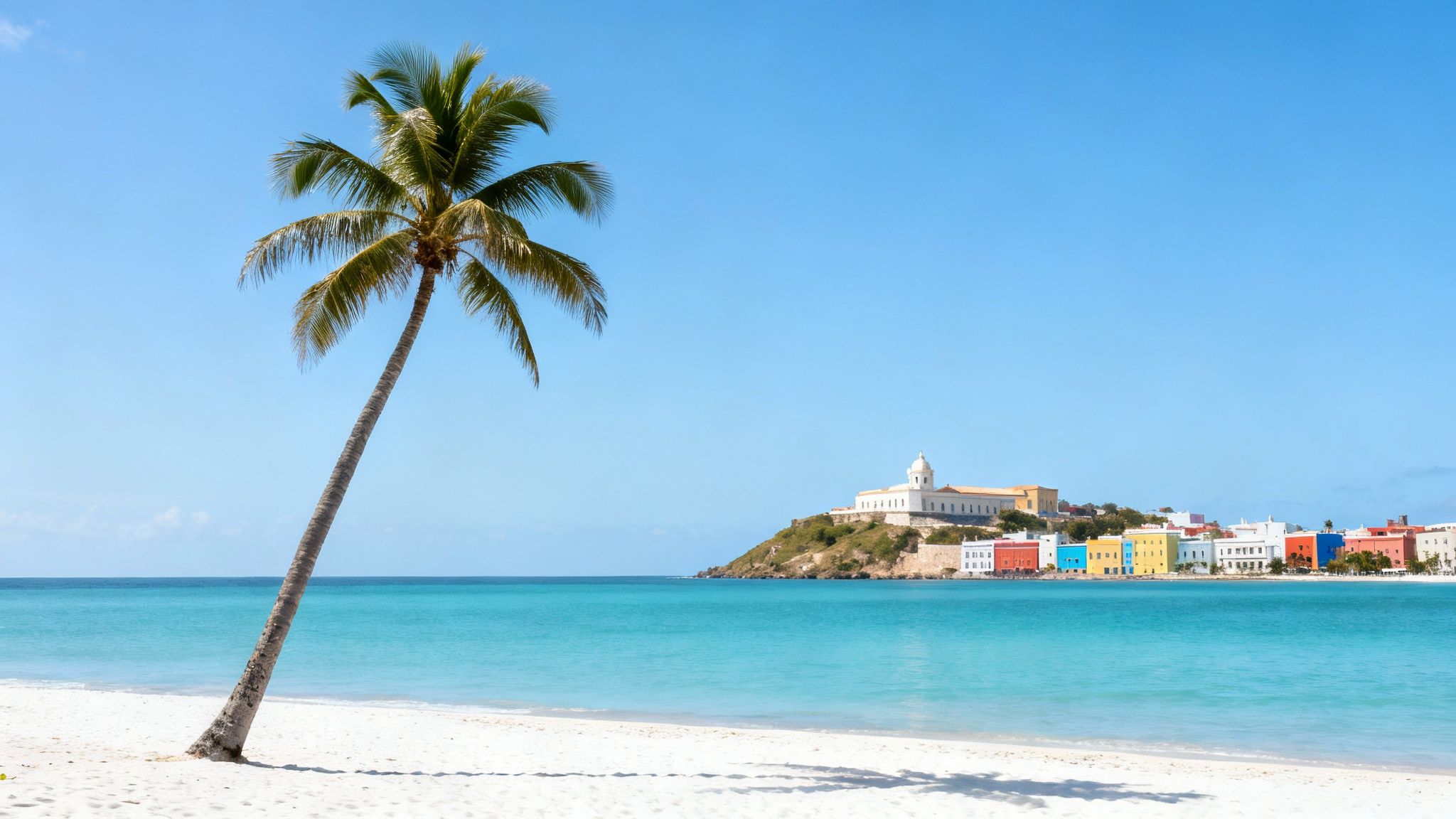
This isn't just a lucky break; it's a predictable climate pattern. The island's driest stretch typically runs from December through March, making it a reliable bet for your vacation investment.
We're talking real numbers here. The average rainfall in San Juan drops to just 2.3 inches (56mm) for the entire month. This means you're far more likely to be soaking up reliable sunshine than dodging downpours. In fact, about 74% of the daylight hours are sunny or mostly clear—ideal conditions for any adventure you have in mind.
What Does This Mean for Your Trip?
This consistently great weather translates into some real, practical benefits when you're on the ground.
- More Time for Everything: With an average of nearly 9 hours of daily sunlight, your days feel long and full. You’ll have plenty of time to snorkel the reefs off Culebra, wander the historic forts of Old San Juan, and still catch a spectacular sunset.
- Comfort is Key: Forget that sticky, heavy feeling of summer humidity. March is much more comfortable, thanks to lower moisture in the air and the constant, gentle trade winds that keep things pleasant.
- Perfect Ocean Conditions: The sea is beautifully warm, with water temperatures hovering right around a perfect 79°F (26°C). It’s ideal for swimming, diving, or just floating around without a care in the world.
Let's break down the key numbers so you can see exactly what to expect.
Puerto Rico March Weather At a Glance
Here’s a quick summary of the weather metrics you’ll want to know for planning your trip.
| Weather Metric | Average Figure |
|---|---|
| Average High Temp | 83°F (28°C) |
| Average Low Temp | 72°F (22°C) |
| Average Rainfall | 2.3 inches (56mm) |
| Average Sea Temperature | 79°F (26°C) |
| Daily Sunshine Hours | 9 hours |
As you can see, the numbers back it up: March offers a fantastic balance of warm temperatures, ample sunshine, and minimal rain, making it an easy choice for a reliable tropical vacation.
What Temperatures to Expect Across the Island
If you're trying to picture the perfect vacation weather, you’re basically imagining Puerto Rico in March. It’s that sweet spot—like a perfect late spring or early summer day back home. It's consistently warm enough for the beach but almost never hits those oppressive, sticky extremes of deep summer.
This reliability is a huge win for any traveler. It makes planning your days so much easier when you don't have to constantly worry about a sudden heatwave or a surprise chilly spell messing things up. The daytime weather is ideal for sunbathing, swimming, and exploring, and when evening rolls around, the air cools down just enough to be absolutely perfect.
Local Insight: You can have a magical al fresco dinner in Old San Juan or take a sunset walk along the coast without needing anything more than maybe a light sweater, if that. You can confidently book that morning snorkel tour and an afternoon city walk, knowing the weather is going to cooperate from start to finish.
Daytime Highs: A Perfect Beach Forecast
One of the best parts about March is how uniform the temperatures are across the island's coastal areas. Whether you're navigating the vibrant streets of San Juan or kicking back on a secluded beach in Rincón, you can expect pretty much the same glorious warmth.
Decades of weather data show that average daily highs consistently hover right around 84°F (29°C). This means your dream trip inspiration—whether it’s surfing in the west or lounging on Culebra's famous Flamenco Beach—all shares the same beautiful forecast. You can learn more about Puerto Rico's consistent March climate on Avionero.com.
Travel Tip: Puerto Rico’s March weather is beautifully predictable. The temperatures stay within a narrow, comfortable range, meaning you get all the tropical warmth without the oppressive heat that can derail vacation plans in other seasons.
Balmy Sea Temperatures for Ocean Lovers
It's not just the air that's perfect; the ocean itself is incredibly inviting. The Caribbean waters surrounding Puerto Rico are perfectly warm for any and all of your aquatic adventures.
- Swimming and Snorkeling: The sea averages a balmy 79°F (26°C). This is the ideal temperature for spending hours in the water, exploring the reefs without ever feeling a chill. No wetsuit needed.
- Ideal Diving Conditions: For scuba divers, the warm, clear water means fantastic visibility for checking out the island's vibrant coral gardens and marine life.
- Gentle Waters: Combine that warmth with the typically calm seas of the dry season, and you have a safe and amazing environment for families and casual beachgoers alike.
This killer combo of warm air and even warmer water is the secret sauce behind Puerto Rico's reputation as a top-tier March destination. It's the kind of weather that lets you completely immerse yourself in the island's natural beauty, from the sandy shores to the incredible world just below the waves.
Sunshine, Rain, and Those Famous Trade Winds
When you read travel guides for Puerto Rico in March, you’ll see phrases like "mostly sunny" and "low rainfall." Frankly, that's an understatement. It doesn't quite capture the reality of the long, brilliant days you're about to experience—perfect for photographers, explorers, or anyone just wanting to soak in the island's vibrant colors without a dull, gray sky in sight.
This isn’t just wishful thinking; the data backs it up. March in Puerto Rico offers what amounts to a 74% sunny daylight guarantee. That's based on more than a decade of hourly weather data. In San Juan, this translates to an average of 8 hours and 46 minutes of direct sunlight during its 12-hour days. With clouds only covering about a quarter of the sky, the conditions are pretty much ideal. Want to see more? Wanderlog.com has some great visuals on March's sunny weather patterns.
This abundance of sunshine has a real impact on your trip, giving you more usable daylight hours for everything from jungle hikes to simply claiming your spot on the beach.
The Truth About March Rain
Now, let's talk about the rain, because this is where a lot of travelers get needlessly worried. Hearing there's a small chance of precipitation in the forecast means something very different in a tropical dry season context.
A "rainy day" in March is almost never a complete washout. What it usually means is a brief, passing shower that rolls through for 15-20 minutes, cools things off, and then vanishes. The sun comes back out, everything dries in minutes, and you get right back to your day.
Local Insight: Think of a March shower as nature hitting the refresh button. It’s a fleeting event that cools the air, makes the tropical foliage pop, and then disappears. It's a minor interruption, not a day-ruiner, so don't cancel your plans.
The Cooling Effect of Trade Winds
The final piece of the puzzle for understanding the perfect Puerto Rico weather in March is the trade winds. These are the island's natural air conditioners. A constant, gentle breeze blows in from the Atlantic, cutting right through the humidity.
This is exactly why a day that’s 84°F feels so pleasant rather than sticky and oppressive. These winds create a comfortable environment where you feel the tropical warmth without being overwhelmed by it. This gentle breeze makes almost every activity better:
- Beach Lounging: The winds are just enough to keep you cool while you sunbathe.
- City Exploring: They make walking through the cobblestone streets of Old San Juan completely comfortable.
- Outdoor Dining: An evening meal by the coast feels magical with that soft sea breeze.
These three elements—consistent sun, minimal and brief rain, and cooling winds—come together to create a weather experience that feels custom-made for an ideal vacation. You can find more details on what makes March a prime travel month in our comprehensive guide on the best time to visit Puerto Rico.
How to Pack for Puerto Rico's Microclimates
Packing for Puerto Rico in March isn't just a matter of tossing a swimsuit and some shorts in a bag. While the coastlines are picture-perfect warm, the island is famous for its microclimates, meaning the weather can shift dramatically as you move from a sun-drenched beach to the lush central mountains.
Think of it this way: a drive from the dry, arid southern coast near Cabo Rojo to the misty peaks of El Yunque National Forest is like changing seasons in under an hour. Understanding this is the key to packing smart and staying comfortable.
This flowchart pretty much nails the dominant vibe for most of your trip, especially along the coasts.
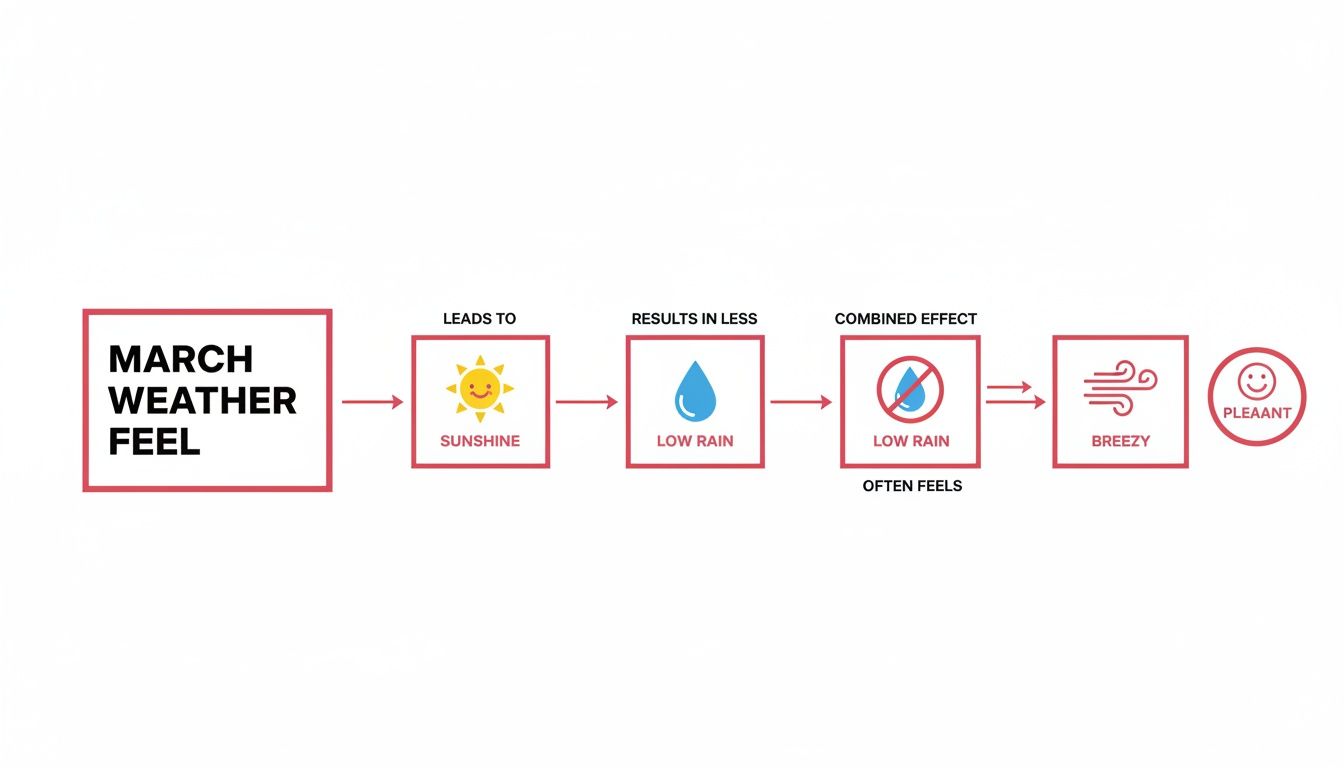
That blend of sunshine, low rainfall, and a nice breeze is what makes March absolutely perfect for any beach-centric plans.
Packing for the Coasts and Cities
For your days exploring San Juan, surfing in Rincón, or just lounging anywhere along the coast, your packing list is wonderfully simple. The weather is consistently warm and sunny, so lightweight clothing will be your best friend.
- Lightweight Fabrics: Think cotton, linen, and other breathable materials that keep you cool in the tropical heat.
- Serious Sun Protection: A wide-brimmed hat, high-SPF reef-safe sunscreen, and a good pair of sunglasses are non-negotiable.
- Multiple Swimsuits: With the ocean calling at a perfect 79°F (26°C), you’ll be glad to have a dry suit ready to go for your next dip.
This basic setup will get you through most of your trip, from wandering the cobblestone streets of Old San Juan to relaxing on Flamenco Beach. For a full rundown, check out our guide on how to build the ultimate packing list for any trip.
Gearing Up for the Rainforest and Mountains
Now, if your plans include hiking in El Yunque or visiting a coffee hacienda in the central mountains, you'll need to adjust your wardrobe. These higher-elevation areas are noticeably cooler and much damper, even during the "dry" season.
Packing Tip: Don't make the classic mistake of assuming the whole island is hot. A light rain jacket and closed-toe shoes can be the difference between an amazing rainforest adventure and a soggy, miserable hike.
A packable rain jacket is a lifesaver when a sudden mountain shower passes through. On top of that, you’ll want sturdy, closed-toe shoes with decent grip for navigating trails that can be wet and slippery. Layering is the name of the game here—a long-sleeve shirt over a t-shirt is usually all it takes to adapt to the cooler, misty air.
What to Wear for Every Activity on Your Trip
With the ridiculously good Puerto Rico weather in March, it's tempting to think packing is as simple as throwing a few swimsuits and t-shirts in a bag. And you're not wrong... mostly. But to be truly comfortable, you need to pack for your itinerary, not just the forecast.
The real trick is managing the transitions—from a sun-drenched beach to a powerfully air-conditioned museum, or from a dry coastal town into the misty mountains of El Yunque. A little planning goes a long way.
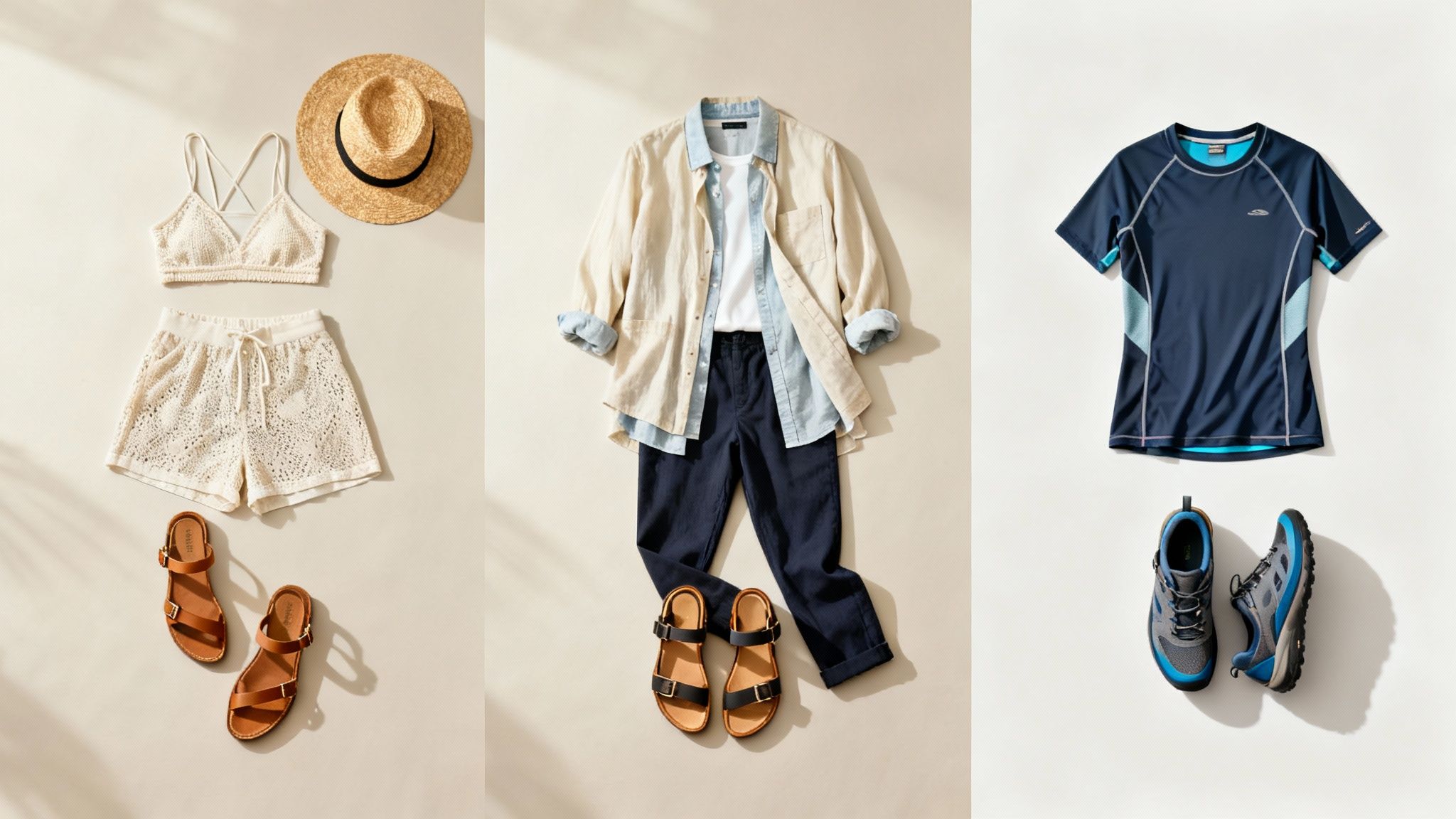
Thinking about your activities helps you pack smart, ensuring you have the right gear for every moment without feeling like you brought your entire closet.
For Beach Days and Coastal Relaxation
Your time along the coast, whether you're lounging in Condado or catching waves in Rincón, is all about the sun and sea. The game plan here is simple: comfort and sun protection.
- Breathable Fabrics: This is where linen shirts, cotton shorts, and flowy sundresses really shine. They let the air move and keep you from overheating under that beautiful tropical sun.
- Multiple Swimsuits: Trust us on this one. Being in and out of the water all day is the norm, and having a dry swimsuit ready to go is a small luxury that makes a huge difference.
- Sun Protection Essentials: A wide-brimmed hat, polarized sunglasses, and a high-SPF, reef-safe sunscreen are completely non-negotiable. Protect your skin, and protect the incredible marine life you're there to see.
For Exploring Cities and Towns
When you’re wandering the cobblestone streets of Old San Juan or popping into local shops, your needs shift a bit. Now, the focus is on walking comfort and handling the dramatic temperature swings between outside and inside.
Actionable Tip: Pack a lightweight cardigan or a linen button-down shirt that you can easily toss in your bag. This simple layer is perfect for when you step from the warm street into a heavily air-conditioned restaurant or museum.
Footwear is key here. You’ll be doing a lot of walking, so comfortable sandals or stylish sneakers are a must. Happy feet make for a happy traveler, after all. A small backpack or crossbody bag is also perfect for stashing your essentials while keeping your hands free.
For Adventure and Rainforest Hikes
If your plans include a trip to El Yunque National Forest or other inland adventures, your packing list needs a few specialized items. The environment here is totally different from the coast.
- Quick-Dry Clothing: Think athletic shorts and moisture-wicking shirts. They'll dry in a flash after one of the rainforest's famous passing showers.
- Sturdy Footwear: Closed-toe water shoes or lightweight hiking shoes with good grip are essential. The trails can get slippery and muddy in an instant, and you’ll want that extra traction.
- A Light Rain Jacket: A packable, waterproof jacket is your best friend in the mountains. Even during the "dry season," brief, refreshing downpours are just part of the experience.
Answering Your March Travel Questions
Got a few last-minute questions before you lock in that March trip to Puerto Rico? Perfect. Let's run through the common ones so you can finalize your plans with total confidence.
Think of this as the final check-in to make sure your trip is smooth, safe, and timed just right.
Is March a Good Time for Whale Watching?
Absolutely. In fact, March is pretty much the peak of the season. The waters off Puerto Rico’s west coast, especially around towns like Rincón, become a major highway for humpback whales.
This is the heart of their migration season, which runs from January through the end of March. Thousands of them head south to the warm Caribbean to breed and give birth, and a whale-watching tour in March gives you a front-row seat to the show. Your chances of spotting these incredible animals are about as good as they get.
Do I Need to Worry About Hurricanes in March?
Nope, not even a little. You can put this worry completely out of your mind.
The official Atlantic hurricane season doesn’t kick off until June 1st and runs through November 30th. March is planted firmly in the island’s dry season, which is known for its calm and stable weather. It's one of the most reliable months to visit, with virtually zero risk of a tropical storm interrupting your plans.
What Are the Crowds and Costs Like with Spring Break?
This is a great question. Yes, March is a popular month, and you'll definitely feel the Spring Break energy, especially during the middle weeks. Hotspots like San Juan, Condado, and Flamenco Beach will be buzzing, and flight and hotel prices will be at their peak.
Budget Tip: To avoid the biggest crowds and highest prices, aim for the first week of March or the last few days of the month. Alternatively, head for less-trafficked parts of the island like the southern coast (Ponce, Cabo Rojo) or the laid-back island of Vieques for a more relaxed vibe and potentially lower costs.
Is It Cool Enough at Night to Need a Jacket?
For most people, definitely not. Evening temperatures along the coast rarely drop below 72°F (22°C). The air stays pleasantly warm and balmy, which is perfect for an evening dinner on a patio or a sunset stroll in shorts and a t-shirt.
That said, if you get chilly easily or plan to be right on the water after dark, a super light cardigan or a linen shirt is the most you'll ever need. The one exception? If you're heading up into the central mountains. The elevation makes it noticeably cooler, so you’ll absolutely want a light jacket for evenings there.
Feeling inspired? The next step is turning all these ideas into an actual plan. Dream Trip is the perfect tool for pulling together all the amazing spots you discover for your March getaway. Stop juggling screenshots and random links—save everything to one beautiful map and build an itinerary that makes sense in minutes. Start planning your adventure with Dream Trip today.


