
The drive from Bryce Canyon to Arches National Park is one of those classic American road trips. You've got two main ways to tackle it: the quick and direct route, or one of the most famous scenic drives in the entire country. Which one you pick really just depends on what you're after—getting to Moab as fast as possible, or making the drive itself the main event.
Let's break down how to plan this leg of your Utah adventure with practical, actionable tips for your dream trip.
Planning Your Bryce to Arches Road Trip
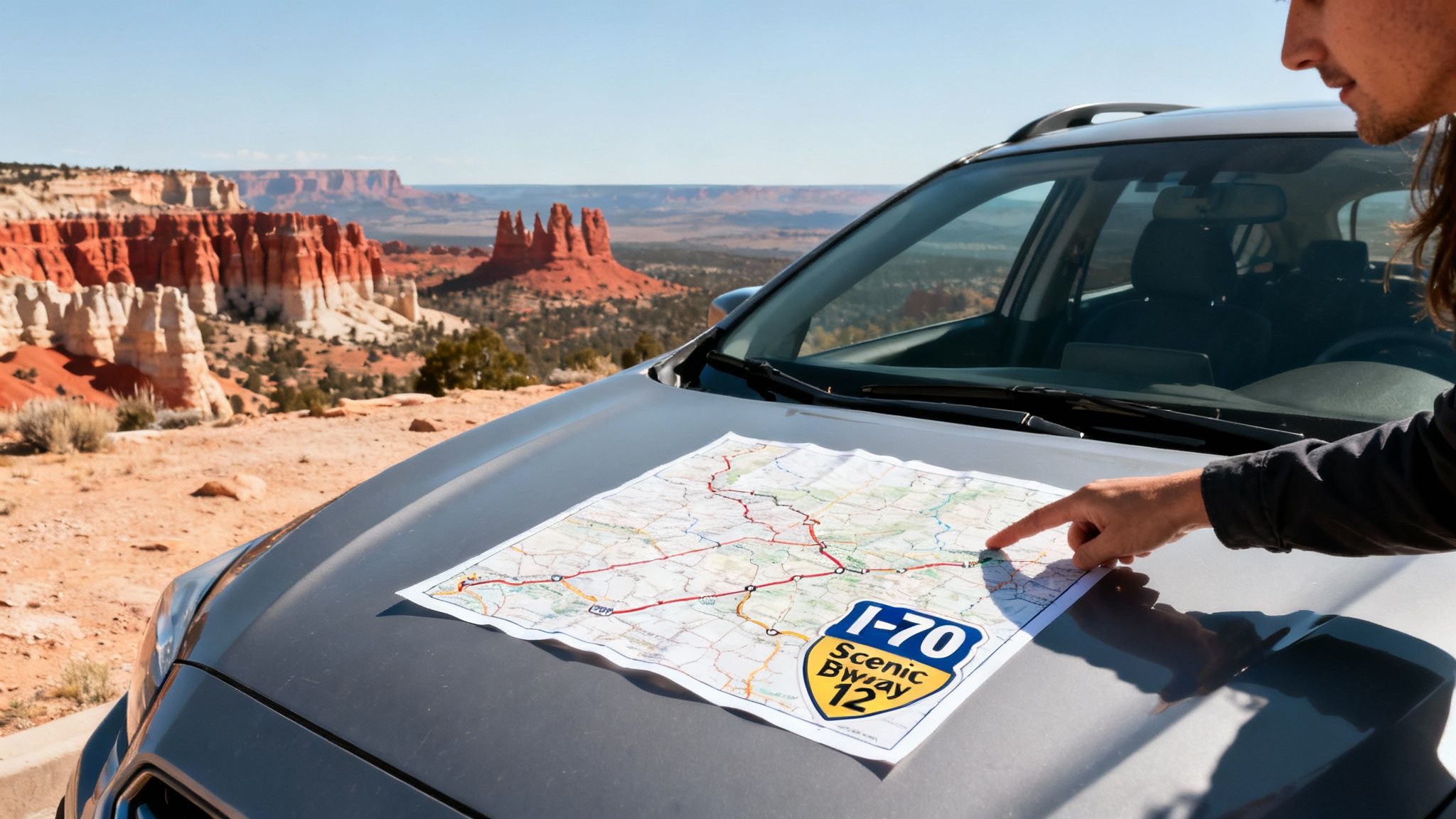
Driving between two of Utah's 'Mighty 5' parks is more than just connecting the dots on a map; it's an experience all its own. The path you choose will define this entire part of your trip. So, the first question to ask yourself is: are we just trying to get to Arches, or is the journey the destination?
One option is the straightforward highway route that gets you there efficiently. The other is the legendary Scenic Byway 12, an All-American Road famous for its jaw-dropping landscapes and winding, dramatic path through the heart of Utah.
The Two Routes: A Quick Comparison
With Utah's national parks exploding in popularity—the 'Mighty 5' saw a combined 10.6 million visitors in 2023—having a solid plan is more important than ever. Knowing your route is the first big piece of that puzzle.
Actionable Tip: Deciding whether to take the fast route or the scenic route is the single most important choice you'll make for this drive. It sets the tone for your timing, your stops, and the whole vibe of the day.
To help you decide, here’s a head-to-head look at what each route entails.
Comparing Routes From Bryce Canyon to Arches
This table breaks down the key differences between the fastest route and the scenic byway. It's not just about time and distance; it's about the kind of experience you want to have on your dream trip.
| Feature | Fastest Route via I-70 | Scenic Route via UT-12 |
|---|---|---|
| Distance | Approximately 244 miles | Approximately 256 miles |
| Drive Time | 4.5 – 5 hours (no stops) | 5.5 – 6 hours (no stops) |
| The Vibe | Efficient and straightforward | An immersive, scenic journey |
As you can see, the difference in pure driving time isn't massive, but the experience is worlds apart. The scenic route's extra hour doesn't account for the countless pull-offs and detours you'll be tempted to take.
How to Choose What's Right for You
Your decision really comes down to your priorities and timeline.
- If you're short on time: The I-70 route is your best bet. It’s a clean shot that maximizes your time for hiking and exploring in Arches National Park.
- If the drive is part of the adventure: Take Scenic Byway 12. You won't regret it. The views through Grand Staircase-Escalante and over Boulder Mountain are unforgettable.
The time of year can also play a big role in your choice, affecting weather, road conditions, and how much daylight you have. Before you lock in your plans, check out our guide on the best time to visit to make sure your trip lines up with the best possible conditions. Getting this one decision right will ensure your road trip is memorable for all the right reasons.
Choosing Your Drive: The Speedy vs. The Scenic Route
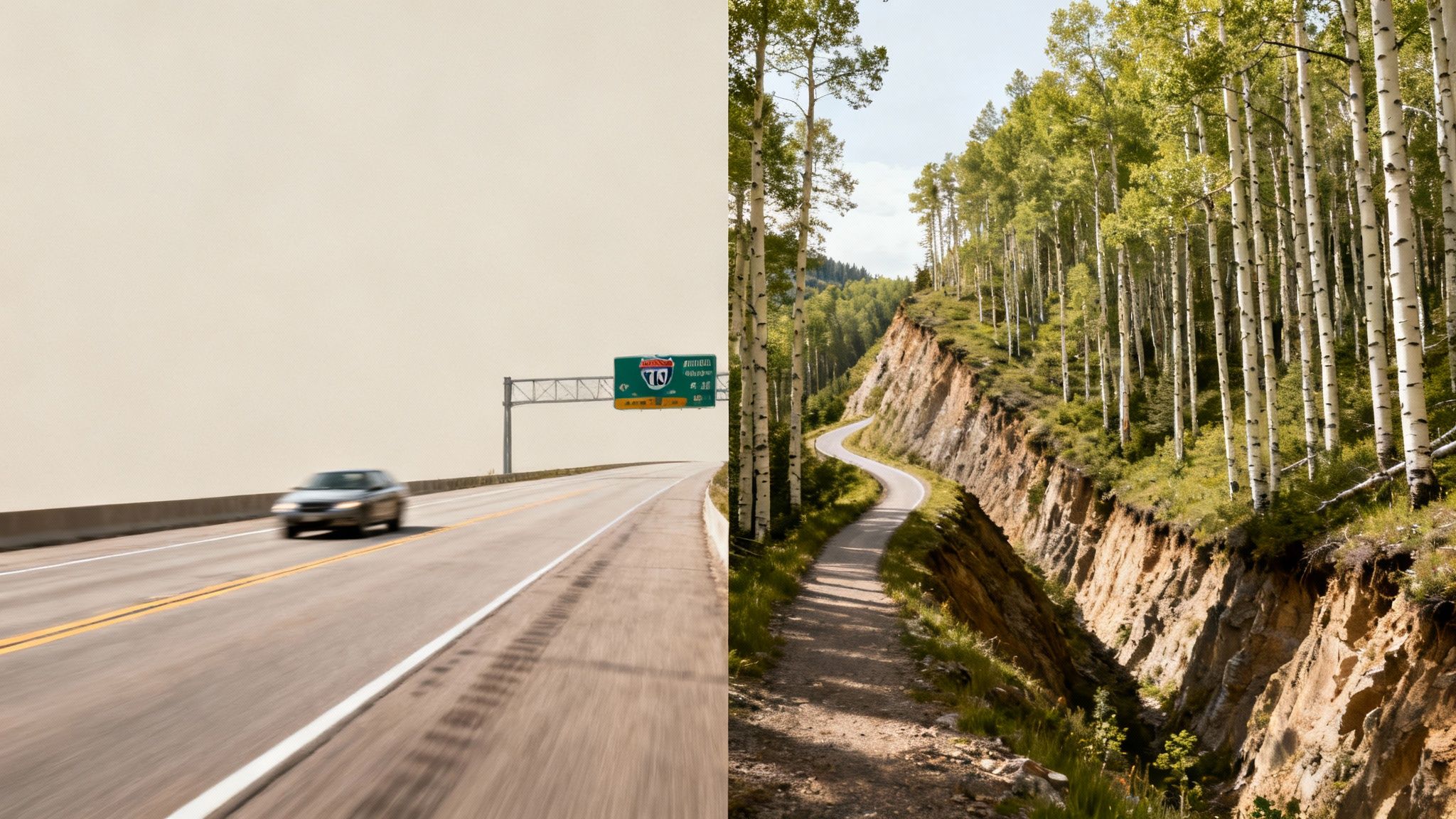
When you're mapping out the drive from Bryce Canyon to Arches National Park, you’ve got a big decision to make. This isn't just about getting from Point A to Point B; it's about choosing the entire vibe for this leg of your Utah adventure.
Are you trying to maximize your time hiking under the arches in Moab? Or is the drive itself a core part of the experience? One path is a straight shot, all business. The other is one of the most celebrated drives in the entire country—an experience in its own right.
The Speedy Route via I-70
If you're on a tight schedule or just eager to get to Moab and start exploring Arches, this is your route. It’s the most direct and efficient path, clocking in at approximately 4.5 hours without any major stops.
You'll head north on US-89, cut east on UT-24, and then hop on the interstate for the final stretch. This is the practical choice. You’ll find plenty of gas stations, roadside diners, and reliable cell service along the way. The roads are mostly multi-lane highways, making it a predictable and low-stress drive.
Local Insight: The Speedy Route is for travelers who see the drive as a simple transfer. It's the "get it done" option that frees up more daylight for that bucket-list hike to Delicate Arch.
Think of it as prioritizing the destination. You’ll arrive in Moab with plenty of time and energy to check into your hotel and head straight into the park.
The Scenic Route via Utah Scenic Byway 12
Now, if you believe the journey is the destination, then taking Utah’s Scenic Byway 12 is non-negotiable. This is an official All-American Road, and it earns that title with every single curve. It winds through some of the most remote and jaw-dropping landscapes you'll ever see.
The drive itself takes about 5.5 to 6 hours, but that’s a meaningless number. You will be stopping. A lot.
What makes it so special?
- The Hogsback: This is the legendary stretch of road everyone talks about. You're driving along a narrow spine of asphalt with sheer, thousand-foot drop-offs on both sides. It’s exhilarating, a little nerve-wracking, and offers completely unfiltered views of the canyons below.
- Boulder Mountain: As you climb from the red rock desert, the scenery shifts dramatically. You’ll find yourself surrounded by a high-altitude aspen forest, which is absolutely breathtaking in the fall when the leaves turn gold.
- True Remoteness: This is not the place to let your gas tank run low. Services are incredibly scarce. Make sure you have a full tank of gas leaving Escalante or Torrey, because you could easily go over 120 miles without seeing another gas station.
This route isn’t about speed; it's about immersion. You’re not just passing through the landscape—you're driving through Grand Staircase-Escalante National Monument and the gateway to Capitol Reef National Park. It’s an adventure you’ll be talking about long after you get home.
Unforgettable Stops Along Scenic Byway 12
Choosing the scenic route from Bryce Canyon to Arches isn't just about the drive—it's about making the drive the main event. Highway 12 isn't just a road; it's an adventure in itself, packed with jaw-dropping landscapes that demand you pull over and explore.
Forget just passing through. To really do this drive justice, you need to know which turnoffs lead to true magic. Let's dive into the must-see stops and the insider tips that transform a good road trip into a legendary one.
Escalante and the Oasis of Lower Calf Creek Falls
The town of Escalante is your gateway to the sprawling, rugged beauty of Grand Staircase-Escalante National Monument. While the town is a perfect spot to grab gas and a bite, the real treasure here is the hike to Lower Calf Creek Falls.
Be warned: this is not a quick roadside photo op. The trail is a 6.7-mile round trip, and much of it is through deep sand, which makes it feel a lot longer and more strenuous than the mileage suggests. You'll want to budget a solid 3-4 hours for the hike and some time to soak in the view at the falls.
- Actionable Tip: Wear real hiking shoes, not sandals. That sand gets surprisingly hot, and the uneven ground is tough on the ankles. Pack at least 2 liters of water per person.
- Best Time to Go: Get an early start. Heading out before 9 AM means you'll beat the worst of the midday sun (shade is almost non-existent) and get that soft, golden light for photos.
- Local Insight: After you've conquered the trail, head straight to Escalante Outfitters. Their pizzas are the stuff of local legend and the absolute best reward for a sandy, sweaty hike.
Capitol Reef National Park: Pie is the Prize
As you wind your way north, you'll hit Torrey, the doorstep to Capitol Reef National Park. This park is often overshadowed by its more famous siblings, but it's a geological masterpiece of cliffs, canyons, and stunning natural bridges.
The main scenic drive is paved and easy for any car. But the one stop that is absolutely non-negotiable is the Gifford Homestead, tucked away in the historic Fruita district.
Traveler Tip: The pies at the Gifford Homestead are a mandatory experience. They're baked fresh every day using fruit from the historic orchards, and they almost always sell out by early afternoon. If you want one—and you do—get there before lunch.
This charming old farmhouse sells jams, jellies, and other homemade treats alongside its famous pies (around $8-10 each). It’s a delicious slice of the area’s pioneer history.
The Otherworldly Detour to Goblin Valley
Just before Highway 12 connects with I-70, you'll see a sign for a detour that is worth every extra minute: Goblin Valley State Park. The park entrance fee is $20 per vehicle, and it buys you an experience that feels like stepping onto another planet.
The main draw is the Valley of Goblins, a surreal basin filled with thousands of bizarre, mushroom-shaped rock formations called "goblins." What makes it so special is that there are no set trails in the main valley. You're completely free to wander among these whimsical figures for hours.
- Time Budget: Give yourself at least 2-3 hours here. You'll want time to just meander, explore, and take a ridiculous number of photos.
- Photo Tip: Golden hour is magic here. The low sun in the early morning or late afternoon casts long, dramatic shadows that make the goblins look even more alien.
- Why It's Worth It: Sure, Bryce has hoodoos, but Goblin Valley's are totally different. They're smaller, there are thousands of them, and you can walk right up and touch them. It’s an unforgettable final adventure before you make the last push to Arches.
Building Your Perfect Bryce to Arches Itinerary
Knowing the best stops is one thing; piecing them together into a coherent plan is another challenge entirely. Whether you have one jam-packed day or three leisurely ones, you can build an incredible journey from Bryce Canyon to Arches National Park.
Think of these itineraries as your starting point. I've designed them to be flexible blueprints you can use as-is or mix and match to create your own perfect road trip. They’re not just about driving, either—I’ve included practical tips for where to stay, what to eat, and how to manage your time so you can move from daydreaming to a real, bookable adventure.
The One-Day Dash: A Taste of the Scenery
This one's for travelers on a serious time crunch. If you absolutely need to get to Moab in a day but don't want to miss everything, this is your plan. It’s a long, full day, but you'll get a real glimpse of Scenic Byway 12's magic without needing an overnight stop.
- Morning (7:00 AM): Get an early start from Bryce Canyon. Head east on UT-12 and make a quick stop at the Head of the Rocks Overlook for those classic, sweeping photos.
- Mid-Day (11:00 AM): You should be rolling into Torrey around now. Your mission: grab a famous pie and a quick lunch at the Gifford Homestead inside Capitol Reef National Park. If you’re making good time, do the short scenic drive.
- Afternoon (2:00 PM): Jump back on the road and continue on UT-24 toward Hanksville.
- Late Afternoon (4:00 PM): Arrive in Moab, check into your hotel or Airbnb, and race out to catch the sunset from a viewpoint just outside Arches National Park.
This fast-paced option is perfect if reaching Moab is the priority, but you still want to soak in some of Utah's iconic landscapes along the way.
The Two-Day Explorer: The Byway Immersion
Honestly, this is the way to do it. This itinerary breaks the drive into two manageable days, giving you the chance for a deeper exploration of Capitol Reef and a much more relaxed pace. You get to truly experience Scenic Byway 12.
- Day 1: Leave Bryce Canyon and dedicate the whole day to the drive to Torrey. Your big stop is the hike to Lower Calf Creek Falls (3-4 hours), but you'll also have time to explore the quirky town of Boulder and drive the breathtaking "Hogsback" section of the highway. Settle in for the night in Torrey.
- Day 2: Give yourself a full morning to really explore Capitol Reef National Park. Hike to Hickman Bridge or tackle the trail to Cassidy Arch. In the afternoon, make the worthwhile detour to Goblin Valley State Park before finishing the last leg of your drive to Moab.
Local Insight: This two-day plan is the sweet spot for most people. It turns the drive from a simple transfer into a highlight of the trip, giving you the time to properly appreciate one of America's most beautiful roads without feeling rushed.
The journey flows naturally from the waterfalls near Escalante to the historic pies in Torrey and, finally, to the alien landscapes of Goblin Valley.
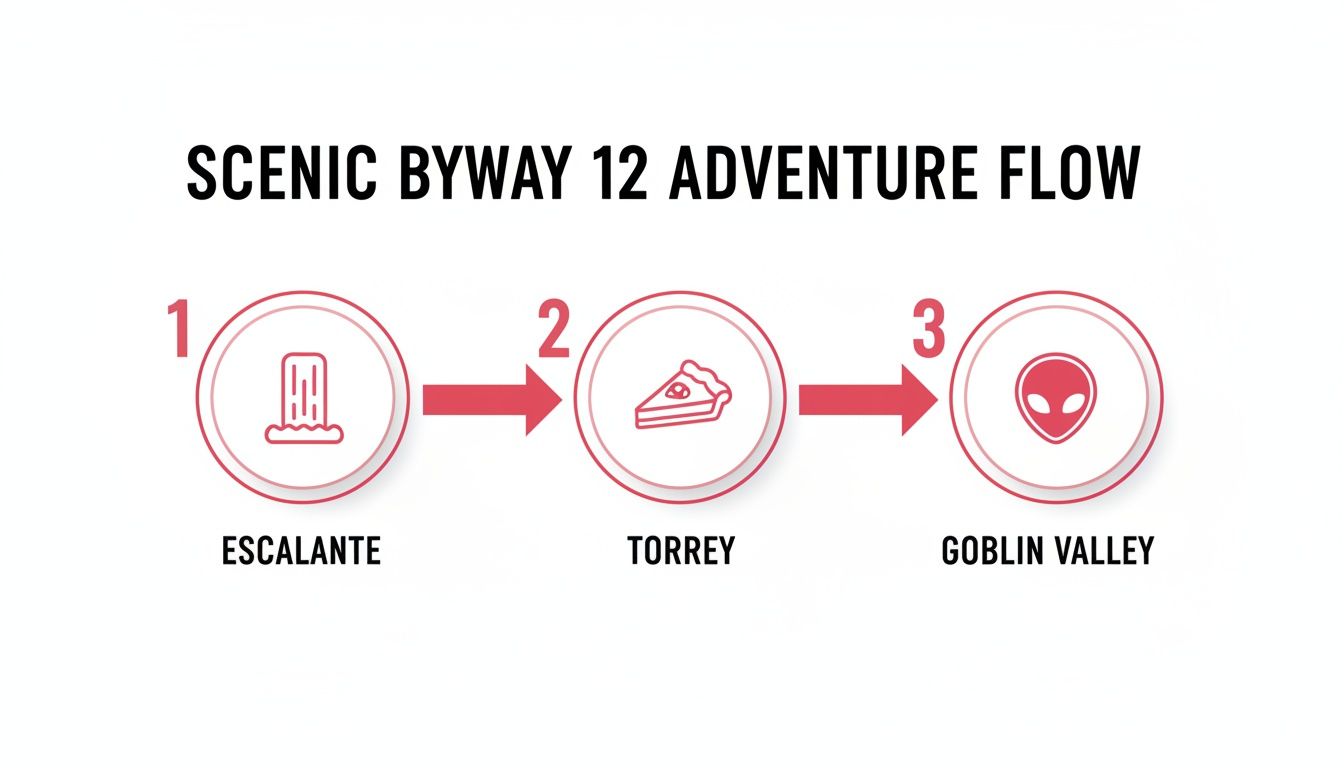
This visual helps map out how the key stops connect along this popular scenic route.
The Three-Day Immersion: The Ultimate Adventure
For those lucky enough to have more time, this itinerary adds detours to hidden gems and allows for longer, more rewarding hikes. It’s the perfect choice for anyone who wants to dive deep into the region's rugged beauty and fascinating history.
- Day 1: Follow the same plan as the Two-Day Explorer, ending your day in Torrey.
- Day 2: Instead of leaving town, spend the day digging deeper into Capitol Reef. If you have a high-clearance vehicle, consider driving a portion of the unpaved Burr Trail. Otherwise, explore some of the park's more remote hiking trails.
- Day 3: Drive from Torrey towards Moab, making sure to stop at both Goblin Valley and Little Wild Horse Canyon—a fantastic, non-technical slot canyon that’s perfect for families.
With 10.6 million visits to Utah's parks in 2023, and family groups making up 79% of those visitors, having a multi-day plan like this allows for a variety of activities that can appeal to different ages and energy levels.
No matter which itinerary you lean toward, remember you can customize it. If you need a hand organizing your saved spots and figuring out the best route, a powerful AI Itinerary Generator can help bring your perfect road trip to life.
Essential Tips for a Smooth Utah Road Trip
A little prep work can make the difference between a good road trip and a great one. The drive from Bryce Canyon to Arches National Park is stunning but also remote, and that wide-open beauty comes with a few things you absolutely need to plan for. These are the practical tips that will help you navigate it all like a seasoned pro.
First up: a place to sleep. Towns like Moab (your base for Arches) and Torrey (near Capitol Reef) are small, and hotels fill up shockingly fast. If you're traveling during the popular spring and fall seasons, you really need to book your hotels or campsites 4-6 months in advance. Last-minute options are almost always gone or ridiculously expensive.
And don't underestimate the vast distances between towns out here. Gas stations can be well over 100 miles apart, especially along the incredibly scenic but very rural Scenic Byway 12.
Actionable Tip: Make it a hard and fast rule: if you see a gas station and you're at half a tank or less, fill up. The next one might be a lot farther than you think, and running out of fuel with spotty cell service is a scenario you want no part of.
Navigating Park Logistics and Packing Smart
Getting into the parks themselves requires a bit of strategy. The America the Beautiful Pass is a no-brainer if you're hitting multiple national parks. For $80 a year, it gets you into more than 2,000 federal recreation sites. Considering the entrance fee is usually $35 per vehicle at each major park, it pays for itself very quickly.
More importantly, Arches National Park now requires a Timed Entry Permit to get in during peak hours and seasons. These reservations are released online three months ahead of time and are often snapped up within minutes. Check the official NPS website for the exact release schedule and be ready to book the second they go live.
Packing the right gear is just as crucial for staying comfortable. Utah’s high-desert weather is famously unpredictable—it's not uncommon to experience a massive temperature swing in a single day.
- Layering is Key: Pack a mix of t-shirts, long-sleeve layers, a fleece or mid-weight jacket, and a rain shell. Trust me, you’ll probably use all of them.
- Sun Protection is Crucial: The sun here is intense. A wide-brimmed hat, sunglasses, and high-SPF sunscreen are non-negotiable.
- Hydration is a Must: Always carry more water than you think you need, especially on hikes. A big reusable bottle or a hydration pack will be your best friend.
For a complete rundown of everything you should bring, check out our ultimate packing list designed specifically for this kind of adventure travel. Being prepared is the key to staying safe and comfortable while you soak in these incredible landscapes.
Final Details for Your Bryce to Arches Drive
We've gone over the routes, the must-see stops, and a few different ways to structure your trip. Now, let's get into the nitty-gritty questions that always come up when you're finalizing the plan for a road trip like this.
What’s the Best Time of Year for This Road Trip?
Hands down, the best times to drive from Bryce Canyon to Arches are in the spring (April-May) and fall (September-October). You’ll get those perfect, t-shirt-weather days for hiking without the scorching heat and peak-season crowds of summer.
Fall is especially stunning. As you drive Scenic Byway 12 over Boulder Mountain, the aspen groves turn a brilliant, shimmering gold that you have to see to believe. A winter trip is doable, but be ready for potential snow, icy roads, and fewer services in the smaller towns along the way.
Traveler Tip: Aim for the shoulder seasons. The weather is more comfortable, the crowds are thinner, and the softer light in the mornings and evenings makes the red rock landscapes pop for photos.
Do I Need a 4WD Vehicle?
For the main paved routes, including every mile of Scenic Byway 12, a standard two-wheel-drive car is all you need. The roads are well-maintained and accessible to any regular vehicle.
However, if you're the adventurous type and want to explore some of the unpaved side roads—like the famous Burr Trail or other backcountry tracks in Capitol Reef—a high-clearance 4WD is a very good idea. Always check the current road conditions before you head off-pavement; they can change in a heartbeat out here.
How Far in Advance Should I Book Everything?
For gateway towns like Moab, Torrey, and Bryce Canyon City, book your hotels at least 4-6 months out, especially if you're traveling during the spring or fall. These are small towns with limited options, and the good places fill up fast.
The big one is Arches National Park. It requires a timed entry reservation to get in during the busy season. These permits are released online three months ahead of time, on a rolling basis, and they often sell out in minutes. Check the official NPS website for the exact release schedule and set a calendar alert.
What's the Cell Service Situation Like?
Be prepared for long stretches of absolutely no service. The drive along Scenic Byway 12 between Escalante and Torrey is a notorious dead zone. You cannot rely on your phone's GPS to get you through.
Before you leave a town with good signal, download your maps for offline use. Do the same for any playlists or podcasts you want. And as a simple safety rule, always tell someone your travel plan and when you expect to arrive.
Ready to turn all this inspiration into a real plan? The Dream Trip app is the perfect way to gather all the cool spots you find on social media and organize them into a beautiful, functional itinerary. Start building your Utah adventure with Dream Trip today!

