

If there's one travel hack that consistently unlocks cheaper flights for your dream trip, it’s this: fly on a Tuesday, Wednesday, or Saturday. Shifting your travel plans by just a day or two is often the single most effective way to save a surprising amount of money that you can use for amazing experiences instead.
Finding the Cheapest Flight Days: A Quick Answer
Think of airline seats like tables at a popular restaurant. Monday mornings and Friday afternoons? That’s prime time for business travelers. Sunday evenings? That’s when every vacationer is trying to get home. On these high-demand days, airlines can—and do—charge a premium.
But Tuesday, Wednesday, and Saturday are the airline industry’s quiet days. Just as a restaurant might offer a lunch special to fill empty tables, airlines slash fares on these off-peak days to make sure their planes fly as full as possible. Understanding this simple rhythm is the first step to becoming a savvy traveler.
The Midweek Savings Advantage
The data doesn't lie. Year after year, flight pricing patterns show a clear and consistent dip right in the middle of the week. Flights that depart on a Tuesday or Wednesday are almost always cheaper than those taking off on or around the weekend.
Across countless studies, these two days consistently come out on top for savings. For a trip to Europe, for example, flying midweek can slice your fare by 25–40% compared to peak travel days—that's potentially hundreds of dollars back in your pocket for museum tickets or a fantastic meal. You can explore more detailed findings about these airfare trends and see for yourself just how much you could save on your next getaway.
This simple chart paints a very clear picture of the price difference.
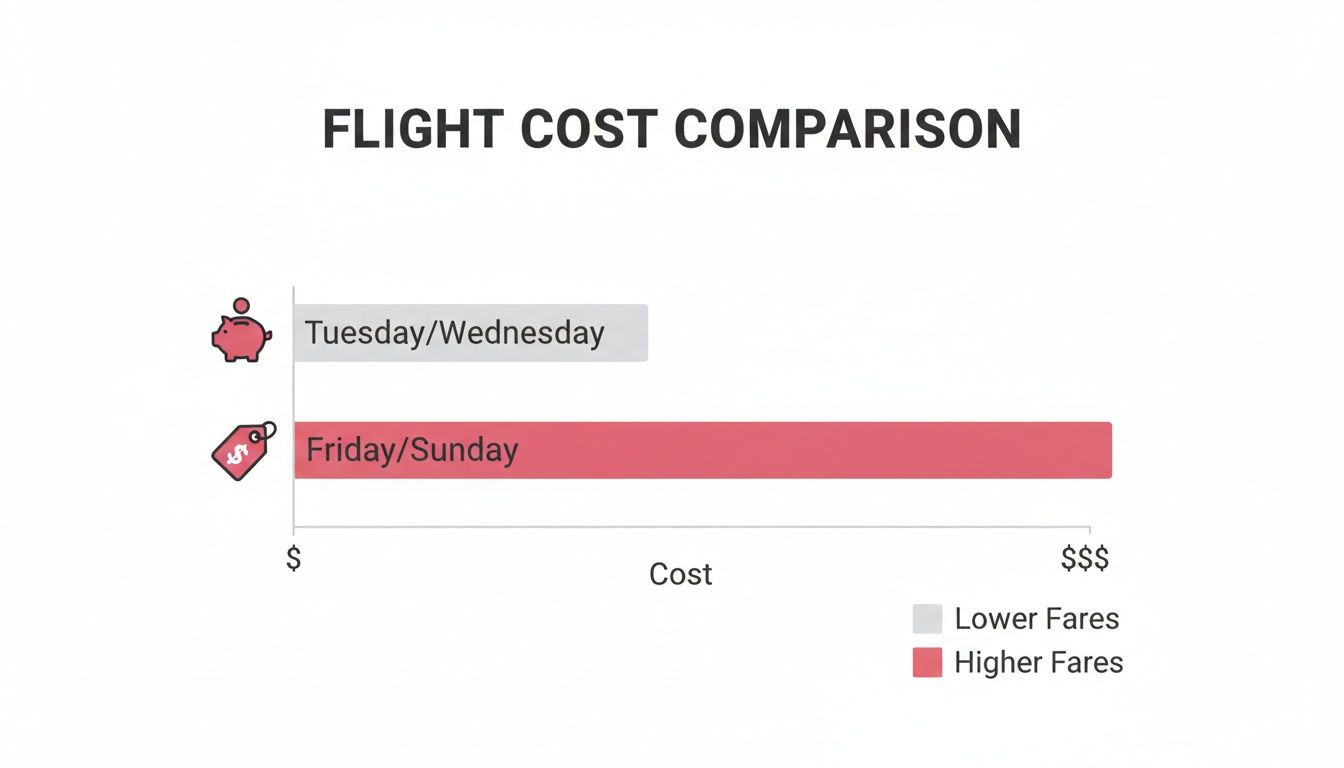
The takeaway is simple: avoiding the Friday and Sunday travel rush is a powerful move for your travel budget. By just tweaking your itinerary to fly on a Tuesday or Wednesday, you’re aligning your travel with the lowest demand period of the week. The result? Significant savings you can put toward amazing experiences at your destination instead of just getting there.
Here’s a quick cheat sheet to help you plan your next domestic or international trip.
Typical Cheapest vs Most Expensive Days to Fly
| Travel Type | Cheapest Days (Typically) | Most Expensive Days (Typically) |
|---|---|---|
| Domestic | Tuesday, Wednesday, Saturday | Friday, Sunday |
| International | Tuesday, Wednesday | Friday, Sunday, Monday |
While these trends hold true for most destinations, think of them as your starting point. The absolute best day for your specific trip can vary, but starting your search on a Tuesday or Wednesday is always a smart first move.
Understanding Why Midweek Flights Are Cheaper

To consistently find the cheapest day to fly, you have to start thinking like an airline. Their goal is simple: fill every seat on every flight. Their pricing isn't magic; it's just a deep understanding of the predictable weekly rhythms of travelers.
Imagine planning a trip to a city like London. Fridays and Mondays are the headliners. They attract business travelers who need to be there for the workweek. These travelers have little flexibility and are willing to pay more for convenience. Sundays are packed with vacationers trying to squeeze every last moment out of their trip. The demand for these days is so high that airlines set prices accordingly, knowing the seats will sell out.
The Midweek Demand Dip
So what about Tuesday and Wednesday? These are the "indie band nights" of the travel week. The crowds are much smaller. Business travelers are already working, and most leisure travelers are settled into their trips.
This dip in demand creates a problem for airlines. An empty seat is lost revenue. So they pull their most powerful lever: lower prices. By offering significantly cheaper fares, they give travelers with flexible schedules a powerful incentive to fly on these less popular days. This helps them ensure planes don't take off half-empty.
Traveler Tip: Airlines don't slash midweek fares out of kindness. It's a strategic business move. By choosing to fly when fewer people want to fly, you're directly benefiting from their pricing model.
This is why shifting your travel plans by just a day or two can unlock such massive savings. You're not just finding a cheaper ticket; you're aligning your travel with the airline's quietest days.
Airline Fare Sales and Timing
There’s another layer to this strategy: the timing of airline fare sales. Airlines often roll out their weekly sales on Monday nights or early Tuesday mornings. These promotions are designed to boost bookings, and they frequently target those slower midweek travel periods.
This means Tuesday isn't just a cheaper day to fly—it can also be one of the best days to book.
By understanding this cycle, you can put yourself in the perfect position to snag a fantastic deal. For a deeper dive, check out our guide on the best time to book flights to see how the booking window and your departure day work together. This knowledge is what separates paying top dollar from getting the exact same seat for a fraction of the cost.
Unlocking Savings with Saturday Departures

While Tuesdays and Wednesdays get all the glory, there’s another travel hack hiding in plain sight: the Saturday departure. Most of us write off the entire weekend as pricey, but that assumption could be costing you.
The logic is simple. Most vacationers scramble for flights on Friday afternoon and book their return for Sunday evening to maximize their time off. This creates a huge, predictable price surge on those two days.
But this rush leaves a quiet gap on Saturday mornings. Business travelers are home, and most leisure travelers are already sipping their first vacation cocktail. Demand for outbound flights dips, creating a sweet spot where airlines drop fares to fill seats that would otherwise fly empty.
The Saturday Savings Sweet Spot
Shifting your departure from Friday to Saturday can often unlock serious savings without sacrificing too much of your weekend. For a beach getaway to a destination like Cancún, this is one of the most effective ways to find a deal outside the usual midweek window.
And the data backs it up. According to Expedia's 2025 Air Hacks Report, Saturday has become one of the cheapest days for domestic flights, with fares averaging about 17% lower than flying on a Sunday. For international trips, that same report points to Thursday as another key savings day, with fares around 15% lower than the Sunday peak. You can dive into their findings in the 2025 Air Hacks Report to see how these patterns work.
Pro Tip: This strategy is a game-changer for short trips like weekend getaways. The money you save on a Saturday morning flight—say, $75 per person—can cover the cost of a fantastic dinner or a cool city tour at your destination.
Think about the other perks of this approach:
- Fewer Crowds: Airports are often far less chaotic on Saturday mornings compared to the Friday afternoon mad dash.
- More Budget for Fun: The cash saved on airfare goes right back into your travel fund for actual experiences.
- A More Relaxing Start: You get to skip the stress of bolting from work on a Friday just to make your flight.
By understanding how other travelers behave, you can strategically place your booking to take advantage of these predictable lulls in pricing. Next time you're planning a trip, don't automatically cross off the entire weekend—give Saturday a serious look.
Actionable Strategies to Find Your Lowest Fare

Knowing that Tuesdays and Wednesdays are often the cheapest days to fly is a great start. But turning that knowledge into actual savings for your trip takes a few smart strategies. These practical, step-by-step methods will help you lock in the lowest possible fare.
Embrace Flexible Date Searches
This is your single most powerful tool for slashing flight costs. Instead of searching for one specific date, you're asking the airline, "Show me the price for the entire month."
Search engines like Google Flights and Skyscanner make this incredibly easy. Just enter your route and select the calendar view. You’ll instantly see a color-coded grid where the cheapest days—almost always those midweek dates—are highlighted in green. You can see at a glance if leaving a day earlier or later could save you $50, $100, or even more. This is the fastest way to pinpoint the cheapest days for your specific trip.
Let the Deals Come to You with Price Alerts
What if your travel dates are set in stone? Or maybe you're just holding out for a fantastic price on a dream trip to Japan. This is where you let technology do the work. Setting up price alerts is like having a tiny, deal-scouting robot working for you 24/7.
It's simple: find your desired flight and click "track prices" or "get price alerts." You’ll now get an email or notification the second that fare drops.
Expert Tip: Don't just set one alert. If you can, set alerts for a few different date combinations around your ideal window. An airline might launch a flash sale for a Wednesday departure that you'd completely miss if your alert was only set for Thursday.
This is a low-effort, high-reward strategy that ensures you never miss those sudden price drops.
Unlock Hidden Savings with Advanced Tactics
Sometimes the cheapest flight isn't the most obvious one. By thinking a little outside the box, you can uncover deals that most travelers completely overlook.
- Check Nearby Airports: Planning a trip to Los Angeles? Don't forget to check smaller airports like Burbank (BUR) or Long Beach (LGB) instead of just LAX. Flying into a secondary airport can sometimes save you a surprising amount of cash and hassle.
- Book One-Way Fares: We're trained to think round-trip tickets are the default, but that’s not always the best deal. Sometimes, booking two separate one-way tickets on different airlines is significantly cheaper.
- Plan Your Total Budget: A cheap flight is only a win if the whole trip is affordable. Before you book, get a clear picture of the total cost. Using a tool like a comprehensive trip cost calculator helps you see how that flight deal fits into your overall budget, making sure your savings lead to a more affordable vacation.
Knowing when to use each strategy is key to consistently finding the best prices for your dream destinations.
Flight Finding Strategy Comparison
| Strategy | Best For | How It Works | Potential Savings |
|---|---|---|---|
| Flexible Date Search | Travelers with flexibility in their schedule | Visually scan a month-long calendar to spot the cheapest days (usually green). | High |
| Price Alerts | Travelers with fixed dates or waiting for a deal | Set up automated notifications for a specific route and get an email when the price drops. | Medium to High |
| Nearby Airports | Trips to large metro areas with multiple airports | Compare prices for primary and secondary airports to find hidden lower fares. | Medium |
| One-Way "Hacker Fares" | When one airline has a cheap outbound but not return | Book two separate one-way tickets, potentially on different carriers. | Low to Medium |
By combining these tactics, you put yourself in the best possible position to stop overpaying for flights and start traveling more.
When the Standard Flight Rules Do Not Apply
While flying on a Tuesday, Wednesday, or Saturday is a fantastic rule of thumb, it’s not foolproof. Certain situations completely throw off the normal weekly pricing patterns. Knowing when to toss the standard playbook out the window is what separates a good deal-finder from a truly savvy traveler.
The Holiday and Special Event Effect
Major holidays, school vacations, and huge city-wide events are the great equalizers of flight pricing. When demand skyrockets for a destination, every day of the week can become expensive. That reliable midweek dip in prices? It pretty much evaporates.
Take Christmas week, for example. The cheapest day to fly often shifts to Christmas Day itself, simply because fewer people want to travel on the actual holiday. Data consistently shows that flying on December 25th can be $100 or more cheaper than flying just a day or two before. A similar effect happens during shoulder season; visiting a popular spot like Rome in May can offer great weather with fewer crowds and lower costs than a peak summer trip in July.
Key Insight: When everyone wants to travel at the same time, your goal shifts from finding the cheap day to finding the least expensive day within a pricey window. It's less about the day of the week and more about the moments with slightly less demand.
This same logic applies to other peak travel times:
- Spring Break: Any day during this period will see a price surge for popular beach destinations like Miami or Cabo.
- Major Sporting Events: Flying into a city hosting the Super Bowl will be expensive regardless of the day.
- Large Festivals: Events like Mardi Gras in New Orleans or Carnival in Rio de Janeiro create their own high-demand pricing bubbles.
How Your Route Changes the Game
The nature of your destination also plays a massive role. The typical Tuesday/Wednesday/Saturday pattern is most reliable for routes serving a mix of business and leisure travelers.
A flight into a business hub like New York will almost always follow the classic Monday/Friday peak model. But a route to a pure vacation spot like Hawaii or the Maldives might see sustained high demand from Thursday straight through Sunday as travelers try to maximize their trip. Local insights matter here; for example, knowing that many European cities have local holidays in August can help you plan around price spikes.
Ultimately, finding the cheapest day requires more than just memorizing a rule. It’s about understanding the demand for your specific destination on your specific dates. By recognizing when the standard rules don't apply, you can adjust your strategy and avoid paying a premium.
Still Have a Few Lingering Questions?
Alright, we’ve covered the best days to fly and the strategies for sniffing out those cheaper fares. But a few common questions always pop up, so let's tackle them head-on so you can book your next trip with total confidence.
Does the Time of Day I Book Actually Matter?
This is a classic travel hacker debate. While the day you fly makes the biggest difference by far, some people swear by booking at a specific time of day. The theory is that booking late at night might catch airlines as they update their fare systems, potentially revealing a slightly lower price.
Honestly, though, the savings here are usually minimal. You'll get way more bang for your buck by focusing your energy on finding a Tuesday or Wednesday flight than you will by staying up until 2 a.m. hoping for a glitch.
How Far in Advance Should I Book My Flights?
Finding that perfect booking window is the key to not overpaying. It really comes down to where you're going.
- Domestic Trips: The sweet spot is usually 1 to 3 months before you plan to leave.
- International Adventures: You need a much longer runway. Start seriously looking 4 to 8 months out for your dream trip.
Booking too early can be just as bad as booking too late. Airlines often haven't released their most competitive fares a year in advance. Wait too long, and you'll be stuck with last-minute price hikes.
So, Are Last-Minute Flights Ever Cheaper?
It’s one of the most persistent travel myths out there—that waiting until the final hour will unlock some secret, ultra-cheap fare. While a freak deal can happen, the reality is almost always the opposite. Airlines jack up prices significantly in the last few weeks before a flight.
Why? Because they know they can. Those sky-high prices are aimed squarely at business travelers with inflexible schedules or people dealing with emergencies who have no choice but to pay whatever it takes. For travelers planning their dream trips, planning ahead is a much more reliable path to savings. For more ways to keep your budget in check, check out our complete guide to budget travel tips.
Ready to turn all that travel inspiration into a real plan? Dream Trip is an AI travel planner that takes all your saved spots from social media and organizes them into a single, smart itinerary. Stop scrolling and start planning. Download Dream Trip on the App Store and build your next adventure today.


