
Let's be honest, planning a trip with a group of people can go one of two ways. It either starts with a flurry of excitement—trading dreamy Instagram posts and TikToks—or it immediately devolves into a chaotic mess of opinions, scheduling conflicts, and a group chat that blows up your phone 24/7.
What starts as fun can quickly feel like a full-time administrative job. This is exactly where a flexible, collaborative group travel itinerary template becomes your most valuable tool. It’s the single best way to corral all that chaotic energy into a clear, actionable plan everyone can actually see and agree on for their dream trip.
The Secret to Stress-Free Group Travel
Think of a good itinerary template as the central hub for your entire trip. It’s more than just a schedule of events; it's the shared source of truth that prevents those all-too-common travel headaches. No more digging through month-old emails for a flight confirmation or scrolling endlessly through the group chat to find the address of the hotel.
Everything lives in one place, accessible to everyone. This simple shift from chaos to cohesion is what separates a trip remembered for its amazing experiences from one remembered for its planning nightmares.
From Chaos to Cohesion
This need for organized planning is only growing. The global Group Travel Service Industry is on track to hit a staggering $250 billion by 2032, a huge leap from $145 billion in 2024. As more and more of us choose to travel together, the tools we use to plan those trips have to get smarter. You can dive deeper into the growth of the group travel market here.
A great itinerary doesn't just list activities; it builds consensus. When everyone can contribute to a single document, you make sure all voices are heard and expectations are managed long before you lock the front door.
A well-structured template is the foundation for a smooth group trip. Here's a look at the core components that make an itinerary truly effective for group travel.
Key Elements of a Perfect Group Itinerary
| Component | Why It's Critical for Groups | Example |
|---|---|---|
| Shared Travel Details | Centralizes all flight numbers, arrival/departure times, and confirmation codes. This prevents the classic "What time does your flight land?" question from being asked ten times. | A simple table listing each person's name, airline, flight number, and arrival time. |
| Accommodation Info | One-click access to the hotel/rental address, check-in/out times, and booking contact. Crucial for when the group splits up and needs to get back. | "The Coastal Villa, 123 Ocean Drive. Check-in: 3:00 PM. Host: Maria, 555-123-4567." |
| Day-by-Day Schedule | Provides a clear but flexible outline of planned activities, reservations, and free time. It manages expectations about the pace of the trip. | Day 1: 7:00 PM - Dinner reservation at La Trattoria. Day 2: 10:00 AM - Guided city tour (meet in lobby). |
| Budget & Expense Tracker | A shared space to track group expenses and individual contributions. This transparency minimizes the awkward "who owes what" conversation at the end of the trip. | A linked spreadsheet tab showing who paid for dinner, groceries, and tickets, with a running total. |
| Ideas & Voting Section | A "parking lot" for potential activities, restaurants, or sights. Including a voting feature helps the group make democratic decisions without endless debate. | "Potential Activities: Beach Day (Votes: 4), Museum Visit (Votes: 2), Hike (Votes: 3)." |
| Contact & Emergency Info | A consolidated list of everyone's phone numbers, local emergency services, and travel insurance details. It's the section you hope you never need, but are glad you have. | A list with each traveler's name, phone, and an emergency contact back home. |
Having these elements in place from the beginning transforms the planning process from a chore into an exciting, collaborative part of the journey itself.
Key Benefits of Using an Itinerary Template
Ultimately, using a template sets your trip up for success by tackling the biggest sources of group travel friction head-on.
- Clarity and Transparency: Everyone can see the plan anytime, which drastically cuts down on repetitive questions and misunderstandings.
- Shared Responsibility: It naturally encourages people to take ownership. Someone can handle booking the tours while another researches restaurants, and it all gets added to the central doc.
- Reduced On-Trip Friction: When the big decisions are made beforehand, you avoid standing on a street corner arguing about where to eat dinner. The plan is the plan.
- Actionable Inspiration: It provides the perfect structure to turn all those saved TikToks and Instagram posts into a concrete schedule with dates, times, and locations.
How to Build Your Group Itinerary
This is where the magic happens—turning that chaotic group chat full of vague ideas into a real, actionable plan. A solid itinerary is the bridge between everyone's travel dreams and a stress-free adventure on the ground.
First things first, you need a brain dump. Get everyone to throw their "must-do" activities, restaurant links, and social media pins into the "Ideas" tab of the group travel itinerary template. The goal here isn't to commit to anything just yet; it's about getting all the possibilities out on the table.
Turning Inspiration into Action
With a pool of ideas ready, you can start building out the day-by-day schedule. But before you start slotting things in, you have to get crystal clear on what your group actually needs when it comes to pace, budget, and overall vibe. Is this a jam-packed, see-everything trip, or are people hoping for a mix of planned activities and lazy afternoons?
Let’s imagine you're planning a 4-day city break for a few friends to Rome. Here’s how it usually plays out:
- Gather the ‘Must-Sees’: One friend wants to see the Colosseum, another wants an authentic pasta-making class, and a third wants to toss a coin in the Trevi Fountain. Everyone adds their top spots to the list.
- Plug in the Logistics First: Before you do anything else, anchor the itinerary with the non-negotiables. Add the flight confirmation number (like FR-9432), the Airbnb address, and the check-in/out times. This creates the skeleton of your plan.
- Cluster Activities by Location: Pull up a map and see where all these desired spots are. You’ll quickly realize the Colosseum, Roman Forum, and Palatine Hill are all next to each other and can be done on the same morning, saving hours of travel time. Visiting the Trevi Fountain is best done early in the morning (around 7 AM) to avoid massive crowds.
This is how a template transforms a mess of ideas into an organized plan that actually works.
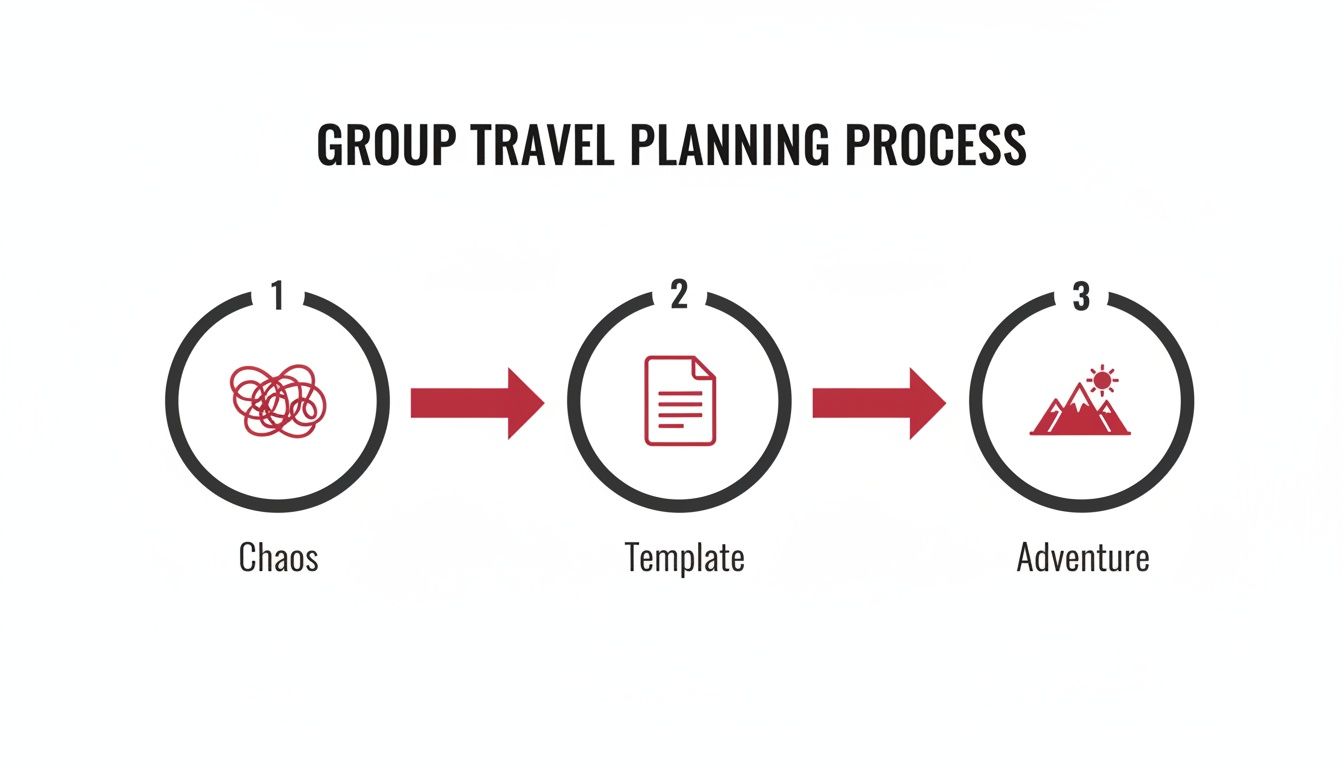
The template isn't just a document; it's a filter that brings structure and logic to the creative chaos of group planning.
Balancing Plans with Flexibility
A great group itinerary is never set in stone. Think of it as a framework, not a rigid script. It needs enough structure to avoid that dreaded "what do we do now?" indecision, but enough wiggle room for spontaneous discoveries. Honestly, over-scheduling is one of the fastest ways to burn a group out.
A packed itinerary might look impressive on paper, but the best travel memories often come from the unplanned moments. Always build in blocks of "free time" or "explore time" to let people wander off, recharge, or chase a random recommendation.
For that 4-day Rome trip, this might mean booking Colosseum tickets for the morning but leaving the entire afternoon open for exploring the charming Trastevere neighborhood. This simple trick caters to everyone. The friend who needs a nap can take one, while someone else might stumble upon a fantastic local gelateria. It’s about accommodating different energy levels.
If you want to find that perfect balance automatically, you can even use Dream Trip’s AI itinerary generator to create an optimized schedule.
Finally, fill in the small but crucial details that make the trip seamless. Add dinner reservation times, ticket confirmation numbers for attractions, and direct links to any pre-booked tours. When everything is logged in one shared place, you empower everyone to be self-sufficient. It takes the pressure off a single planner and makes the whole trip run smoother.
Mastering Group Dynamics and Collaboration
Let's be real: a perfectly organized itinerary template is a great start, but it's the people on the trip that make or break it. Even the most flawless plan can unravel if the group chemistry is off. This is where your role shifts from just a planner to a trip leader—you’re now navigating the human side of the adventure.

Successfully managing different travel styles and energy levels is the secret sauce for a trip everyone enjoys. Not everyone is a "wake up at 6 AM for a ten-mile hike" person, just like not everyone wants to spend eight hours by the pool. The goal isn’t to force everyone into the same box, but to build a flexible plan that respects these differences from the get-go.
Assign Roles to Share the Load
One of the easiest ways to get everyone invested and prevent one person from doing all the work is to assign small, specific roles. This isn’t about adding chores; it’s about giving each person ownership over a piece of the trip's success. It flips the script, turning passive travelers into active, helpful participants.
You could try a few simple assignments like these:
- Chief Restaurant Researcher: This person scouts dinner spots based on the group's budget and food preferences, and they’re the hero who makes reservations.
- Transportation Lead: Their job is to figure out the logistics of getting from A to B, whether that's booking an airport shuttle or figuring out the local train schedule.
- Activity Coordinator: This role is all about the details—confirming booking times, checking museum hours, and making sure everyone has their tickets for pre-planned stuff.
These aren't huge jobs, but they make a world of difference. It's a strategy pulled straight from the professional world, where collaboration is everything. In fact, group travel is the largest part of the business travel market, making up a massive 60.66% of the total share, largely because it builds better teams. You can read more about the rise of group business travel and see why it works.
The Pre-Trip Huddle
If there's one thing I've learned, it's that a quick pre-trip meeting is non-negotiable. Whether it's in person or over a quick video call, this isn't about re-planning the whole trip. It's about alignment. This is your chance to nail down the big-picture items that often cause friction once you're on the ground.
A 30-minute chat before you leave can prevent hours of misunderstanding and debate while you're on vacation. It’s the single most important conversation you can have.
During this huddle, you need to hit two critical topics head-on: budget and pace. Don’t beat around the bush. Ask directly, "What's a comfortable daily spend for meals?" and "Are we trying to see everything, or are we aiming for a more relaxed vibe?"
Getting clear answers sets expectations before anyone even packs a bag. It ensures everyone boards the plane with a shared understanding, paving the way for a trip that’s memorable for all the right reasons.
Smart Budgeting and Splitting Costs Fairly
Let’s be honest: money is usually the most awkward part of planning a group trip. But it really doesn’t have to be.
The single best way to prevent stress and arguments over the final bill is to get everything out in the open before you go. When it comes to group finances, transparency is your best friend. The goal is to land on a system that feels fair to everyone and is easy to manage while you’re busy having fun.
Luckily, there are some simple, proven ways to keep the finances clear and painless.
Simple Methods for Splitting Expenses
Forget passing a wad of cash around or trying to remember who paid for dinner three nights ago. Modern tools and simple strategies make the whole process much less personal and way more accurate.
Here are a few approaches that actually work:
- Use a Cost-Splitting App: Apps like Splitwise or Tricount were literally made for this. One person pays for a group meal or activity, logs it in the app, and the algorithm figures out who owes what. At the end of the trip, everyone can see their total and settle up in a few clicks.
- Establish a Group Fund: This is perfect for shared incidentals like groceries for the rental house, gas, or snacks. Everyone contributes an agreed-upon amount (say, $100 each) to a central pot. This can be actual cash or a transfer to one designated person's account. All shared costs then get paid from this fund.
- Track in Your Template: For ultimate convenience, you can build a simple expense tracker right into your group travel itinerary template. Just add a separate tab with columns for the date, item, total cost, who paid, and who it was for. This keeps your budget and daily plans all in one place.
The best method is the one your group will actually use. Hash it out during your pre-trip huddle and agree on a system before the first expense ever happens. A five-minute conversation now saves a massive headache later.
Having ‘The Money Talk’ Before You Go
Once you've picked a system, you need to align on the actual numbers. If you need some help getting a handle on the bigger picture, a comprehensive modern travel budget guide can give you a solid framework.
Set aside some time to talk about financial expectations. You can start by using our trip cost calculator to get a baseline for big expenses like flights and lodging. This isn't about getting into anyone's personal finances; it's about setting realistic boundaries so everyone can relax and enjoy the trip without worrying about surprise costs.
A few easy conversation starters can make this feel way less formal:
- "So, for food, what's a comfortable daily budget for everyone? Are we thinking casual cafes most days, or should we plan for a couple of fancy dinners?"
- "For optional stuff like the boat tour, how should we handle it if some people want to opt out? No pressure either way."
These direct questions get everyone on the same page. It’s the key to making sure financial stress doesn’t become an unwanted souvenir from your trip.
You've done the hard work. The itinerary is packed with everyone's must-sees, the logistics are sorted, and the group chat is buzzing with excitement. Now, it's time to turn that static document into a living, breathing guide that sits right in your pocket. This is where your planning shifts from a spreadsheet to a smart travel assistant.
By pulling your finished itinerary into an app like Dream Trip, you unlock tools that automate the most tedious parts of actually being on the trip. Suddenly, your plan becomes interactive, easily shareable, and far less of a headache to manage when you're on the move. It’s the difference between a paper map and a live GPS.
Optimize Your Days with AI Scheduling
Once all your activities are in the app, the real magic happens. The AI scheduler gets to work, analyzing the locations of everything you've planned—from that tiny coffee shop and the museum to that sunset viewpoint. It then pieces it all together into the most efficient daily route.
This isn't just about dropping pins on a map. It’s about intelligent optimization.
The scheduler calculates realistic travel times between each spot, preventing the classic group travel blunder of trying to be in three places at once. We've all been on those trips, frantically rushing from one side of town to the other. This simple step builds a logical flow into your day, meaning more time actually enjoying the experiences and less time stressing in transit.
Here’s a glimpse of how the app lays out your optimized schedule and map all in one place.
This single view means everyone can see not just what you're doing, but where each activity is in relation to everything else. It makes those spontaneous "let's grab a drink nearby" moments so much easier.
Visualize and Share Your Interactive Plan
One of the most powerful features is the unified map that displays your entire adventure at a glance. Every hotel, restaurant reservation, and tour is pinned, giving you a complete visual overview. This is amazing for spotting those little opportunities you might otherwise miss, like a famous bakery just two blocks from your morning walking tour.
Best of all, this interactive plan can be shared with the whole group. Everyone gets access to the live itinerary, which means no more out-of-date information.
- Real-Time Updates: If a dinner reservation gets pushed back or you decide to swap afternoon plans, one quick edit updates the plan for everyone instantly. No more confusion or a dozen "what's the plan?" texts.
- Centralized Information: All the important stuff—confirmation numbers, addresses, contact info, and notes—is attached right to its pin on the map. Everyone has what they need, right when they need it.
- Empowered Travelers: When everyone can see the day's schedule and navigate to the next spot on their own phone, it takes all the pressure off of one designated planner.
Turning your template into a live, AI-powered plan automates the logistics so you can stop worrying about the 'how' and focus entirely on the experience itself.
Ultimately, integrating your plan with a tool like Dream Trip bridges the gap between careful planning and seamless execution. It ensures all your hard work pays off in the form of a smoother, more enjoyable trip for the whole crew. You can check out how to get started with the Dream Trip app and see how it brings your group travel itinerary to life.
An Example Itinerary for a Weekend Getaway
Theory is great, but let's see how this all comes together in the real world. I’ve filled out our group travel itinerary template for a hypothetical 3-day weekend trip to Dublin for four friends. This shows you how to build a plan that mixes firm bookings with the breathing room everyone needs to stay sane.
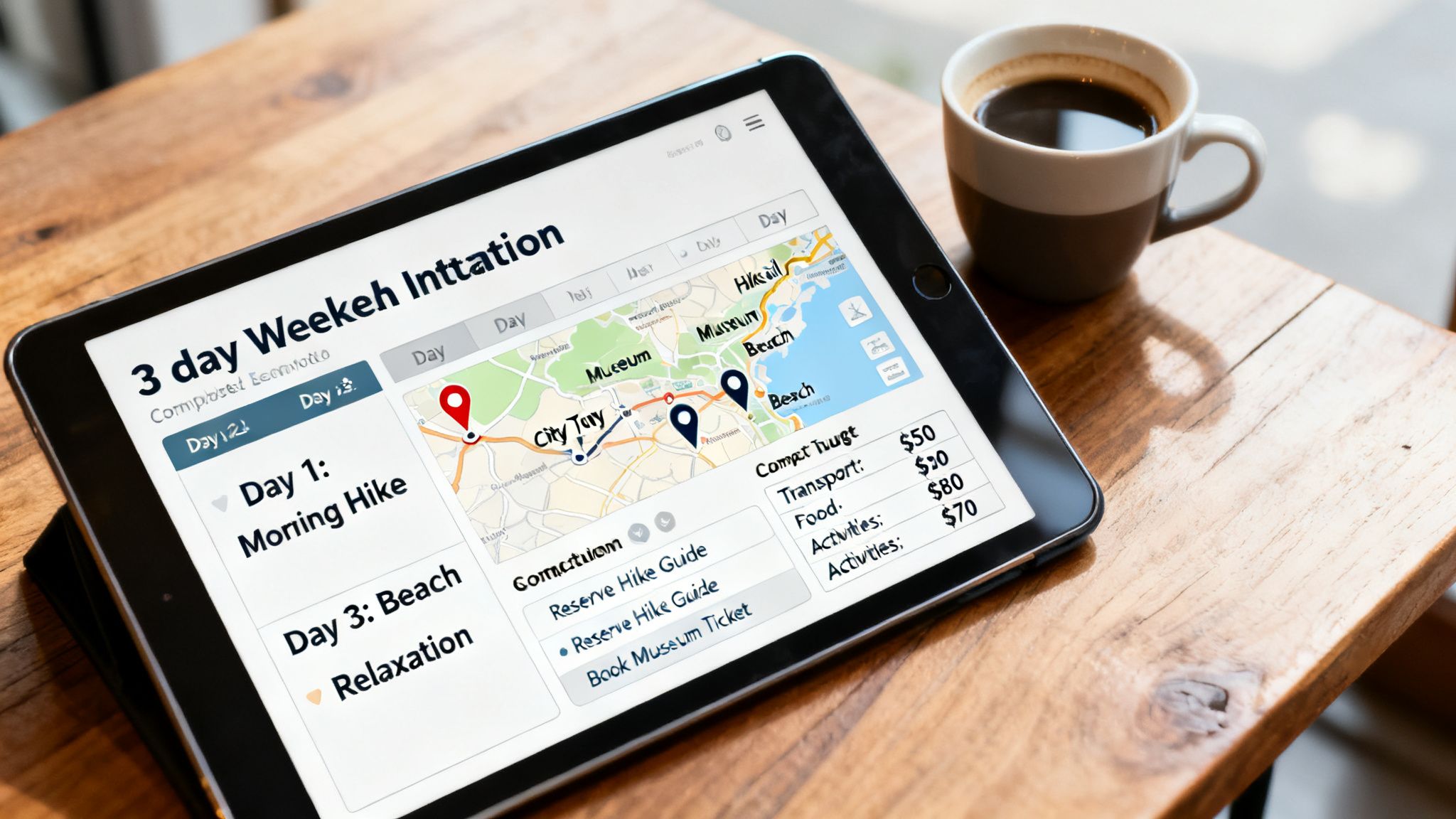
This level of organization isn't just nice to have anymore; it's becoming essential. Group and multigenerational trips now make up 10% of all travelers, and the entire leisure travel market is exploding. Projections show it rocketing from $425 billion in 2024 to nearly $1.4 trillion by 2040. You can read more about the future of leisure travel if you're curious about the trends.
Here’s how our Dublin weekend breaks down.
Day 1: Arrival and Historic Exploration
Local Insight: Dublin's shoulder seasons (April-May, September-October) offer pleasant weather with fewer crowds than peak summer. Expect to pay around €80-€120 per night for a decent mid-range hotel.
- 2:00 PM: Land at Dublin Airport (DUB). Both flight numbers (Aer Lingus EI176 & British Airways BA836) are logged in the 'Travel Details' tab so we can track everyone's arrival.
- 3:30 PM: Check into The Temple Bar Hotel. The address and confirmation number are hyperlinked right in the itinerary—one tap and you’ve got navigation open.
- 4:30 PM - 7:00 PM: Free Time. This is a non-negotiable part of day one. It gives the early arrivers a chance to wander and the jet-lagged a moment to nap.
- 7:30 PM: Dinner reservation at The Winding Stair. It’s booked under "Aoife's name," and we've set a rough budget of €60 per person in the expense tracker.
- 9:30 PM: Optional live music at The Cobblestone Pub. This is a low-pressure activity; anyone who’s still got energy can head over, and anyone who’s tired can call it a night.
Day 2: Culture and Cuisine
The goal for day two is to hit one major "must-do" attraction without turning the whole day into a forced march. We’re pairing a big tourist spot with more relaxed, local experiences.
- 10:00 AM: Tour of the Guinness Storehouse. Tickets are pre-booked (Confirmation #G78H3F) and cost €30. A link to the QR codes is right in the itinerary to avoid any frantic searching.
- 1:00 PM: Lunch at Leo Burdock for classic fish and chips. This is an easy, budget-friendly meal that doesn’t require a reservation and costs about €15 per person.
- 2:30 PM - 6:00 PM: Flexible Afternoon. Here’s where personal choice comes in. We’ve listed a few options—exploring Dublin Castle, visiting St. Patrick’s Cathedral, or just chilling out. The group can split up based on what they actually want to do.
- 7:00 PM: Group cooking class at Dublin Cookery School. A perfect group activity that’s both interactive and serves as dinner.
This blend of firm reservations and open slots is key. It provides structure without being restrictive, accommodating different energy levels and personal interests within the group.
Day 3: Farewell Breakfast and Departure
Keep the last day simple. The goal is a stress-free departure, not cramming in one last thing.
- 9:00 AM: Farewell breakfast at Brother Hubbard (South). Local Tip: Known for its fantastic brunch, but it gets busy. Arrive early or book ahead if possible.
- 11:00 AM: Check out of the hotel.
- 11:30 AM: Pre-booked taxi to Dublin Airport (DUB). Cost is approx. €30-€40. All transport details and costs are logged, which makes splitting the bill later a breeze.
As you can see, the template turns a mess of ideas and bookings into a clear, shared vision for the trip. It’s the difference between potential chaos and a genuinely memorable adventure.
Ready to stop the planning chaos and start your adventure? Let Dream Trip turn your saved social media spots into an organized, shareable plan. Build your perfect group itinerary and let our AI handle the logistics. Download Dream Trip and start planning today.

