
A hotel cancellation policy is the agreement that spells out whether you can get your money back if your travel plans hit a snag. Think of it as the fine print that governs your trip's flexibility, detailing the deadlines, fees, and rules for changing or canceling a reservation without losing your cash.
Why Hotel Cancellation Policies Matter for Your Dream Trip

You’ve finally found it—the perfect hotel for that trip you’ve been piecing together from saved TikToks and Instagram spots. But as you hover over the ‘Book Now’ button, a little voice whispers, “what if things change?” This is exactly where understanding the hotel’s cancellation policy can turn that flicker of doubt into booking confidence.
These policies aren't just legal jargon; they're a crucial handshake between you and the hotel. They exist to strike a fair balance: protecting your need to be flexible while making sure the hotel can manage its rooms and avoid the financial hit of last-minute empty beds. For anyone planning a multi-stop adventure, a good policy is your ultimate safety net.
Balancing Flexibility and Stability
The travel world is always in motion, and booking rules have changed right along with it. Hotel cancellation policies went through a massive shift over the last few years. At the height of the pandemic, some European hotels saw cancellation rates jump to an incredible 52% of online revenue.
By 2023, things settled down to a more normal global average of about 20–23% of online bookings. This history lesson explains why so many hotels now offer a mix of flexible rates alongside stricter, non-refundable options. You can learn more about how these cancellation trends have evolved.
This balancing act has a direct impact on your travel budget and peace of mind. Getting a handle on these policies helps you:
- Book with Confidence: Knowing you have an out lets you lock in great rates early without the stress.
- Protect Your Budget: You can avoid losing a deposit or, even worse, paying for a room you never even get to use.
- Stay Adaptable: Keep your itinerary fluid enough for spontaneous side trips or unexpected detours.
- Spot Hidden Fees: Understand the real difference between a small penalty and losing the entire cost of your stay.
A clear cancellation policy is one of the most powerful tools a traveler has. It’s the difference between a minor hiccup and a major financial setback, allowing you to pivot when life inevitably happens.
By digging into the details before you book, you’ll start making much smarter decisions. You'll learn the difference between "fully refundable" and "non-refundable" rates, what a "cancellation window" really means, and how to pick the right booking for your kind of trip. This guide will give you the know-how to navigate these rules like a pro, keeping your dream trip on track no matter what comes your way.
Decoding Common Cancellation Terms and Clauses
Stepping into the world of hotel bookings can feel like learning a new language. The terms and conditions are often dense, confusing, and feel designed to trip you up. But once you understand the lingo, you can see these policies for what they are: a roadmap for a flexible trip.
Knowing these key phrases is the difference between a minor inconvenience and a major, non-refundable headache. Let's break down the most common clauses you'll run into so you can book with total confidence.
The Cancellation Window and Cut-Off Time
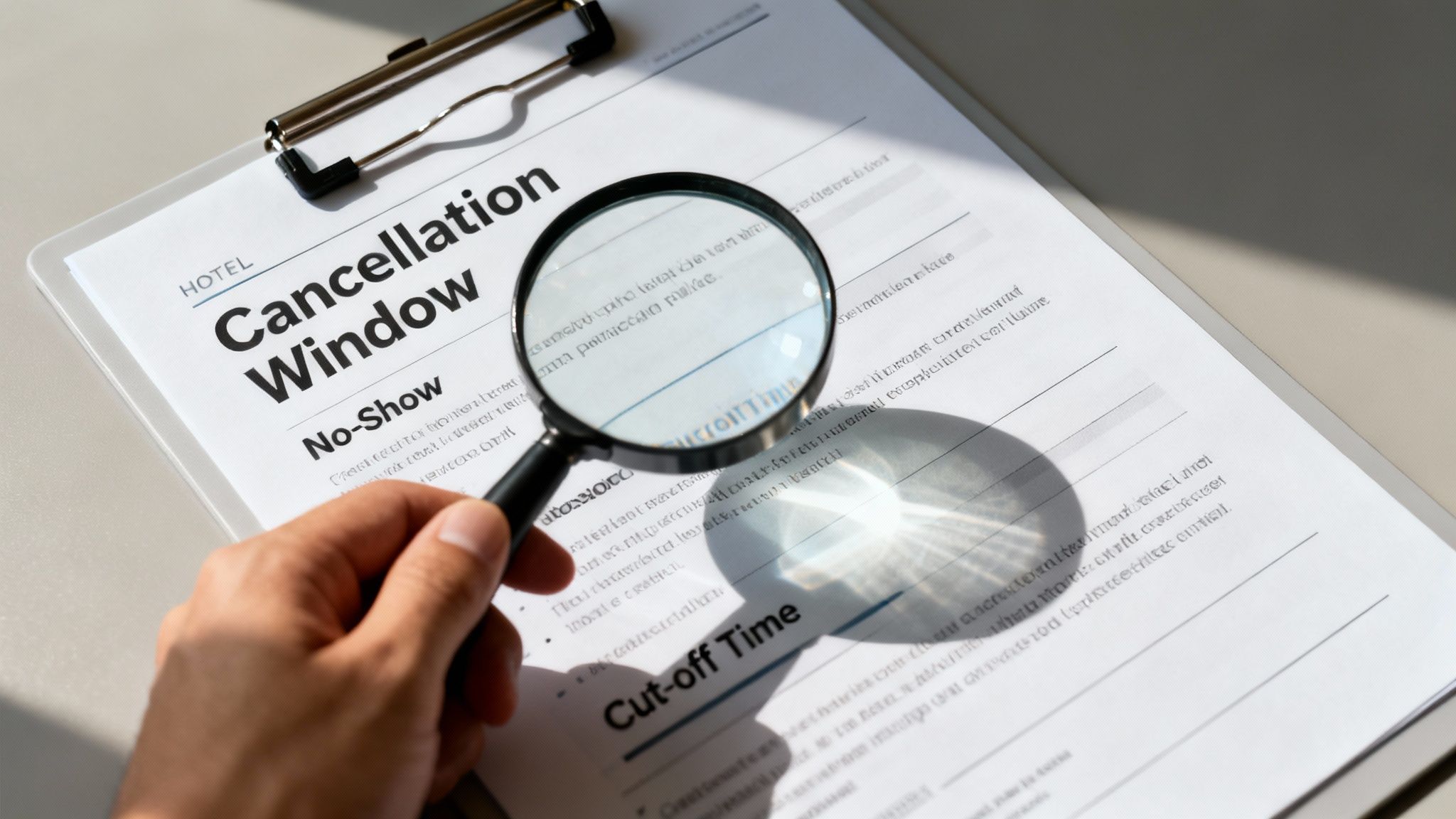
Think of the cancellation window as your get-out-of-jail-free card. It's the specific timeframe when you can cancel your booking with zero penalty. A common example is "free cancellation up to 48 hours before check-in."
Within that window lies the single most important detail: the cut-off time. This isn't just a date; it's a precise moment. If a policy says you must cancel by 3:00 PM two days before arrival, trying to cancel at 4:00 PM means you’ve missed your chance and will almost certainly be charged a fee.
Travel Tip: Always, always double-check the time zone specified in the hotel cancellation policy. A 3:00 PM cut-off in Paris is a world away from 3:00 PM in your home city. This tiny oversight can be a very expensive mistake.
This is where so many travelers get caught out, assuming the deadline is midnight or based on their own local time. Don't be one of them.
Penalties and Partial Refunds
Miss the cancellation window, and you're going to face a penalty. The size of that penalty is spelled out in the policy you agreed to, so it’s crucial to know what you’re in for.
- One-Night Penalty: This is the most common fee. The hotel charges your card for the full cost of the first night of your stay, including any taxes, which could be anywhere from $150 to $500+, depending on the hotel.
- Full Stay Penalty: For stricter policies—especially during holidays, special events, or for non-refundable rates—you could be on the hook for the entire cost of your reservation.
- Loss of Deposit: If you paid a deposit to secure the room, the penalty is simply forfeiting that amount.
In some situations, you might get a partial refund. Say you cancel a five-night stay just after the cut-off. The hotel might charge you for the first night but agree to refund the remaining four. You can review our general terms of service for more examples of how different policies are structured.
No-Show and Non-Refundable Policies
A no-show penalty is what happens when you don't cancel and you don't show up. From the hotel's perspective, they held that room for you all night, losing the chance to sell it to someone else. In almost every case, this results in a significant charge, often for the full cost of the stay.
Then you have the non-refundable booking—the ultimate high-risk, high-reward option. You get a lower price, but in exchange, you waive your right to any refund if your plans change. This is often a good choice for short, certain trips, but a risky one for a long, complex vacation.
Local Insight: For high-demand destinations like Kyoto during cherry blossom season or New York City at New Year's, policies become much stricter. Hotels may require non-refundable payment weeks in advance, making flexible booking essential.
This shift has pushed hotels to be more transparent, but it's still on you to understand the rules of the game. Once you do, you're in complete control of your travel plans.
How Your Booking Method Impacts Cancellation Rules
Ever found the perfect hotel room, clicked "book," and never gave it a second thought? It turns out that where you click that button can completely change the rules of the game if you need to cancel.
It's a detail most travelers miss, but it's crucial. The very same hotel can offer a flexible, penalty-free cancellation on its own website while locking you into a strict, non-refundable policy on a third-party booking site.
Think of it like buying concert tickets. If you get them straight from the venue's box office, you deal directly with them for any issues. But if you go through a reseller, you're suddenly playing by the reseller's rules, which are often layered on top of the venue's own policies. It’s the exact same principle with hotel rooms.
Direct Booking vs. Third-Party Sites
Booking your stay through different channels means you're agreeing to different sets of rules. Getting this right from the start can save you a lot of money and headaches down the road.
Booking Directly with the Hotel: This is almost always the simplest and most flexible option. When you book on the hotel’s official website or call them up, your agreement is with them and them alone. This direct line makes it much easier to clarify a cancellation policy, ask for a little grace, or sort out any problems that pop up.
Booking Through an Online Travel Agency (OTA): Using sites like Booking.com, Expedia, or Agoda adds a middleman into the mix. When you book through an OTA, you are actually agreeing to two sets of terms: the OTA’s policy and the hotel’s policy.
Travel Tip: In almost every case, you're bound by the stricter of the two policies. If the hotel allows cancellation up to 24 hours before check-in, but the OTA’s policy for that same booking is 72 hours, you have to follow the 72-hour rule.
This extra layer often catches travelers by surprise and leads to unexpected fees. It also means any changes or cancellations have to go through the OTA's platform. The hotel’s front desk staff usually can't touch or refund a reservation made through a third party.
Why Do the Policies Vary So Much?
It really comes down to simple economics. Hotels often save their best perks, including the most forgiving cancellation terms, for customers who book directly.
Why? Because it saves them from paying hefty commission fees—sometimes as high as 15-25%—to the OTAs. They're essentially rewarding you for helping them keep more of their own money.
The data backs this up. Global distribution reports show a massive difference in cancellation rates depending on the booking channel. In Europe during 2023, for example, only about 18% of revenue from direct bookings ended up being canceled. Compare that to major OTAs, where cancellation rates soared as high as 42%. Seeing numbers like that, it's no wonder hotels offer more attractive, flexible terms to their direct customers. You can dig into more of these insights about how booking channels affect hotel revenue.
A Practical Strategy for Smart Booking
So, how do you find that sweet spot between a great price and a flexible policy? It just takes a few minutes of detective work before you commit.
- Find Your Hotel: Start your search on your favorite OTA. Use it to browse options and get a feel for prices in your destination.
- Go to the Source: Once you’ve zeroed in on a hotel, open a new tab and go directly to its official website.
- Compare Apples to Apples: On both sites, search for the exact same room type and dates.
- Read the Fine Print: Now for the important part. Carefully compare the cancellation policies on both sites. Look for the cut-off times, any penalty fees, and whether the rate is fully refundable.
You might find the OTA is offering a slightly lower price, but it comes with a rigid, non-refundable policy. Meanwhile, booking directly with the hotel might cost a few dollars more but give you the freedom to cancel right up to the day before you arrive. If you're planning a multi-stop trip where plans can easily shift, that added flexibility is often worth the small premium.
A Step-By-Step Checklist to Cancel Your Reservation
When your perfectly planned trip hits a bump in the road, the last thing you need is a stressful and costly cancellation. Having a clear plan of action is everything. This step-by-step guide is your playbook for navigating the process smoothly, helping you dodge penalties and get your money back.
But before we dive in, it’s helpful to see where these rules even come from. Your booking method—whether direct with the hotel or through a third party—is the key.
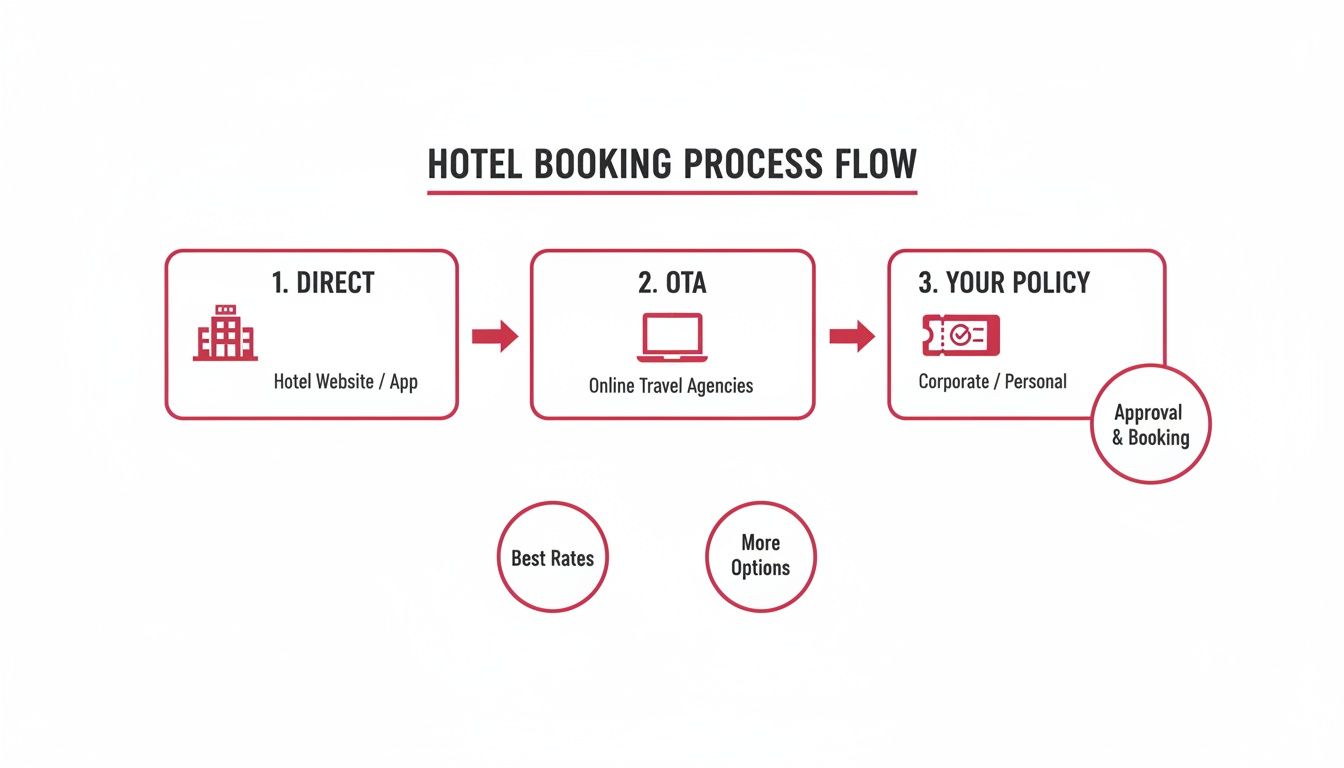
As you can see, the path you take to book determines which set of rules you have to play by.
Step 1: Locate Your Booking Confirmation
First things first: find your original booking confirmation. Check your email or pull up the reservation in your travel app. This document is your single source of truth, holding all the critical details you’ll need.
You're looking for a few key things:
- Confirmation Number: This is your golden ticket. It's the identifier for your booking.
- Cancellation Policy Details: Zero in on the exact cut-off date and time, paying close attention to the time zone.
- Booking Channel: Did you book straight through the hotel’s website or use a third-party site like Expedia or Booking.com?
Step 2: Review the Cancellation Policy... Again
With your confirmation in hand, read the hotel cancellation policy one more time. And I mean really read it. Misinterpreting the deadline by even an hour can trigger a penalty.
Look for the exact wording, like "by 4:00 PM local hotel time," and understand the consequences of missing it. A super common mistake is messing up the time zone. If you’re in New York canceling a hotel in Rome, that 4:00 PM deadline is based on Rome’s time, not yours. It’s a simple oversight that could easily cost you a full night's stay.
Step 3: Choose Your Cancellation Method
You’ve got two main options here: cancel online or pick up the phone. The best route depends on where you booked and how close you are to the deadline.
- Online Cancellation: This is usually the fastest way to go if you booked on the hotel's website or an OTA and you're well inside the cancellation window. It’s quick, efficient, and gives you an instant digital record.
- Phone Cancellation: If you're cutting it close to the deadline or have a special circumstance to plead, calling is often the smarter move. You get to speak with a real person, confirm the cancellation in real-time, and maybe even ask for a little grace.
Actionable Tip: Always cancel through the same channel you used to book. If you booked on Expedia, you must cancel through Expedia. The hotel's front desk staff won't be able to process a refund for a third-party reservation.
Step 4: Document Absolutely Everything
This step is non-negotiable. It’s your insurance policy against future disputes. No matter how you cancel, create a paper trail. If an unexpected charge pops up later, this documentation is your proof.
- Take a Screenshot: When you cancel online, screenshot the final confirmation page showing the cancellation number. Don't just close the tab.
- Save the Email: Drag that official cancellation confirmation email into a dedicated folder. Don't let it get lost in your inbox.
- Log Your Call: If you cancel by phone, jot down the date, time, the name of the agent you spoke with, and the cancellation number they give you. For extra protection, follow up with a quick email summarizing the call.
Keeping a clear record is your best defense if something goes wrong.
Cancellation Communication Tracker
Use this simple template to keep a detailed record of your cancellation request in case of any future disputes.
| Action Date | Method (Phone/Email/Portal) | Contact Person/Confirmation # | Outcome/Notes |
|---|---|---|---|
Having this log handy can turn a frustrating "he said, she said" situation into a quick resolution.
Step 5: Confirm the Refund and Cancel the Extras
You're not quite done yet. After you’ve canceled, keep an eye on your credit card statement for the next few business days. Make sure the refund posts correctly or that no penalty fees have been charged. If you spot a rogue charge, contact the hotel or OTA immediately with your documentation ready.
Finally, don't forget to cancel any related services you booked through the hotel. These are almost always separate reservations and won't be canceled automatically with your room. This includes things like:
- Spa appointments
- Dinner reservations
- Airport shuttle services
Tying up these loose ends ensures you don't face any surprise charges. It's a small detail that can impact your overall travel budget. To get a better handle on all your potential trip expenses, a good trip cost calculator can be a lifesaver.
What to Do When You Have a Refund Dispute
Even when you've done everything right, you might find yourself staring at an unexpected charge on your credit card. It's frustrating, and it’s easy to feel powerless when a hotel won't issue the refund you're owed. But you have more options than you think.
Navigating a dispute over a hotel cancellation policy just requires a calm, methodical approach. Think of it as a clear escalation path to get your money back fairly.
Start with Polite but Firm Communication
Your first move is always to talk to the hotel directly, but it's crucial to start at the right level. Don't waste your breath arguing with a front desk agent who doesn't have the authority to help.
Instead, politely but firmly ask to speak with the general manager or a duty manager. When you connect, calmly explain the situation, referencing the documentation you saved during the cancellation process.
Pro Tip: Keep your conversation strictly factual and professional. State the timeline of events, quote the exact cancellation policy from your confirmation email, and present your evidence (like that all-important cancellation number). A calm, organized approach is always more effective than an emotional one.
Escalate to Corporate Headquarters
If the hotel manager is unwilling or unable to resolve the issue on-site, your next step is to go up the chain. Every major hotel brand has a corporate guest relations or customer service department whose entire job is to handle these situations.
You can usually find their contact information on the brand’s main website. When you reach out, provide a concise summary of your issue, including:
- Your information: Your name, booking details, and confirmation number.
- The hotel's details: The specific location and dates of your intended stay.
- The problem: A brief, clear explanation of the charge and why it's incorrect.
- Your evidence: Attach copies of your cancellation confirmation email and any other correspondence you've had with the hotel.
This formal complaint ensures your case gets reviewed by a team with the authority to override a single hotel's decision.
Initiate a Credit Card Chargeback
When all direct communication fails, your credit card company can be your most powerful ally. A chargeback is a process where your bank literally reverses a transaction, pulling the funds back from the merchant.
This should be your final move. To start the process, call the number on the back of your credit card or log into your online account. You'll need to provide all the documentation you've gathered to prove you followed the hotel cancellation policy and are entitled to a refund. Banks take this evidence very seriously, and a strong paper trail is often the deciding factor.
The Role of Travel Insurance
Travel insurance is designed to be a safety net for unexpected events, but it isn't a get-out-of-jail-free card for any change of plans. It’s important to know what it actually covers.
- What it usually covers: Documented emergencies are the key here. Think of a sudden medical issue, a death in the family, or a hurricane that makes travel impossible.
- What it usually doesn't cover: Simply changing your mind, a conflict at work, or trying to cancel a non-refundable booking for a reason not explicitly listed in your policy.
Always read your insurance policy’s fine print to understand exactly what you're covered for. If you need help navigating these tricky situations, you can always reach out to our team for guidance through our support page.
Frequently Asked Questions
When you're booking a hotel, the cancellation policy can feel like a maze of fine print. Let's clear up a few of the most common questions travelers run into when plans change.
Can I Get a Refund on a Non-Refundable Room?
Usually, "non-refundable" is exactly what it sounds like—if you cancel, you don't get your money back. It's the trade-off for getting that slightly lower rate. However, there are a few exceptions where you might not be at a total loss.
If you're dealing with a documented emergency, like a sudden medical crisis or a death in the family, reach out to the hotel directly. While they aren't obligated to refund you, many will offer a credit for a future stay as a gesture of goodwill. You'll almost certainly need to provide proof.
This is also where good travel insurance proves its worth, as it's designed to cover you for these specific, unforeseen events. And don't forget, if the hotel fails on its end—say, the room is uninhabitable or they've overbooked—you have solid ground to dispute the charge with your credit card company.
While a non-refundable rate is a gamble, it's not always a total loss. Documented emergencies or a failure of service from the hotel can open doors to a credit or a chargeback, even if a direct refund isn't on the table.
What Is a 24-Hour Hotel Cancellation Policy?
This is one of the most common policies out there, but it trips up a lot of people. It means you need to cancel at least 24 hours before a specific time on your check-in day to avoid a penalty.
Here’s the detail everyone misses: that deadline is tied to the hotel’s official check-in time (e.g., 3:00 PM), not midnight or whenever you planned to show up. It's also based on the local time zone of the hotel, not yours. If you try to cancel at 5:00 PM the day before for a 3:00 PM check-in, you’ve already missed the window and can expect to be charged for the first night.
Does Booking Through a Third-Party Site Change My Rights?
Yes, it changes everything. When you book through an Online Travel Agency (OTA) like Expedia or Booking.com, you're entering into an agreement with them, not just the hotel. You're now bound by two sets of rules: the hotel's policy and the OTA's own terms and conditions.
The OTA's rules often win out, and they can be much stricter. More importantly, any changes or cancellations must go through the OTA's website or app. The front desk staff at the hotel typically have no power to modify or refund a third-party reservation. Always, always read the fine print on the booking site you're using—those are the rules that will ultimately apply.
Managing every detail of your dream trip, from booking rules to must-see spots, can be overwhelming. Let Dream Trip turn your scattered inspiration into a perfectly organized plan. Our AI travel planner helps you save places from social media, build smart itineraries, and keep all your travel details in one place. Start planning your next adventure with Dream Trip today

