
So, you have a phone full of saved TikToks, Instagram spots, and random Google Maps pins. Now what? Let's be honest, turning that digital daydreaming into an actual, real-world adventure is where most people get stuck.
This guide is your blueprint for moving from a chaotic wishlist to a smart, perfectly paced itinerary. We'll show you exactly how to gather all those scattered ideas and forge them into a plan that works for your dream trip. Think of this as the bridge between inspiration overload and a journey so well-planned, it feels effortless.
This is the only guide you'll need to finally stop scrolling and start traveling.
The whole process is simpler than you think. It's really just a three-step journey from finding cool spots online to organizing them, and finally, getting out there to experience them.
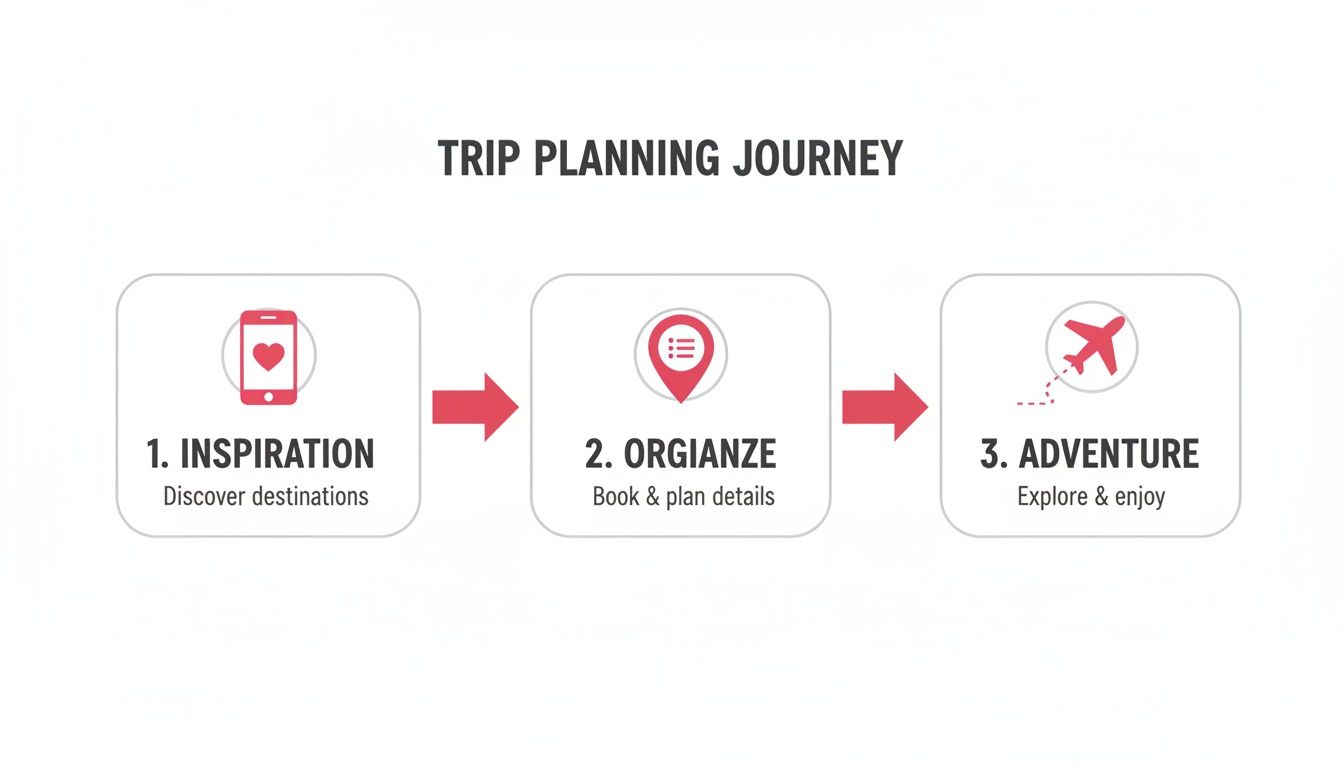
This is the modern traveler's path: turning digital saves into tangible memories.
From Inspiration Overload to Actionable Plan
The biggest hurdle for most travelers isn't a lack of ideas—it's having way too many. You've got folders bursting with beautiful destinations, but no clear path to actually getting there. This is where a structured approach to planning your trip itinerary becomes a total game-changer.
We're here to give you that structure. This guide is packed with practical, actionable tips to help you:
- Centralize Your Ideas: We'll show you how to pull every saved spot from all your different apps into one unified, easy-to-use map. Check out our detailed article on how to effectively plan trips from your social media saves.
- Budget Like a Pro: This means thinking beyond just flights and hotels. We're talking local transportation, daily food costs, and those unexpected souvenir stops. A recent survey found that 70% of travelers prioritize their full trip budget, so getting this right is key.
- Pace Your Adventure: Learn to build a schedule that feels exciting, not like a frantic race against the clock. The secret is leaving room for spontaneous detours and local discoveries.
Your itinerary isn't a rigid script; it's a flexible guide. The best trips happen when a solid plan meets a willingness to chase those unexpected discoveries that pop up along the way.
Turning Your Wishlist into a Cohesive Itinerary
Think of all your saved places as ingredients. Right now, they’re probably scattered all over—a dash of TikTok, a pinch of Instagram, a scoop from a friend's text. We'll teach you the recipe for combining these ingredients into an amazing trip.
You'll learn how to group activities by neighborhood to save travel time, make smart decisions based on things like museum opening hours, and figure out the best times to visit popular attractions to avoid the worst crowds.
By the end of this guide, you’ll have a clear, step-by-step method to transform your travel dreams into a real plan that you can actually book.
Start with a Realistic Budget and Clear Priorities
Before you book flights and daydream about hotel views, let's ground your dream trip in reality. The most incredible adventures start with a clear budget and a solid understanding of your priorities. This isn't about limiting your fun—it's about making sure your money goes toward the experiences that truly matter to you.
The first step is figuring out your total trip cost. This goes way beyond just flights and hotels. You have to account for all the smaller, everyday expenses that sneak up on you, like daily coffees, subway tickets, museum entries, and that perfect souvenir. Honestly, learning how to budget for international travel is one of the most important skills you can develop as a traveler.
This financial planning is more critical than ever. Globally, 70% of travelers are now prioritizing their full trip budget, a trend that's especially strong in the APAC region (73%) and the US (69%). With US travelers spending over $12 billion abroad in 2023 and airfares climbing, a good budget prevents the kind of sticker shock that could easily shrink your spending power by 10-20% compared to just a few years ago.
Define Your Travel Style and Non-Negotiables
Beyond the numbers, ask yourself why you're taking this trip. Answering that question will shape every decision and ensure you're planning a trip you actually want, not one based on what you think you should do.
Think about what kind of traveler you are:
- The Foodie: Your priority is Michelin-starred meals, bustling food markets, and local cooking classes. You might save on a simpler hotel to splurge on an unforgettable tasting menu.
- The Adventurer: You're all about hiking, diving, or zip-lining. Your budget will be heavily skewed toward experiences and gear, not fancy accommodations.
- The Relaxation Seeker: All-inclusive resorts, spa days, and beachside cocktails are your non-negotiables. The quality of where you stay is everything.
- The Culture Vulture: You want to soak up every museum, historical site, and art gallery. Your money will go toward tickets, tours, and a centrally located home base.
A trip built around your true priorities will always be more fulfilling than one that tries to check every box. Know what you're willing to splurge on and where you're happy to save.
For example, a couple planning a foodie weekend in Lisbon might dedicate 40% of their budget to dining, while a solo backpacker exploring Southeast Asia for a month might only spend 20% on food to make their funds stretch. These choices are what make a trip uniquely yours.
If you want a clearer picture of your potential expenses, a specialized tool can be a huge help. You can try our free trip cost calculator to get a personalized estimate.
Allocate Your Funds with Real-World Examples
Once you know what matters most, you can start assigning dollars to different categories. Here’s a look at how different travel styles might break down their budgets.
Sample Trip Budget Breakdown
This table shows how a budget might be allocated for different types of trips. Use it as a starting point to think about where your money will go.
| Expense Category | Budget Traveler (e.g., Solo Backpacker) | Mid-Range Traveler (e.g., Couple's Getaway) | Luxury Traveler (e.g., Family Vacation) |
|---|---|---|---|
| Accommodation | 40% (Hostels, budget guesthouses) | 35% (Boutique hotels, quality Airbnb) | 40% (5-star hotels, luxury villas) |
| Food & Drink | 20% (Street food, self-catering) | 25% (Mix of cafes and nice dinners) | 25% (Fine dining, private chefs) |
| Activities & Tours | 15% (Free walking tours, select entries) | 15% (Museums, guided tours, classes) | 20% (Private tours, exclusive access) |
| Transportation | 15% (Public transit, walking) | 10% (Trains, ride-shares, occasional taxi) | 10% (Private transfers, car rentals) |
| Contingency | 10% (Buffer for unexpected costs) | 15% (Buffer for splurges, emergencies) | 5% (Usually covered by higher-end services) |
As you can see, a backpacker prioritizes cheap lodging to free up funds, while a luxury traveler might spend just as much on activities as a mid-range traveler spends on food. It all comes down to your personal travel style.
Let’s make it even more concrete. Imagine a mid-range trip to Italy for two people with a $4,000 budget for one week (not including international flights).
Here’s one way that could break down:
- Accommodation (35% - $1,400): This covers seven nights at around $200/night, perfect for well-located boutique hotels or nice Airbnbs.
- Food & Drink (25% - $1,000): This allows for a great mix of nice sit-down dinners, casual trattoria lunches, and daily gelato stops, averaging about $140/day.
- Activities & Tours (15% - $600): This is enough for pre-booked Colosseum tickets, a Vatican tour, a cooking class in Florence, and a few other museum entries.
- Local Transportation (10% - $400): This would cover a high-speed train between Rome and Florence, plus city metro passes and the occasional taxi.
- Contingency Fund (15% - $600): Never skip this. This buffer is for spontaneous train trips, that leather jacket you suddenly need, or a last-minute splurge on a fantastic dinner.
Map Your Must-Sees to Uncover Hidden Gems
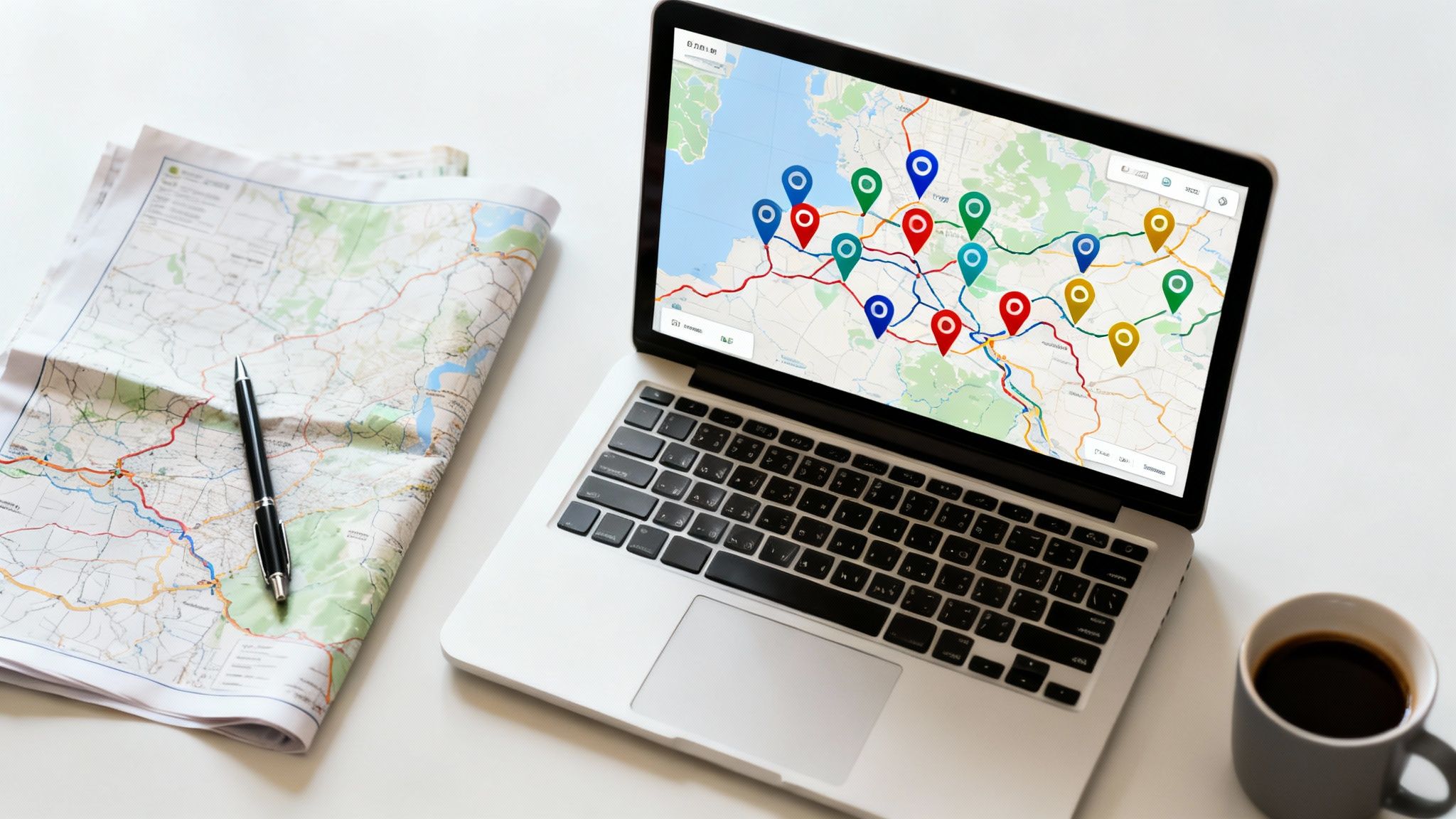
This is the moment your trip stops being a messy list of ideas and starts looking like a real adventure. You’ve probably got dozens of saves scattered everywhere—restaurants from TikTok, viewpoints from Instagram, and recommendations from friends. Now, it's time to pull them all onto a single map to see how they actually fit together.
This simple visual step is the secret to smarter planning. Forget copy-pasting addresses into a spreadsheet. Modern tools can instantly plot every saved location, turning that chaotic wishlist into a clear geographic overview. Honestly, this is what separates a frustrating, zigzagging trip from a seamless one.
Unify Your Inspiration on One Map
First things first: consolidation. The goal is to get every single spot you’ve saved—whether from social media, blogs, or guidebooks—pinned onto one map. Think of it as creating a powerful visual database for your entire trip.
Many planning apps make this ridiculously easy. You can often share a link straight from TikTok, Instagram, or Google Maps, and the app will automatically grab the location data and drop a pin for you. It completely eliminates the tedious manual work.
This visual organization is a game-changer, especially for younger travelers. A staggering 29% of Gen Z and Millennials get their travel inspiration directly from TikTok. While this flood of ideas is amazing—US citizen departures hit 98.5 million in 2023—it can quickly become overwhelming. Without a way to organize it, inspiration turns into frustration, causing 85% of shoppers to abandon their travel purchases mid-process. By getting all those saves onto a map, you build the foundation for a coherent, bookable plan. You can read the full American Express report for more on current travel trends and insights.
Identify Geographic Clusters to Save Time
Once all your pins are on the map, you’ll immediately start seeing patterns. These are your geographic clusters—groups of saved spots that are naturally close to each other. Spotting these clusters is the key to building efficient daily plans that cut down on travel time and let you see more.
Imagine you're planning a trip to Tokyo. A map view would instantly show you that your saved spots for Shibuya, Harajuku, and Shinjuku are all huddled together. This tells you they can be grouped into a single, well-paced day, saving you hours on the subway.
Here’s how to make the most of this technique:
- Color-Code Your Pins: Assign different colors to categories like food, museums, shopping, and viewpoints. This helps you quickly see if you have a good mix of activities in each cluster.
- Find Your Home Base: Notice where the densest clusters of your must-sees are. That's probably the best area to book your hotel, putting you right in the middle of the action.
- Spot the Outliers: See that one cool restaurant an hour away from everything else? Seeing it on the map helps you decide if it's worth a special trip or if it's better to save for another time.
By grouping your activities geographically, you're not just saving time; you're creating a more relaxed and logical flow for your days. You'll spend less energy navigating and more energy enjoying the destination itself.
Discover Hidden Gems Between Your Pins
Your map is more than just a collection of your saves; it’s a tool for discovery. With your main attractions pinned, you can now zoom in and explore the areas between them. This is how you find those special, off-the-beaten-path places that make a trip truly memorable.
Think of it like this: you have a famous museum pinned. By exploring the map around it, you might spot a highly-rated local café on a side street, a small park with a great view, or a boutique shop that wasn't on any major blog. These are the spontaneous finds that add so much personality to your trip.
For example, while looking at the route between the Eiffel Tower and the Louvre in Paris, a quick map scan might reveal the beautiful Tuileries Garden or a charming patisserie that locals love. Adding these smaller, in-between stops transforms a simple transit into a memorable part of your day. It’s a simple trick that helps turn a list of tourist landmarks into a rich journey filled with authentic local flavor.
4. Build Your Day-by-Day Itinerary
Alright, your map is full of pins. Now for the fun part: connecting the dots and turning that wishlist into a real, day-by-day plan. The goal here isn’t to create a rigid, minute-by-minute spreadsheet that sucks the life out of your trip. It's about building a smart framework that feels exciting, not exhausting.
The secret to a great itinerary is balance. We’ve all been there—trying to cram so much in that you end up rushing from one landmark to the next, forgetting to actually enjoy the moment. A well-paced plan leaves breathing room for those spontaneous detours and much-needed coffee breaks.
Use the Anchor and Float Method
One of the best techniques for structuring your days is the Anchor and Float Method. It’s brilliantly simple but gives you structure without sacrificing flexibility.
Here's how it works: for each day, pick one main thing to be your "anchor." This is your non-negotiable priority—the museum ticket you booked, the big hike you planned, or that coveted dinner reservation. It’s the one thing you’d be bummed to miss.
With your anchor set, you then fill the time around it with "floaters." These are smaller, nearby sights, cool cafes, or interesting shops you can pop into if you have the time and energy. But if you miss them? No big deal. This method guarantees you hit your must-sees while leaving tons of room for discovery.
The Anchor and Float Method gives each day a purpose without putting you on a leash. It's the difference between checking off a list and actually having an adventure.
Let’s say you have 3 days in Rome:
- Day 1 Anchor: A pre-booked 10:00 AM tour of the Colosseum and Roman Forum.
- Day 1 Floaters: Afterwards, walk to the nearby Capitoline Hill for epic views, grab a long lunch in the Monti neighborhood, and maybe wander over to the Trevi Fountain after dark when it’s all lit up.
See how that works? You have a plan, but you also have the freedom to linger over an espresso or follow a charming cobblestone street without feeling like you’re falling behind schedule.
Group Your Stops by Neighborhood
Remember that map of pinned locations? It’s about to become your best friend. Grouping your anchors and floaters by neighborhood is probably the single biggest time-saver in itinerary planning.
Zig-zagging across a city is a massive waste of time and energy—resources you’d much rather spend soaking in the atmosphere. Look at your map and find the natural clusters of pins. Dedicate a full day, or at least a half-day, to exploring one specific area. To get a sense of how this looks in practice, this Florida Keys road trip itinerary does a great job of breaking down a longer journey into logical geographic chunks.
This works everywhere. In Paris, you could spend a whole day just in Le Marais, hitting the Picasso Museum, relaxing in the Place des Vosges, and browsing the boutiques—all within easy walking distance. No frantic metro rides required.
Be Realistic About Your Pace
Finally, have an honest conversation with yourself about your travel style. The pace of a jam-packed 3-day city break is worlds apart from a lazy week on a beach. Trying to do too much is the #1 rookie mistake.
Here’s what to keep in mind to set a realistic pace:
- Travel Time: Don't just look at the 15 minutes Google Maps says it takes to get from A to B. Add a buffer for getting a little lost, waiting for the bus, or just stopping to take a photo.
- Activity Duration: A big museum can easily eat up 3 hours. A scenic viewpoint might only take 30 minutes. Be honest about how long things actually take.
- Downtime: This is non-negotiable. Seriously. Schedule time to just sit in a park, read a book in a café, or chill at your hotel. Burnout is the enemy of a great vacation.
By building a balanced, well-paced plan, you create an itinerary that works for you, not against you. And if this all feels like a lot, modern tools like an AI itinerary generator can automate much of this, creating logical daily schedules based on your saved spots and their locations.
Fine-Tune Your Routes and Nail Down the Logistics
A brilliant plan on paper is one thing, but a dream trip only happens when it works flawlessly in the real world. This is where you transform a great itinerary into an exceptional one by sweating the small stuff. Nailing the logistics is how you guarantee a smooth, stress-free experience on the ground.
This means you need to stress-test your plan. Dig into the practical details like museum opening hours—that famous gallery in Paris might be closed on Tuesdays, a tiny detail that could completely derail an entire day's schedule. For high-demand attractions like the Anne Frank House in Amsterdam or the Uffizi Gallery in Florence, pre-booking tickets is non-negotiable. Seriously, unless you enjoy burning vacation time standing in line for hours, book ahead.
Fine-Tune Your Daily Schedule
With your big-ticket items and flexible spots mapped out, it’s time to get real about the clock. How much time will you actually spend at each location? A quick photo op at a scenic viewpoint might only take 20 minutes, but a sprawling museum could easily eat up half your day. Be honest with yourself about your travel style.
Don't forget to consider the time of day. Golden hour—just after sunrise or before sunset—is unbeatable for photography. A bustling local market is best experienced in the morning when it's packed with energy. That popular restaurant that doesn't take reservations? Try going for a late lunch to dodge the peak rush.
Here’s a quick checklist for this stage:
- Verify Opening and Closing Times: Double-check every single museum, shop, and attraction. Pay close attention to holidays, as they can have weird hours.
- Book Key Tickets: Lock in your spot for any must-see sights, popular tours, or special events well in advance.
- Research Transit Passes: Look into whether a city pass or multi-day metro card makes sense. In places like London or Tokyo, this can save you a surprising amount of money and hassle.
Use AI to Find the Most Efficient Path
Once your day's activities are grouped by neighborhood, the next puzzle is figuring out the best order to visit them in. This is where modern tools can save you a ton of guesswork and, more importantly, save your tired feet. Manually plotting the perfect route can be surprisingly tricky.
AI-powered planners, like the one built into the Dream Trip app, can instantly optimize your daily schedule. Just drag your chosen spots for the day into the itinerary, and the AI will shuffle them into the most logical sequence based on their locations and typical visit times. It automatically calculates the smartest path, cutting out backtracking and wasted transit time.
Instead of you trying to solve the puzzle of what to do first, second, and third, an optimized route does the thinking for you. This frees up mental energy and gives you back precious vacation time.
Ask Your AI Assistant for Local Secrets
Think of your AI planner as a local friend who has all the insider info. It can help bridge the gap between what your plan says and the reality of being in a brand-new place. This is where you can get the kind of practical advice that used to require digging through dozens of blog posts.
Try asking specific questions to add that extra layer of local flavor to your itinerary:
- "What's the best local dish to try near the Louvre, and where can I find it?"
- "How do I get from Fiumicino Airport to my hotel in Trastevere using public transport?"
- "Is it better to visit the Acropolis in the morning or late afternoon in July to avoid the worst crowds and heat?"
- "What's a good rainy-day alternative to our planned park visit in Kyoto?"
This kind of real-time, context-aware advice is invaluable. It helps you make smarter decisions on the fly and uncovers the little insights that make a trip truly special, ensuring your well-crafted plan holds up from the moment you land.
With your bookings locked in and your day-by-day schedule looking sharp, it’s time for the final pre-flight check. This is all about turning that digital plan into a real-world tool that works for you on the ground—even when you're completely offline.
But remember, the most important travel skill isn't perfect planning. It's knowing when to happily throw that plan out the window.
The best itineraries are trusted guides, not rigid rulebooks. The real magic of a trip often hides in the unplanned moments: a recommendation from a local for a hidden restaurant, a sudden downpour that sends you into a fascinating little museum you’d have otherwise skipped, or a beautiful side street that just begs to be explored.
Your Final Pre-Trip Checklist
Before you zip up that suitcase, a quick final review can save you from some major headaches later. Seriously, don't skip this.
- Confirm All Bookings: Triple-check flight times, hotel reservations, and any tour or ticket confirmations. Are the dates right? Are the names spelled correctly?
- Save Everything for Offline Access: This is critical. Download your itinerary, maps, and confirmation emails directly to your phone. Apps like Google Maps let you save entire city maps for navigation without a single bar of service.
- Share Your Plan: Send a copy of your itinerary to your travel companions so everyone is on the same page. It’s also a great idea to share it with a trusted friend or family member back home, just in case.
Think of your finalized itinerary as your safety net. It’s there to catch you, ensuring you have a place to sleep and a general idea of what’s next. But it shouldn't be a cage that prevents you from chasing spontaneous opportunities.
Building Flexibility into Your Itinerary
A truly great plan has adaptability baked right in. You’ve already done the hard work by grouping activities by neighborhood and setting anchors for each day. That structure is what gives you the freedom to be flexible without feeling completely lost.
If a rainy day ruins your planned hike, your itinerary should make it easy to see what indoor attractions—like that museum you pinned as a "maybe"—are just around the corner. If you’re absolutely loving a particular neighborhood, a flexible plan lets you scrap the afternoon's schedule and just linger, knowing you’ve already hit your "must-see" for the day.
Handling Surprises on the Road
Look, no matter how well you plan, things can go sideways. A train strike, a sudden museum closure, or a restaurant that’s unexpectedly full—it’s all part of the adventure. A flexible mindset turns these potential frustrations into new opportunities.
When a surprise pops up, just take a breath and consult your map of saved spots. That booked-out restaurant? Pull up your map and see what other highly-rated spots you pinned a few blocks away. The key is to have options ready so you can pivot without missing a beat.
By building a plan that is both organized and adaptable, you empower yourself to handle anything the road throws at you and truly dive into the experience.
Common Itinerary Planning Questions, Answered
Got a few last-minute questions? We hear these all the time from travelers trying to perfect their plans. Here are some quick, straight-to-the-point answers.
How Far in Advance Should I Plan a Trip?
For big international trips, start planning 3-6 months out. This is the sweet spot for snagging good deals on flights and locking in top-choice accommodations, especially if you're traveling during peak season. For example, planning a summer trip to Europe should start in January or February.
If you're planning a shorter domestic getaway, 1-2 months is usually enough time. The goal is to have your itinerary ready, so when you see a great flight deal—which many people book about a month out—you can pull the trigger without hesitation.
What Is the Biggest Mistake People Make When Planning?
Over-scheduling. Hands down. It's so easy to get excited and try to cram every single recommendation into your trip, but it's the fastest way to burn out. You end up just running from one sight to the next without actually experiencing anything.
The best itineraries I've ever made—and followed—always have breathing room built right in. Think of downtime not as wasted time, but as an essential activity. Aim for one or two "anchor" activities a day and let the rest of your time be flexible for spontaneous discoveries.
What's the Best Way to Organize All My Travel Ideas?
Stop letting your ideas live in a chaotic mess of screenshots, browser tabs, and random notes. The most effective way to get organized is to use a single, central tool where you can funnel everything.
Seriously, an app that lets you save a spot directly from Instagram, TikTok, or Google Maps is a total game-changer. It should automatically grab the location, pin it to your trip map, and keep all that inspiration in one place. Seeing everything visually is the key to building a plan that actually makes sense on the ground.
Ready to stop dreaming and start planning? The Dream Trip app is the central hub you've been looking for. Save spots from anywhere, see them all on a map for your trip, and let our AI build you a smarter, optimized route. Start building your dream trip today.


