

Planning your dream trip to New Orleans in February? Let's get straight to it: the weather is mild, pleasant, and just a little unpredictable. It's the kind of weather that has you reaching for a light jacket in the morning, shedding it for a sunny stroll through the French Quarter in the afternoon, and then welcoming it back for a crisp evening heading into a jazz club.
Honestly, it’s one of the best times to visit, striking a perfect balance for travelers.
What To Expect From New Orleans Weather In February
If you're planning a trip to New Orleans in February, you've picked a fantastic time to go. You get all the electric energy of the city, especially with Mardi Gras in full swing, but you completely dodge the oppressive heat and humidity the city is famous for later in the year.
This is your quick guide to setting the right expectations so you can pack smart, plan your budget, and have an amazing, comfortable trip.
As you can see, the numbers point to a climate that's practically built for getting out and exploring. It's warm enough for daytime adventures but cool enough to make those cozy evenings feel just right.
The Ideal Climate for Exploration
February in New Orleans offers what I'd call a perfect "sweet spot" of mild weather. It's truly ideal for soaking up the city's vibrant culture without breaking a sweat. Average high temperatures tend to hover right around a pleasant 65°F (18°C), often creeping up towards 70°F by the end of the month.
At night, the lows dip to a comfortable 52°F (11°C)—perfect for those evening strolls or grabbing a late-night beignet. You can find more insights into these pleasant February temperatures and how to plan around them.
The real key to enjoying New Orleans weather this time of year is being ready for the shifts. A sunny, 70-degree afternoon can feel worlds away from a brisk 55-degree evening once the sun goes down.
Actionable Tip: For travelers, this means one thing: layering is not just a suggestion, it's a strategy. A light jacket or a cozy sweater will be your best friend, allowing you to adapt effortlessly from a sun-drenched courtyard lunch to a cool jazz club at night.
Why February Stands Out
It’s about more than just comfortable temperatures. February in New Orleans offers a unique combination that makes it an incredible time to visit. The city is absolutely buzzing with pre-Lenten celebrations, but it hasn't yet hit the peak humidity of late spring and summer.
This creates a perfect storm of exciting events and genuinely enjoyable outdoor conditions. Here’s a quick summary of key weather stats you should know.
New Orleans February Weather At A Glance
This table breaks down the essential numbers you'll want to keep in mind when packing and planning your daily activities.
| Weather Metric | Average Figure |
|---|---|
| High Temperature | 65°F (18°C) |
| Low Temperature | 52°F (11°C) |
| Rainfall Days | 8 days |
| Sunshine Hours | 6 hours per day |
| Humidity | ~75% |
These figures paint a picture of a city that's comfortable and mostly cooperative, with just enough rain to keep things interesting.
Here’s exactly why this month is so appealing for visitors:
- Peak Festival Season: You're landing right in the middle of Mardi Gras season, which means parades and festivities are ramping up all month long. The energy is fantastic.
- Walkable Weather: The mild temps are perfect for long walks through historic neighborhoods like the Garden District or along the Mississippi River without getting overheated.
- Lower Humidity: While "low humidity" is a relative term in New Orleans, it's far more manageable than in the summer months. The air feels fresher and much more pleasant.
Getting a handle on these conditions is the first step in crafting the perfect trip. For more planning tips, check out our in-depth guide on the best time to visit in February.
What A Typical February Day Feels Like
To really get a feel for New Orleans weather in February, you have to think beyond the numbers on a forecast. The real story is in the rhythm of the day—how the temperature shifts from morning to night. This daily swing is what will guide what you pack, what you do, and when you do it. Let’s walk through a day in three acts.
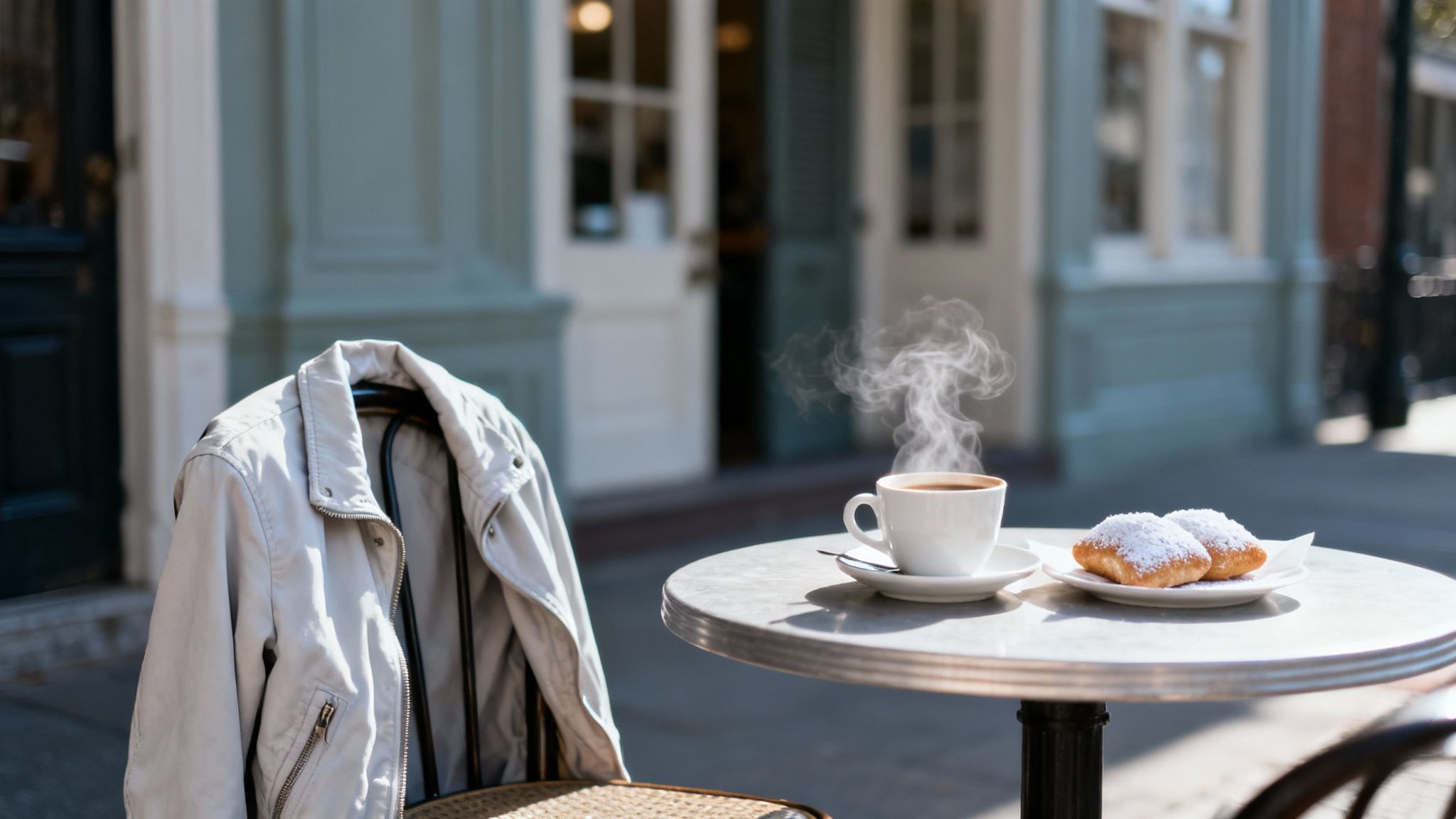
Your morning will likely start off crisp and cool. Temperatures often hover in the low 50s (around 11°C), making the air feel genuinely fresh. It’s perfect weather for grabbing a hot coffee and beignets in the French Quarter before the city truly wakes up, feeling that cool air on your face as the sun starts to climb.
The Perfect Afternoon Peak
As the morning haze burns off, the sun takes over and things warm up beautifully. By early afternoon, you can expect the temperature to hit a delightful mid-60s (around 18°C). Honestly, it's just about perfect for being outside.
This is your prime time. It’s the ideal window for a walking tour through the Garden District, a leisurely stroll along the Mississippi, or staking out a great spot for a daytime Mardi Gras parade. The sun is out, but it’s not the oppressive heat of summer.
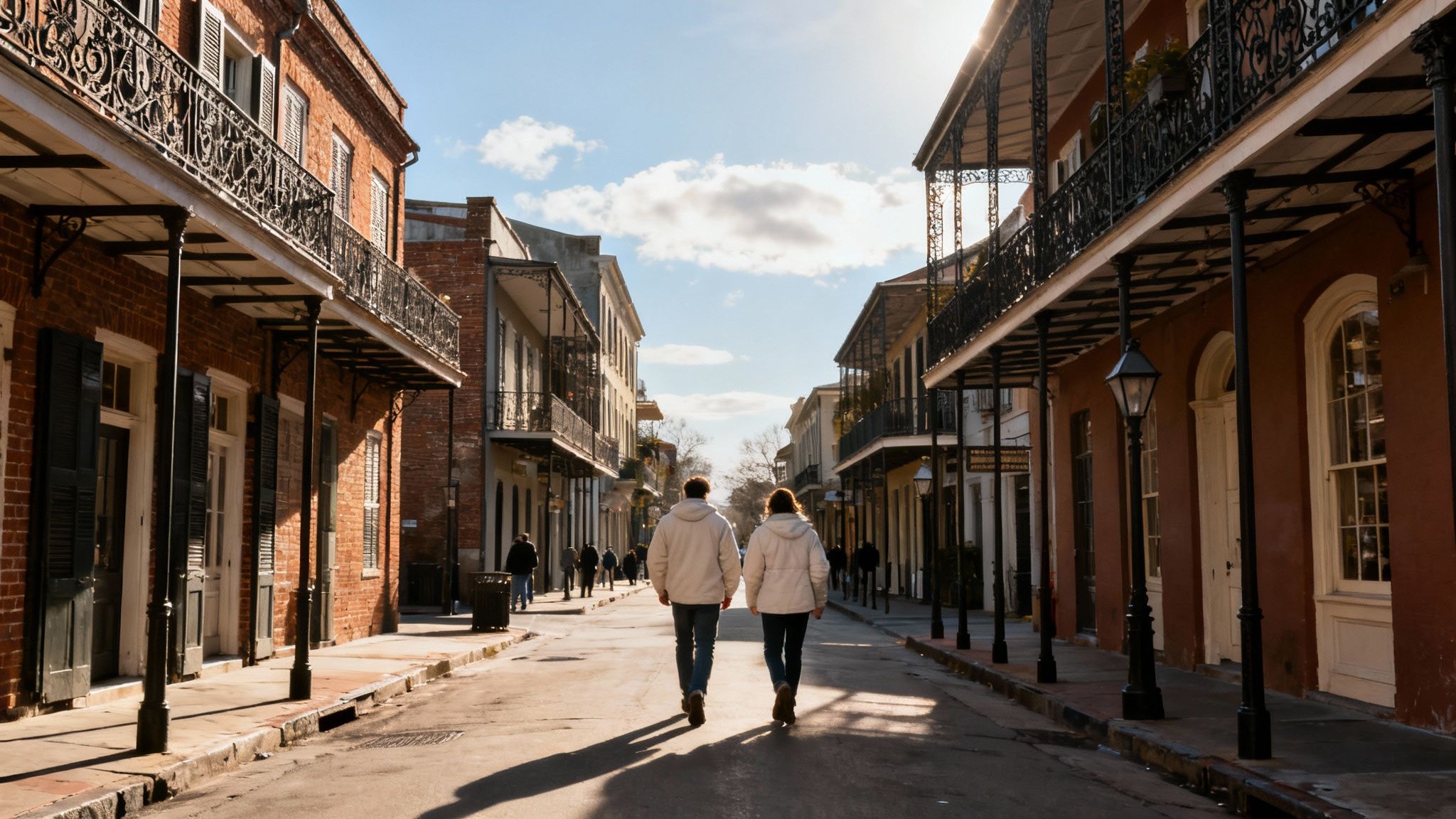
You can see this gentle curve from cool mornings to a pleasant afternoon peak, which is exactly why layering is the key to comfort here.
The Evening Cooldown And What It Means
Once the sun goes down, you'll feel that temperature start its steady slide back into the 50s. This evening cooldown is a noticeable shift, and it’s why a jacket or sweater is absolutely non-negotiable. Whether you're heading out for a ghost tour, catching some live jazz on Frenchmen Street, or sitting down for a late dinner, you will be glad you have that extra layer.
Local Insight: This daily temperature swing is what separates the savvy travelers from the uncomfortable ones. Packing layers isn't just a friendly suggestion; it’s the secret to seamlessly enjoying everything from a sun-drenched afternoon parade to a cool, atmospheric evening in a historic courtyard.
Here are a few actionable tips to work with the weather, not against it:
- Time Your Outdoor Tours: Aim to schedule walking-heavy activities like cemetery tours between noon and 4 PM. You'll be taking advantage of the day's best weather.
- Never Leave Your "Evening" Layer Behind: Even if it feels fantastic in the afternoon, don't leave your jacket at the hotel. You'll almost certainly want it later.
- Embrace the Cool Mornings: Use that crisp morning air as an excuse to wander the quieter streets and pop into cafes before the big crowds hit.
Navigating Rain And Sunshine During Your Trip
Worried a little rain might throw a wrench in your New Orleans adventure? Don't be. While February does bring some showers, they're rarely the kind of all-day washouts that derail an entire trip. Think of the weather here less as a potential problem and more as a classic NOLA plot twist.
A sudden downpour might be the very thing that sends you ducking into a fascinating French Quarter antique shop you would have otherwise walked right past. Or, it could just be the perfect excuse to find a cozy bar, order your first Sazerac, and add an unplanned story to your vacation.
Making The Most Of The Rain
The real key to enjoying February in New Orleans is embracing a little flexibility. The city gets about 100mm (around 4 inches) of rain for the month, typically spread across five to eight days. These aren't lingering drizzles; they're often short, intense showers that pass quickly, leaving crisp, fresh air behind.
For a bit of perspective, your daily chance of getting rained on is way lower than during the city's famously stormy summer months. You can get a better sense of the city's climate by checking out some of the broader New Orleans weather patterns on Wanderlog.com.
Honestly, a simple strategy makes all the difference. Just toss a compact, travel-sized umbrella in your bag. It’s small enough that you’ll forget it’s there, but you'll be glad you have it when a shower pops up out of nowhere.
Traveler Tip: Have a few "rainy day" ideas ready to go. The National WWII Museum, Audubon Aquarium of the Americas, or even a hands-on New Orleans cooking class are all fantastic indoor options you can easily swap into your itinerary at a moment's notice.
Capitalizing On The Sunshine
What's more important than the occasional shower is the generous amount of sunshine that really defines a February visit. On average, the city enjoys six hours of sunshine per day, and you can feel the days getting noticeably longer as the month goes on.
This gives you a huge window for all your outdoor plans. From the beginning of February to the end, you gain almost a full hour of extra daylight, pushing the sunset later and later into the evening. That means more time for things like:
- Exploring City Park: Rent a paddleboat on Big Lake or wander through the incredible sculpture garden as the afternoon light hits just right.
- Strolling the Riverfront: There's nothing quite like watching the massive steamboats glide down the Mississippi River as the sun starts to dip.
- Garden District Tours: That late afternoon "golden hour" sun makes the historic mansions look absolutely magical and creates the perfect backdrop for photos.
If you plan your big outdoor adventures for the sunny afternoons and keep a couple of indoor backups in your pocket, you'll have no trouble mastering the city's climate. The occasional rain shower just becomes a minor footnote in an otherwise bright, pleasant, and unforgettable February trip.
How The Weather Shapes Your Mardi Gras Experience
Mardi Gras and New Orleans weather have a long, complicated relationship. The city's biggest party is an unapologetically outdoor affair, which means the forecast isn't just small talk—it's a central character in the story of your trip. The generally mild February climate is exactly what allows this massive, weeks-long festival to even exist, but its famous unpredictability is what keeps everyone on their toes.
From postcard-perfect sunny Fat Tuesdays to famously bone-chilling ones, the weather adds another layer of drama to the whole celebration. Understanding this dynamic is the secret to being a smart, comfortable, and ultimately happy reveler. After all, your parade strategy depends as much on the forecast as it does on finding the perfect spot to catch beads.
Dressing For Parade Day Success
If you take one piece of advice, let it be this: dress in layers. This isn't just a friendly suggestion; it’s a Mardi Gras survival tactic. You might stake out your spot on a parade route like St. Charles Avenue when the afternoon sun feels fantastic, but hours later, as a nighttime parade like Muses or Orpheus finally rolls, that temperature will have dropped in a big way.
A typical parade marathon day looks something like this:
- Afternoon (2 PM): It's sunny and a pleasant 65°F (18°C). A long-sleeve shirt feels just right.
- Evening (7 PM): The sun is long gone, and it's suddenly 54°F (12°C). You'll be so glad you brought that light jacket.
- Late Night (10 PM): A breeze kicks up off the river, making it feel even cooler. That scarf or extra hoodie you almost left behind is now your best friend.
This is exactly why you'll see locals sporting a baffling mix of t-shirts, hoodies, and jackets all at once. They know the day is a marathon, not a sprint, and being comfortable is the key to enjoying the spectacle from the first float to the last.
The Wildcard Of Historical Weather
The history books on Mardi Gras weather are full of extremes, proving you should always come prepared for anything. On an average Fat Tuesday, you can expect temperatures somewhere between 60-67°F, but the records show just how wild things can get. The celebration has seen a scorching 79°F in 1888 and a frosty 38°F in 1899, which brought three inches of snow and ice to the city. You can geek out on more of this fascinating Mardi Gras weather history over on Weather.gov.
Local Insight: This unpredictability is part of the fun. Will it be a "shorts and sandals" Mardi Gras or a "tights under your costume" year? The forecast becomes part of the city-wide conversation in the days leading up to the main event.
In the end, though, the mild nature of a New Orleans February is what makes the whole thing possible. It’s what allows millions of people to gather comfortably outdoors for hours on end—something that would be unthinkable during the sweltering summer months. By packing smart with versatile layers, you're not just preparing for the weather; you’re setting yourself up for an incredible Mardi Gras, no matter what the forecast holds.
Your Smart Packing List For New Orleans In February
Packing for New Orleans in February isn’t about bringing your whole closet—it’s about making smart, strategic choices. The real secret to staying comfortable from a sunny cemetery tour to a cool evening grooving on Frenchmen Street is all about versatile layers that can keep up with the day's twists and turns.
Think of your wardrobe as a flexible toolkit. The foundation has to be comfort, starting with a couple of pairs of your favorite pants or jeans. You’ll be walking a lot, so this part is non-negotiable.

From there, build up with a mix of short-sleeve and long-sleeve tops. This simple setup lets you easily adjust to the warm afternoon sun or a surprisingly crisp morning without needing a full outfit change.
Core Clothing Essentials
Your outerwear is where you really get your flexibility. Instead of a bulky winter coat, just bring one or two key pieces that you can combine. A mid-weight jacket—think denim, a light trench, or even a casual blazer—is perfect for most daytime situations.
Pair that with a warmer layer, like a cozy fleece or a stylish sweater. Wear them together, and you’re set for the coldest evenings. Wear them separately, and you’re covered for pretty much every other scenario you’ll run into.
Actionable Tip: The single most important item you will pack is a pair of comfortable walking shoes. The city’s historic streets are meant to be explored on foot, and nothing ruins a trip faster than sore, blistered feet. Prioritize comfort over style here; your feet will thank you.
Accessories That Make A Difference
Beyond the main clothes, a few well-chosen accessories will seriously upgrade your comfort and preparedness. These small additions take up hardly any room in your luggage but offer a huge payoff.
- A Stylish Scarf: This is the ultimate layering accessory. It provides a surprising amount of warmth on a cool night and can be easily stashed in a bag when the sun comes out.
- A Compact Umbrella: A sudden downpour is always on the table. Having a small, lightweight umbrella means you won't get stuck inside waiting for the rain to pass you by.
- Mardi Gras Colors: If you're visiting during Carnival season, packing something purple, green, and gold is a super fun way to get into the spirit. It can be as simple as a t-shirt, a scarf, or some festive beads you pick up there.
This table breaks down the essentials from the nice-to-haves, making sure you're ready for anything February in New Orleans throws your way without overstuffing your suitcase.
February Packing Checklist For New Orleans
| Item Category | Must-Haves | Good to Have |
|---|---|---|
| Bottoms | 2-3 pairs of comfortable jeans or pants | A pair of leggings or joggers for lounging |
| Tops | 4-5 short and long-sleeve tops for layering | A slightly dressier top for a nice dinner |
| Outerwear | 1 mid-weight jacket (denim, trench) | 1 warmer layer (fleece, sweater) |
| Footwear | 1-2 pairs of comfortable walking shoes | A pair of stylish boots or flats |
| Accessories | Compact umbrella, sunglasses | A fun scarf, a reusable water bottle |
| Mardi Gras Gear | Clothes in purple, green, and gold | Festive accessories like masks or hats |
This focused approach ensures you're prepared for the city's famous weather swings. For a more comprehensive look at building a travel wardrobe for any destination, you can explore our ultimate packing list for more ideas.
Building a Weather-Proof New Orleans Itinerary
Alright, you've got the scoop on February's wild weather swings. Now, let's talk strategy. The secret to a killer New Orleans trip isn't a rigid, minute-by-minute schedule. It's about building a smart, flexible framework that lets you roll with whatever the forecast throws at you.
Think of it like building with LEGOs. Your big, sun-loving pieces are the outdoor adventures—wandering through the historic Garden District, exploring the sprawling beauty of City Park, or taking a long stroll along the Mississippi riverfront. You’ll want to earmark these for the warmer, brighter afternoons when the weather is likely to be at its best.
Then you have your connector pieces: the indoor options. These are the things you can slot in anywhere. Maybe it's a hands-on Creole cooking class, a deep dive into history at the National WWII Museum, or an afternoon spent mesmerized at the Audubon Aquarium. Keep these in your back pocket for a chilly morning or if a surprise rain shower decides to make an appearance.
Creating a Flexible Daily Plan
A weather-proof plan lets you embrace the day instead of fighting it. It’s about having options, not obligations. Here’s a simple structure that works wonders:
- Morning (Cooler): Start indoors or with something low-key. This is the perfect time to grab beignets at Café Du Monde, get lost in a French Quarter museum, or browse a cozy bookstore.
- Afternoon (Warmer/Sunnier): Prime time. This is when you hit the streets for walking tours, find a great spot for parade-watching, or tackle any other major outdoor sightseeing on your list.
- Evening (Cooling Down): As the temperature dips, it’s time to head inside for live music on Frenchmen Street, join a ghost tour (the chill adds to the atmosphere!), or settle in for a fantastic dinner reservation. Just be sure to have that jacket with you.
This approach puts you in control, letting you pivot with confidence and make the most of every moment. And with daylight hours stretching longer as the month goes on, you have plenty of time to play with. You can find more details on how February's daylight impacts sightseeing on Wanderlog.com.
To make this whole process even easier, our AI-powered itinerary generator is perfect for this kind of planning. You can drop in all your ideas, see them on a map, and easily drag-and-drop activities to build and rearrange your perfect New Orleans adventure in just a few clicks.
Your Top Questions About New Orleans in February
Planning a trip always comes with a few lingering questions. Let's get those sorted out so you can finalize your plans with total confidence.
Is February A Good Time To Visit New Orleans?
Absolutely, it’s one of the best months for a visit. The weather is ideal for exploring—cool enough for hours of comfortable walking but without the biting cold of a true winter. This is your chance to experience the incredible energy of Mardi Gras season without the intense summer humidity.
For anyone planning their dream trip, especially if it involves exploring on foot through the Garden District or City Park, the climate is nearly perfect. You can find more details and planning advice from other travelers in this guide to February weather on Wanderlog.com.
How Crowded Is New Orleans During Mardi Gras?
It gets very crowded. During the final weekend leading up to Fat Tuesday, the French Quarter and the main parade routes like St. Charles Avenue are packed shoulder-to-shoulder. That said, if you venture into neighborhoods outside the main festival zones, things are surprisingly calm.
The real key here is planning ahead. Booking flights and accommodations well in advance is essential if you want to avoid sticker shock and sold-out signs.
Do I Need A Heavy Coat In New Orleans In February?
You can definitely leave the heavy-duty winter coat at home. What you will need is a versatile mid-weight jacket. Think denim, a light leather jacket, or a classic trench coat that you can layer over a warmer sweater or fleece. Mornings and evenings often dip into the 50s, so you'll be glad you have it.
Actionable Tip: The name of the game is versatility. A jacket you can easily carry or tie around your waist during a surprisingly warm afternoon is far more practical than a bulky coat you'll only wear after the sun goes down.
Is It Expensive To Visit New Orleans In February?
It certainly can be, especially if your dates fall during the peak of Mardi Gras. As you’d expect, flight and hotel prices skyrocket for the major parade weekends and Fat Tuesday itself.
But here’s a pro tip: if you can visit in early February, before the biggest parades start rolling, you’ll often find much more reasonable prices. You still get to feel the city’s incredible festive buildup, just without the peak-season price tag. This is the sweet spot for budget-conscious travelers who still want to experience the Carnival magic.
Ready to turn that travel inspiration into a real plan? With Dream Trip, you can save spots you find on TikTok and Instagram, see them all on a map, and build your perfect itinerary with simple drag-and-drop. Start planning your unforgettable New Orleans adventure at https://www.thedreamtrip.app.

