
A road trip itinerary template is the framework for your entire adventure, turning scattered ideas into a stress-free, actionable plan. It’s the central hub for organizing every detail, from your driving route and daily schedule to your budget and packing lists, ensuring your dream trip goes off without a hitch.
Why a Smart Itinerary Template Is Your Best Travel Partner
Before you start the engine, your most critical tool is a well-crafted plan. A modern road trip itinerary template is far more than a simple list of destinations; it's the dynamic blueprint that connects your route, budget, and all those saved Instagram spots into one cohesive strategy.
The allure of the open road is powerful, making road trips the #1 travel choice for many. Over 80% of summer travelers plan to drive, and for a practical reason: 54% of travelers are choosing cars over planes due to rising airfare costs. You can explore more of these summer travel trends to see how people are hitting the road.
Beyond a Simple Checklist
A well-structured template helps you dodge common travel headaches that can derail a perfect getaway. It’s your personal travel assistant, helping you:
- Maximize Your Time: Group nearby attractions to avoid backtracking, so you spend more time exploring and less time driving in circles. For example, when visiting the Black Hills, plan to see Mount Rushmore, Custer State Park, and the Crazy Horse Memorial on consecutive days to minimize drive time.
- See Everything on Your List: A visual plan ensures your must-see spots are logically slotted into your schedule. You won't get to the end of your trip and realize you missed a key landmark that was just a few miles away.
- Stick to Your Budget: Integrate a budget directly into your itinerary to track spending in real-time. This means no surprise credit card bills when you get home.
A great itinerary doesn't restrict you—it frees you. By handling the logistical heavy lifting in advance, you create more space for spontaneous detours and the kind of unexpected magic that makes road trips unforgettable.
From Chaos to Coordination
Ultimately, a smart itinerary template transforms the overwhelming chaos of saved links and random recommendations into an organized, shareable plan. It ensures every dollar is accounted for, every hour is optimized, and everyone in the car is on the same page, letting you focus on the incredible moments you’ve been dreaming about.
Gathering Your Trip Ideas Without the Chaos
Every great road trip begins as a chaotic collection of saved TikToks, Instagram posts, and texts from friends saying, “You have to go here!” This initial burst of inspiration is exciting, but it can quickly become overwhelming. The key is to channel that digital clutter into a coherent plan.
A good road trip itinerary template serves as a central hub for every idea. It’s not just about making a list; it’s about watching your dream trip begin to take shape.
From Saved Posts to a Smart Map
Modern planning tools can save you a massive headache. For instance, an app like Dream Trip lets you send a saved social media post directly to your trip map, automatically grabbing the location data and dropping a pin for you. This simple action saves you from the tedious cycle of copy-pasting addresses into Google Maps one by one.
Suddenly, all those random ideas—that hidden coffee shop in Vermont, a scenic overlook in New Hampshire, or a must-try lobster shack in Maine—appear on a single, interactive map. You can immediately see geographic clusters and how a potential route might form.
Seeing all your potential stops visually is a total game-changer. It gives you a real sense of your trip’s scale, making it easier to decide if a far-flung destination is a realistic detour or better saved for another adventure.
Prioritize Your Bucket List
With your ideas pinned to a map, it’s time to get practical. You can’t do it all, so you need to separate the non-negotiables from the nice-to-haves. A simple three-tier system works wonders:
- Must-Sees: These are your anchors—the absolute non-negotiables that sparked the trip in the first place, like hiking the Flume Gorge in Franconia Notch or driving the entire Kancamagus Highway.
- Want-to-Sees: This is your B-list of exciting spots you’d love to visit if time and logistics allow, like a specific apple orchard or a charming small town slightly off your main route.
- Maybe-Next-Times: These are the outliers that are too far, too time-consuming, or don't fit the vibe of this trip. Don't delete them; save them for a future adventure.
This filtering process is crucial. It transforms an overwhelming bucket list into a focused, achievable plan and lays the groundwork for a day-by-day schedule that feels exciting, not rushed.
Crafting Your Perfect Day-by-Day Travel Plan
You've gathered your ideas and set your priorities. Now, it's time to turn that collection of pins on a map into a logical, day-by-day plan—the heart of your road trip itinerary template. The goal isn't to script every minute but to build a smart structure that maximizes enjoyment and minimizes stress.
Road trips are booming. A recent report found that 92% of Americans are planning to travel, with many opting for everything from cross-country journeys to quick weekend "micro-vacations." This highlights the importance of a good plan, no matter the trip's length. You can dive into the full American travel trends report on IPX1031.com for more insights.
The first step is to think geographically. Group your "must-see" spots into logical clusters to avoid wasting hours backtracking across a state.
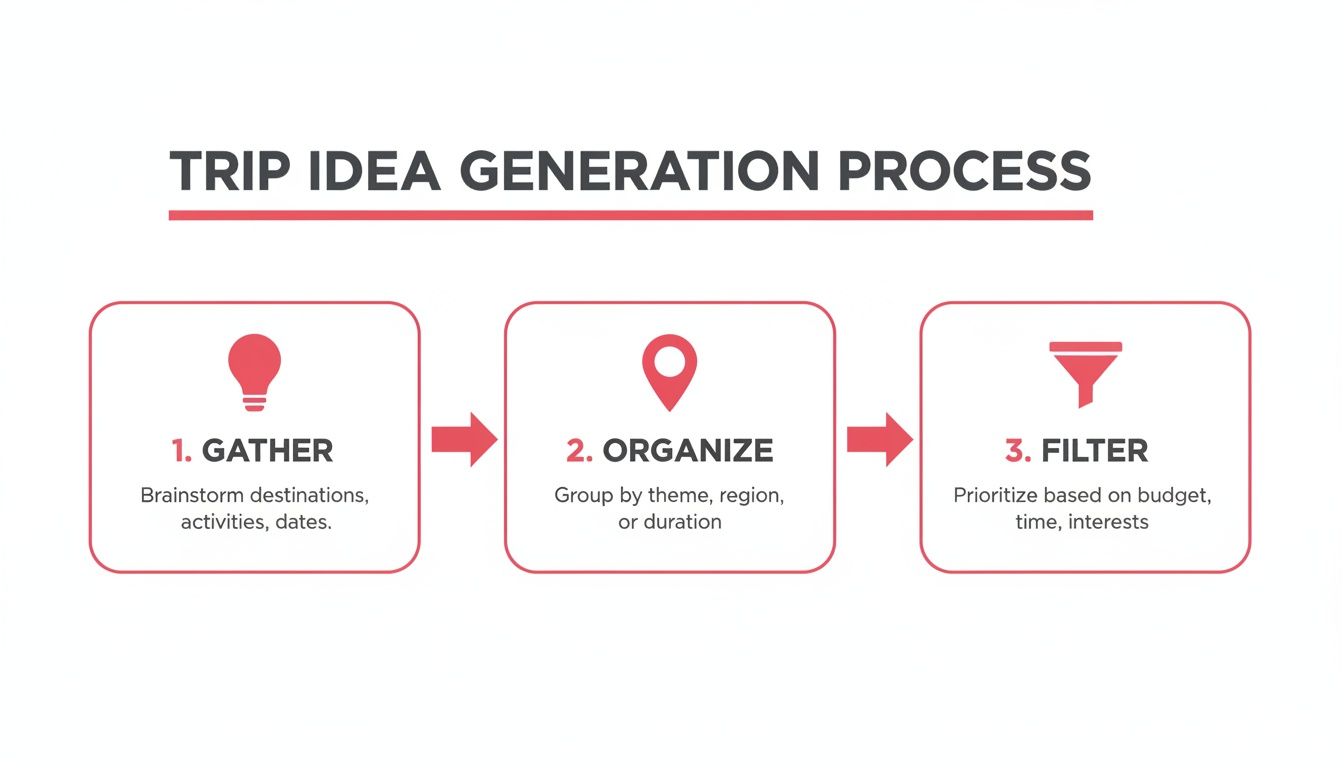
Once you've filtered your inspiration, building out each day's schedule becomes much easier.
Building a Balanced Daily Schedule
A great itinerary balances planned activities with the freedom for spontaneity. The biggest rookie mistake is over-scheduling. Anchor each day with one or two main activities and leave the surrounding time flexible.
Consider a day trip along California's Highway 1 between Carmel and Big Sur:
- Morning (Anchor): Explore Point Lobos State Natural Reserve. Pro Tip: Arrive before 9 AM to secure parking, especially on weekends. Budget 2-3 hours.
- Lunch (Flexible): Grab sandwiches at a Carmel deli to-go or find a cafe in Big Sur.
- Afternoon (Scenic Drive): Drive south, stopping at Bixby Bridge for photos. Local Insight: The best photo spots are from the turnouts on the north side of the bridge. Continue to McWay Falls at Julia Pfeiffer Burns State Park.
- Spontaneous Stops: Leave an hour for unplanned stops at scenic overlooks or art galleries along the coast.
- Evening (Relax): Enjoy a sunset dinner at a clifftop restaurant like Nepenthe before heading back.
This structure ensures you hit your key sights while leaving room for discovery. If you need a starting point, an AI-powered itinerary generator can build a solid first draft.
The magic of a road trip lives in the unplanned moments. Your itinerary should be a guide, not a script. Build in "discovery time" to follow that interesting-looking dirt road or stop at a quirky roadside attraction.
Estimating Time Realistically
Guessing how long things really take is one of the trickiest parts of planning. Google Maps provides a baseline, but it doesn't account for real-world delays. Always add a buffer:
- Traffic: Expect delays near cities and popular national parks, especially during peak season (summer) or holidays.
- Parking: Finding a spot at a popular trailhead can easily take 20-30 minutes.
- Breaks: Factor in time for gas, snacks, and stretching.
- The Activity Itself: A "2-hour hike" rarely takes just two hours. Add time for prep, photos, and rest.
By padding your time estimates, you trade a frantic pace for a sense of relaxed control, making your road trip itinerary template a source of calm, not anxiety.
Mastering Your Budget and Travel Logistics
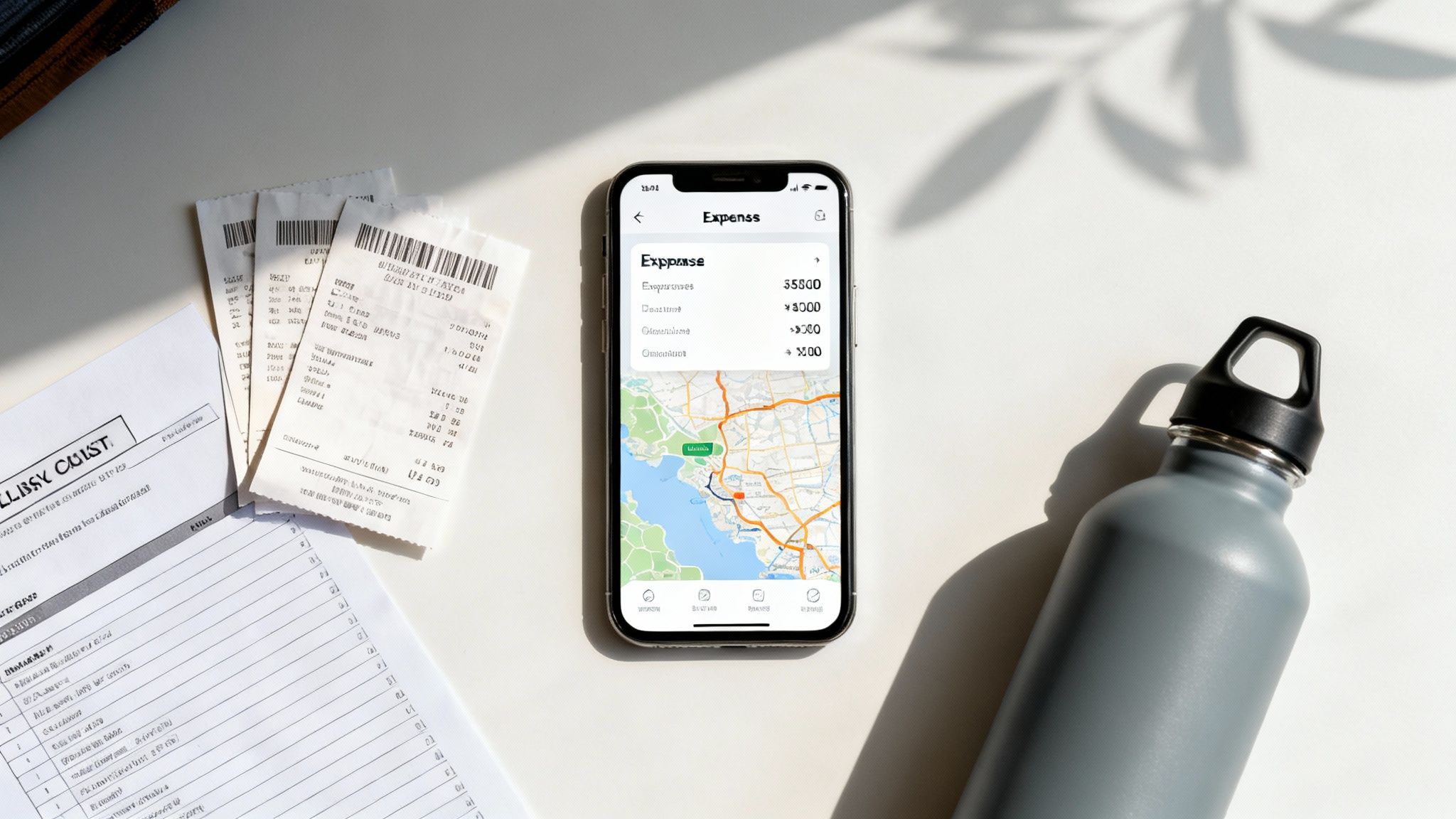
An amazing adventure requires a realistic budget. With your daily plan taking shape, it's time to focus on the practical details that keep a dream trip from becoming a financial headache. This is where your road trip itinerary template transforms into a powerful financial tool. By attaching estimated costs to each stop, you get a clear picture of your total spending before you even leave.
Building Your Comprehensive Travel Budget
A solid budget accounts for everything, not just the obvious big-ticket items. Break it down into categories to see where your money is going and identify areas to save.
- Transportation: Gas is the main cost. Use an app like GasBuddy to find cheaper fuel along your route. Also, budget for tolls, city parking, and any potential ferry fees.
- Accommodations: Tally the nightly cost of hotels, campsites, or rentals, including taxes and fees. Cost-Saving Tip: Traveling during the shoulder season (spring or fall) can cut accommodation costs by 20-40%.
- Food & Dining: Set a daily allowance. Local Insight: Save money by packing lunches for hike days and seeking out local farmers' markets or grocery stores instead of eating every meal out.
- Activities & Entrance Fees: Account for national park passes (an "America the Beautiful" pass is $80/year and covers all parks), museum tickets, and tours.
- Contingency Fund: This is non-negotiable. Add an extra 10-15% to your total budget for unexpected expenses like a flat tire or a must-have souvenir.
A well-planned budget isn't about restriction; it's about empowerment. Knowing you have the funds to cover your plans allows you to relax and fully immerse yourself in the experience without financial anxiety.
For a detailed breakdown of expected costs, a dedicated trip cost calculator can help ensure no expense is overlooked.
Smart Packing and Document Organization
What you pack is directly tied to your budget and logistics. Overpacking reduces fuel efficiency, while underpacking can lead to expensive on-the-road purchases. Your packing list should reflect your itinerary. A road trip through the Pacific Northwest in the fall requires layers, waterproof jackets, and hiking boots. A summer trip through the Southwest demands extra water, sun protection, and breathable clothing. If you're car camping, a guide to 9 must-have car camping essentials is a great starting point.
Finally, organize your documents. Create a digital folder in Google Drive or Dropbox for all essential information:
- Hotel and rental car confirmation numbers.
- Scanned copies of your driver’s license and insurance.
- Digital tickets or park passes.
- A shareable link to your live itinerary.
Having everything accessible on your phone prevents frantic searches for confirmation emails and ensures a smooth, efficient journey.
How to Customize Your Itinerary for Any Traveler
A one-size-fits-all plan simply doesn't work for road trips. The best road trip itinerary template is one that adapts to your travel style, whether you're a solo adventurer, a couple seeking romance, or a family on the move. Customization is the key to a journey where everyone feels excited and included.
For the Solo Adventurer
Solo travel is all about freedom. Your itinerary should reflect that. Build your plan around one "anchor" activity per day and leave the rest open for spontaneous discovery.
- Build in Safety Checks: Share your live itinerary with someone back home. Add your lodging details and planned check-in times so they know your general whereabouts.
- Embrace Spontaneity: Instead of locking in every meal, list options. This gives you the freedom to follow your gut, whether it leads you to a cool local cafe or an unexpected hiking trail.
For a Romantic Getaway
For a couples' trip, the goal is to balance shared interests with individual desires. Use collaborative planning features to let both partners add ideas to the map before building the schedule together.
The goal is connection, not just checking off sights. I always recommend scheduling one unique experience each day that isn’t just about seeing a place but doing something together—like a local cooking class, a sunset picnic overlooking a canyon, or a tandem kayaking tour.
For the Family Crew
Family road trips are a masterclass in managing different energy levels and interests. Your itinerary needs to be engaging for everyone, from toddlers to teenagers.
- Pace Yourself: Limit driving to 3-4 hours between major stops. Practical Tip: Use an app that shows playgrounds or parks along your route for easy break spots.
- Mix It Up: Alternate "parent picks" like museums with activities for the kids, such as a short hike, a playground visit, or swimming. Local Insight: Many small towns have community pools or splash pads that are perfect for a midday break in the summer.
- Involve Everyone: Give each family member a role. Let a teenager manage the playlist, or have a younger child choose the daily snack stop. For more tips, check out our guide on effortless group trip planning.
If your crew includes a furry member, this guide on how to travel with pets is a great resource for ensuring a safe and comfortable journey for everyone. Personalizing your plan is what elevates a good trip into an unforgettable one.
Your Top Road Trip Planning Questions Answered
Even with the perfect road trip itinerary template, questions always pop up. Here are answers to some of the most common queries to help you finalize your plans and hit the road with confidence.
How Far in Advance Should I Plan My Road Trip?
This depends entirely on your destination and travel dates. For popular destinations during peak season—like national parks in summer or New England in the fall—plan three to six months in advance. The best accommodations and campsites get booked up quickly. For example, lodging inside Yellowstone or Yosemite can sell out nearly a year ahead.
For a more spontaneous trip to a less crowded area, you could plan it in a few days. The key is to have your ideas organized so you're ready to go when the mood strikes.
What Is the Best Way to Share the Itinerary?
Stop emailing static PDFs or Word documents. They become obsolete the moment you make a change, leading to confusion. The only sane way to manage a group trip is with a live, collaborative link from a digital planner.
Everyone views the same up-to-date document, can open locations in their map app, and can find booking details without having to ask. This simple switch eliminates most of the "Where are we staying tonight?" confusion.
A live itinerary isn't just a schedule; it's your single source of truth on the road. It eliminates version control issues and makes sure every traveler, from the navigator to the backseat driver, is perfectly in sync.
How Do I Keep My Itinerary Flexible?
Flexibility is the soul of a road trip. The biggest mistake is over-scheduling, which turns an adventure into a stressful race against the clock. Build flexibility into your plan from the start. Structure your days around one or two "must-do" anchor activities. This gives each day a purpose without over-planning. The time between these anchors is your space for discovery—stopping at that quirky roadside dinosaur, pulling over at an unmapped scenic overlook, or trying the pie shop you just saw a sign for.
An optimized route is also key. Knowing the most efficient path between your anchors helps you understand exactly how much buffer time you have for spontaneous detours.
Ready to turn all that travel inspiration into a real, actionable plan? Dream Trip is the AI-powered planner that organizes your saved social media spots into a beautiful, shareable itinerary. Stop screenshotting and start planning at https://www.thedreamtrip.app.

